Trump Says 'Hormuz Users Must Protect Themselves'—Iran Blockade Shows Signs of Prolonged Crisis
As Oil Freight Rates Surge 3.3x, U.S. Demands Self-Defense from Allies—Signaling Shift in Maritime Security Paradigm for New Cold War Era
- •Trump effectively withdrew from Middle Eastern maritime security by demanding Hormuz users take responsibility for their own security.
- •Iran vowed to continue the strait blockade, oil prices surged to $126, and freight rates increased 3.3 times.
- •As the 70-year U.S.-led maritime order shows signs of ending, South Korea faces pressure to diversify its energy security.
U.S. Passes Maritime Security Responsibility to Allies
U.S. President Donald Trump has effectively signaled America's withdrawal from Middle Eastern maritime security by demanding that nations using the Strait of Hormuz take responsibility for their own security. This statement comes as Iran's Supreme Leader Mojtaba Khamenei has vowed to continue the strait's blockade, and Trump's remarks are being interpreted as heralding a fundamental transformation of the global energy security system.
Trump stated that "countries passing through Hormuz must be responsible for their own safety," stepping back from the traditional U.S.-led maritime security commitment. This move directly shifts the burden to Gulf oil-producing nations and East Asian energy importers.
Iran Reaffirms 'Blockade Weaponization' Strategy
Iran's new Supreme Leader Mojtaba Khamenei declared in his first public statement that "we must continue to use the leverage of the Strait of Hormuz blockade." He urged Gulf states to close U.S. military bases, claiming "you must now realize that America's security promises were nothing but lies."
Khamenei stated "there will be no resumption of navigation without security guarantees for neighboring countries," maintaining that the blockade will continue until retribution is achieved for his predecessor Ali Khamenei, who was killed in a joint U.S.-Israel airstrike on February 28.
Unprecedented Energy Crisis—Largest Scale Since the 1970s
The Strait of Hormuz is a narrow 34km waterway through which approximately 20 million barrels of oil pass daily, serving as a critical artery for global energy supply. Although designated as an international navigation strait under the UN Convention on the Law of the Sea, tanker traffic initially plunged 70% following warnings from Iran's Islamic Revolutionary Guard Corps (IRGC) to halt passage, and currently stands at virtually zero.
As of March 12, Iran has carried out 21 attacks on commercial vessels, with over 150 ships waiting outside the strait. Multiple international media outlets have characterized this situation as "the largest supply disruption since the 1970s energy crisis and the biggest upheaval in world oil market history."
Brent crude broke through $100 per barrel on March 8 for the first time in four years, then soared to a peak of $126. This represents the fastest oil price increase from any Middle Eastern conflict.
Shipping Industry Panic—Freight Rates Hit All-Time Highs
Very Large Crude Carrier (VLCC) rates on the Middle East-China route have surged approximately 3.3 times in just two weeks. CNBC reported that daily charter rates for Middle East-originating supertankers have jumped over 94%, reaching all-time highs.
Major shipping companies like CMA CGM have imposed emergency conflict surcharges of $2,000 per 20-foot container and $3,000 per 40-foot container. ING senior economist Rico Luman warned that "the Cape of Good Hope route will become the new normal in the long term" and that "we must prepare for rising transportation costs and supply chain uncertainty."
With both Hormuz and the Red Sea simultaneously blocked, a 'double bottleneck' scenario has materialized, forcing all ships to navigate around the southern tip of Africa. This means a 40% increase in shipping distance and delivery delays of up to 2-3 weeks.
Impact on South Korea
South Korea depends on the Middle East for approximately 70% of its crude oil imports. The Hormuz Strait blockade is expected to dramatically increase raw material procurement costs for refineries, creating upward pressure on domestic fuel prices. Additionally, disruptions to petroleum and chemical product imports from the Middle East threaten cascading impacts across the manufacturing sector.
While the Korean government has moved to release strategic oil reserves and secure alternative supply lines, Trump's 'self-defense' demand is likely to create pressure for Korean naval deployment to the Gulf. This could trigger discussions of the largest overseas military engagement since the 1990s Gulf War.
End of 70 Years of Maritime Security Order
Trump's statement is interpreted as effectively abandoning the 'freedom of navigation' principle that the U.S. has guaranteed since World War II. Experts view this as a signal of the decline of the U.S.-led global security system that has persisted for 30 years since the end of the Cold War.
This is likely to trigger independent naval force buildups and regional alliance realignments among energy-importing nations. Major Asian countries including China, Japan, and India are reportedly already considering independent maritime escort operations.
Iran's Strategic Calculations
Analysts believe Iran is pursuing three objectives through the strait blockade. First, retaliatory pressure against the U.S. and Israel for killing the previous Supreme Leader. Second, inducing Gulf states to close U.S. military bases. Third, gaining negotiating leverage by inflicting damage on Western economies.
The Khamenei regime, unlike its predecessor, advocates a hardline foreign policy, emphasizing military deterrence over nuclear negotiations. According to industry reports, Iran is systematizing the Hormuz blockade as a core component of 'non-nuclear deterrence.'
Future Outlook [AI Analysis]
The Hormuz blockade is likely to become entrenched as a structural confrontation that defies short-term resolution. With Iran's criteria for achieving retribution remaining vague and the Trump administration's willingness to intervene militarily uncertain, the blockade could persist for several months or longer.
Energy markets are expected to enter a long-term high oil price phase. As oil prices above $100 per barrel establish themselves as the 'new normal,' global inflationary pressures may reignite. This will likely delay central banks' normalization of monetary policy.
Geopolitically, the transition to 'regionalized security systems' is expected to accelerate. Europe will likely increase dependence on Norwegian and U.S.-sourced LNG, while Asia will strengthen Russian, Australian, and Southeast Asian supply chains. This could lead to energy bloc formation and deepening of new Cold War structures.
South Korea must focus on strategic oil reserve management and securing alternative supply lines in the short term, while in the medium to long term, energy security diversification through increased nuclear and renewable energy shares appears unavoidable.
댓글 (3)
이 위기를 어떻게 극복할 수 있을지 전문가 의견이 더 필요합니다.
경제 상황이 좋지 않은데, 정부의 대응이 아쉽습니다.
Hormuz 문제가 장기화되면 어떻게 될지 우려됩니다.
More in Global

Latest News
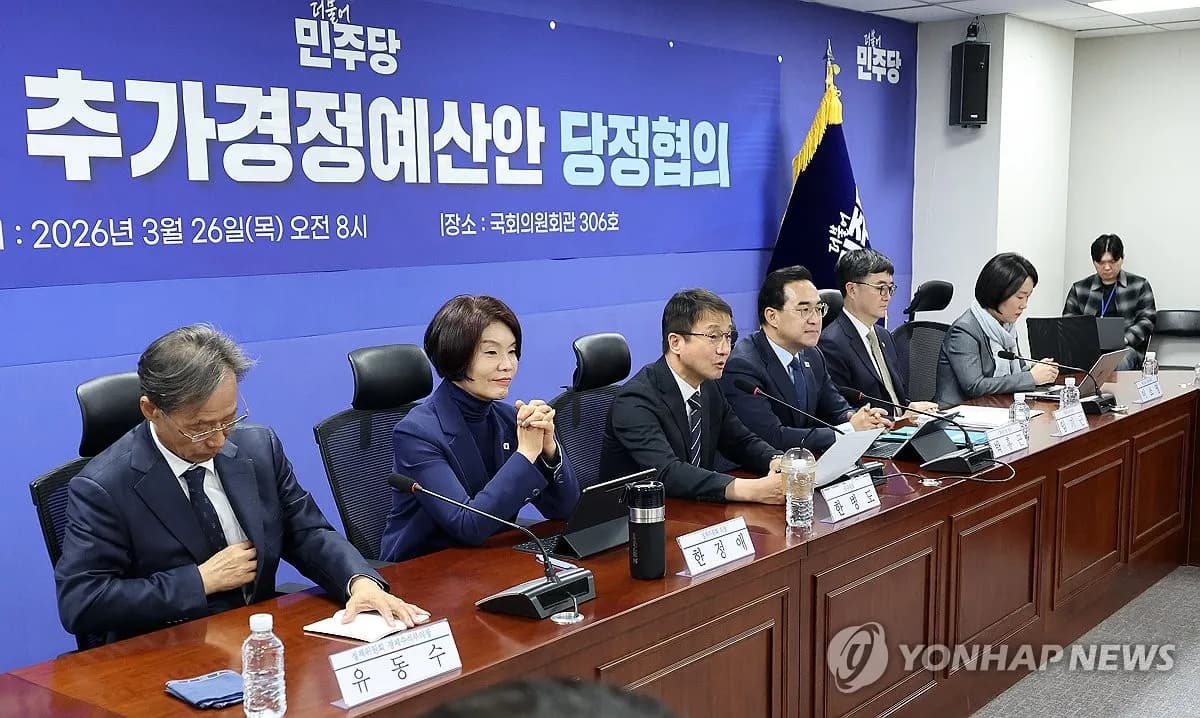
당정, 석유 최고가격제 손실 보전을 추경에 반영키로
당정이 석유 최고가격제 손실을 추경에 반영하기로 결정

6년 전 세 살 딸 살해한 30대 친모 구속송치
경찰, 6년 전 세 살 딸 살해 혐의 30대 친모를 구속송치

中企 수입 나프타의 80% 이상이 중동산…공급망 위기 심화
중소기업 수입 나프타의 80% 이상이 중동산으로 공급 의존도 높음

미·이란 긴장 한 달, 금융시장 요동…장기화 우려
미·이란 갈등으로 증시 변동성 확대, 코스피 6천 고지 후 등락

미·이란 전쟁 한 달, 미국 전문가 "종전·확전 기로"
미·이란 전쟁 1개월 도래, 종전·확전 기로 평가

미·이란 전쟁 1개월, 한국 안보·공급망 취약점 노출
미·이란 전쟁 장기화로 한국 안보·경제 취약점 노출