U.S. Defense Secretary: 'No Timeline for End of Iran War'—Requests $200 Billion in Additional War Funds
Three weeks into war, 7,000 targets struck yet 'nuclear deterrence' goal remains—War expands with serial attacks on Middle East energy facilities
- •U.S. Defense Secretary Hegseth stated no timeline has been set for ending the Iran war and that the goal of preventing nuclear armament remains in place.
- •Following Israel's airstrike on the South Pars gas field, Iran retaliated by attacking Middle Eastern energy facilities, escalating the war.
- •With the Strait of Hormuz transit halted, South Korea faces energy security concerns and pressure to articulate its diplomatic position.
Refuses to Set End Date: "President Will Decide"
U.S. Defense Secretary Pete Hegseth stated during a routine briefing on the 19th (local time) that "no timeline has been set" for ending the war with Iran, and that "the President will decide when the war ends." He emphasized that "operational objectives—destroying Iran's missile capabilities, neutralizing defense production infrastructure, decimating naval forces, and preventing nuclear armament—remain identical to those on day one of the conflict."
Since the war began on February 28, the United States and Israel have reportedly struck over 7,000 targets inside Iran during the past three weeks. However, the war is expanding across the Middle East beyond initial expectations. The Pentagon has requested over $200 billion in additional war funding from Congress. Secretary Hegseth remarked, "Taking out bad guys costs money," adding that "the exact amount is subject to change."
South Pars Strike Intensifies Energy War
The turning point in the war was Israel's strike on Iran's South Pars gas field. When South Pars, the world's largest natural gas field, was engulfed in flames, Iran immediately retaliated by attacking energy facilities in Qatar, Saudi Arabia, and the United Arab Emirates (UAE). Transit through the Strait of Hormuz has effectively halted, and international oil and natural gas prices have surged.
President Donald Trump warned that "if there are additional attacks on Qatar, we will conduct massive bombing of the entire South Pars complex." During a meeting with the Japanese Prime Minister, he compared the strike to the Pearl Harbor attack. Iranian Foreign Minister Abbas Araghchi countered, stating "the United States started this war" and "the U.S. must take responsibility for all consequences." The Iranian government officially rejected ceasefire negotiation proposals.
Ground Troop Deployment Opposition vs. Public Concerns
According to a Reuters-Ipsos poll, 65% of Americans expect President Trump to deploy large-scale ground forces to Iran. However, only 7% support such action. While President Trump has publicly stated he "will not deploy ground troops to the Middle East," concerns about actual deployment are growing as the war becomes prolonged.
Currently, U.S. air strikes on Iran heavily rely on aging KC-135 aerial refueling tankers. While aerial refueling aircraft are critical assets enabling bombers and fighters to conduct long-range missions, experts point out that operational burden is increasing due to aircraft obsolescence and the complex Middle Eastern airspace environment.
Impact on South Korea
As attacks on Middle Eastern energy facilities continue, uncertainty in international energy markets is rapidly increasing. The Strait of Hormuz is a critical chokepoint through which approximately 20% of global oil shipments pass, and South Korea's dependence on Middle Eastern crude oil imports exceeds 70%. If the strait's closure becomes prolonged, disruptions to South Korea's crude oil imports and soaring oil prices will be inevitable.
Additionally, as a major U.S. ally, South Korea may face pressure to articulate its diplomatic position on the Iran war. If the United States requests allied participation in sanctions against Iran and military support, the South Korean government will likely need to make complex decisions simultaneously considering its alliance with the U.S., Middle East diplomacy, and energy security.
댓글 (4)
Defense 문제는 양쪽 입장을 모두 들어봐야 할 것 같습니다.
균형 잡힌 시각이 필요하다는 데 동의합니다.
팩트에 기반한 냉정한 판단이 필요한 시점입니다.
이 사안은 신중하게 접근해야 한다고 봅니다.
More in Global

Latest News
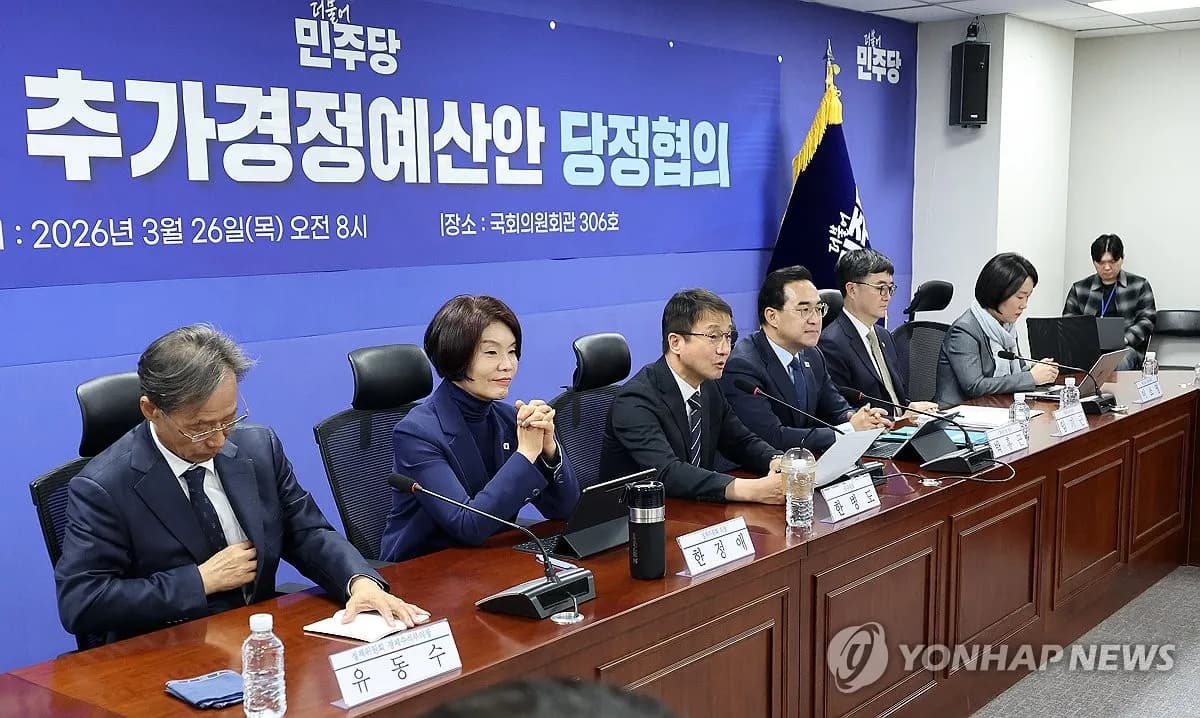
당정, 석유 최고가격제 손실 보전을 추경에 반영키로
당정이 석유 최고가격제 손실을 추경에 반영하기로 결정

6년 전 세 살 딸 살해한 30대 친모 구속송치
경찰, 6년 전 세 살 딸 살해 혐의 30대 친모를 구속송치

中企 수입 나프타의 80% 이상이 중동산…공급망 위기 심화
중소기업 수입 나프타의 80% 이상이 중동산으로 공급 의존도 높음

미·이란 긴장 한 달, 금융시장 요동…장기화 우려
미·이란 갈등으로 증시 변동성 확대, 코스피 6천 고지 후 등락

미·이란 전쟁 한 달, 미국 전문가 "종전·확전 기로"
미·이란 전쟁 1개월 도래, 종전·확전 기로 평가

미·이란 전쟁 1개월, 한국 안보·공급망 취약점 노출
미·이란 전쟁 장기화로 한국 안보·경제 취약점 노출