U.S. Intervention in Venezuelan Oil Signals Return to 19th-Century Imperialism
Trump's 'Monroe Doctrine 2.0' Shifts to Resource Acquisition Strategy, Accelerating Global Order Realignment
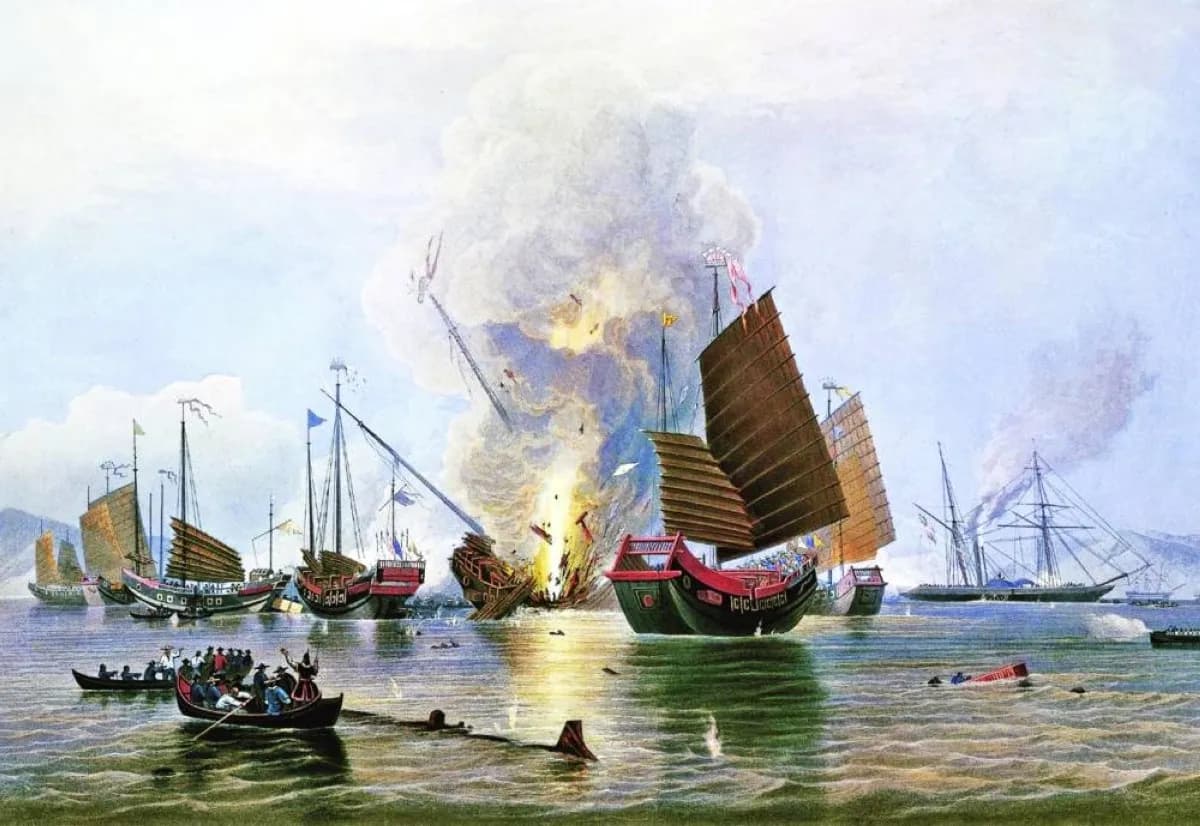
- •The Trump administration has announced intentions to seize Venezuelan oil, shifting to a 19th-century imperialist-style resource acquisition strategy.
- •In response to China's rare earth monopoly, the United States has codified Western Hemisphere resource control in its national security strategy as 'Monroe Doctrine 2.0.'
- •As the post-war international order collapses, an era of naked sphere-of-influence competition over resources among great powers is arriving.
The Dawn of a Neo-Imperial Era
When U.S. President Donald Trump declared his intention to "manage" Venezuela and place millions of barrels of oil revenue under his control, it was no mere rhetoric. The series of military operations, including the abduction of Venezuelan President Nicolás Maduro, symbolizes the world's entry into a new geopolitical era.
However, this represents less a leap forward than a return to the past. For centuries, the world lived in an era of spheres of influence where competition over resources—from spices to gold, rubber, and oil—created colonies and drew borders.
The Collapse of the Post-War International Order
International law and global trade rules only began to exert meaningful influence after World War II. Yet this system is collapsing, with a reversion to the imperial era when resources anywhere were subject to exploitation.
Daniel Yergin, energy historian and vice chairman at S&P Global, observed: "Suddenly the echoes of the 19th century and the pre-world war era are resonating much more loudly. We're moving away from faith in globalization, open borders, and relatively free trade."
The era of firm belief in efficient market operation has ended, giving way to an age of far more explicit government intervention.
China's Model Triggers U.S. Strategic Shift
Two fundamental transformations are underway in U.S. foreign policy.
First, a response to Chinese state capitalism. China has built a near-complete monopoly on rare earth minerals essential for semiconductors and defense industries, while also controlling minerals like cobalt and nickel crucial for energy transition.
In response, Trump is extending U.S. industrial policy overseas to run the domestic economy, support defense industries, and ensure access to the energy and minerals needed to underpin artificial intelligence (AI).
Washington's gradual recognition of China's pursuit of strategic minerals reached a major turning point last April. When Beijing imposed rare earth export restrictions in retaliation for Trump's "Liberation Day" tariffs, it delivered what Yergin called a "real electric shock."
He explained: "The old mindset of what I call 'easy globalization' is gradually disappearing. Nations and governments, including the United States, are focusing more on resilience, vulnerabilities, and control."
Second, a reaffirmation of the 1823 Monroe Doctrine. Trump has revived the Monroe Doctrine, which warned Europe against intervening in Latin America—America's "backyard." Now jokingly called the "Donroe Doctrine," this principle is acquiring new meaning.
America's New Doctrine Expanding Resource Dominance
The 2025 U.S. National Security Strategy added a "Trump corollary" to the Monroe Doctrine, linking American influence in the Western Hemisphere to natural resource control.
The strategy document stipulates that the Western Hemisphere "must be free from any hostile foreign penetration or ownership of major assets." Citing Alexander Hamilton, the first U.S. Treasury Secretary and major advocate of protectionism, the document adds:
"The United States must never depend on any external power to provide critical components necessary for national defense or the economy—from raw materials to parts to finished products."
From Greenland to Venezuela
Considering recent statements by Trump and his advisors, the concept of the Western Hemisphere is expanding. Trump has threatened to seize Greenland, the vast Arctic territory controlled by Denmark, by force if necessary.
Beyond strategic importance, as rising temperatures open Arctic sea routes, this autonomous region holds promising deposits of some minerals and rare earths that America needs.
Daniel Drezner, professor of international politics at Tufts University's Fletcher School, notes: "One of the norms maintained until Russia's 2014 annexation of Crimea was the impossibility of forcible territorial change."
U.S. Resource Diplomacy in Historical Context
American overseas intervention to secure resources is not a new phenomenon. Throughout the 20th century, the U.S. toppled regimes in Latin America for economic interests, creating the term "banana republic."
The 1953 Iranian coup was an operation opposing oil nationalization, and Middle East policy was closely linked to oil acquisition for decades. However, the international norms and multilateral systems established after World War II imposed at least minimal constraints on such actions.
The difference now is that the United States openly codifies these actions in national security strategy documents, with scant regard for international law or allied concerns.
Future Outlook [AI Analysis]
America's new resource doctrine is likely to bring three major changes to the global order.
First, resource nationalism will spread globally. If the United States openly violates sovereignty to secure resources, other major powers gain justification to adopt the same logic. China, Russia, and India will likely strengthen control over resources within their spheres of influence.
Second, defensive alliance formation among resource-holding nations will accelerate. Resource-holding countries in Latin America, Africa, and Southeast Asia will strengthen cooperation with China and Russia to build buffers against U.S. pressure. Paradoxically, this may facilitate the very "hostile power penetration" that America fears.
Third, global supply chain realignment will accelerate. Companies will more aggressively pursue "friend-shoring" and diversification strategies to reduce geopolitical risk. While this causes short-term cost increases, it can create more resilient supply chain structures long-term.
One thing is clear: the rules-based international order that the United States led in building after World War II is being seriously undermined, and the world is returning to an era of overt great power competition for spheres of influence.
댓글 (4)
기사 잘 봤습니다. 다른 시각의 분석도 읽어보고 싶네요.
좋은 의견이십니다.
in에 대해 더 알고 싶어졌습니다. 후속 기사 부탁드립니다.
흥미로운 주제입니다. 주변에도 공유해야겠어요.
More in Economy
당정, 석유 최고가격제 손실 보전을 추경에 반영키로

미·이란 긴장 한 달, 금융시장 요동…장기화 우려
뉴욕증시 3대 지수 동반 상승…이란 휴전 기대감

Elon Musk's X recruits a cryptocurrency expert as head of design... ‘X Money’ launch imminent

BitGo-GK Sync plans to build ‘tokenized deposit’ infrastructure for banks

The other side of prediction markets: Ethical dilemmas of cryptocurrency platforms dealing in war and terrorism
Latest News
"간부 잘 아는데 교통비 좀" 휴가 군인들 돈 뜯은 50대 구속
50대 A씨가 휴가 중인 군인들에게 부대 간부를 아는 척 접근해 돈을 사취

英 옥토퍼스, 이란 전쟁 이후 태양광 판매 50% 증가
이란 전쟁 이후 영국 옥토퍼스의 태양광 판매량 50% 증가
당정 "추경, 지방·취약계층에 더 지원되는 방식으로"
당정이 지방자치단체와 취약계층 중심의 추경 편성 방침 재확인

어머니 폭행하고 금팔찌 빼앗은 30대 아들 경찰에 붙잡혀
어머니 폭행 후 금팔찌 빼앗은 30대 남성 체포
아이티 갱단 폭력사태로 10개월간 5천명 이상 사망
아이티에서 지난 10개월간 갱단 폭력으로 5천명 이상 사망

서방 정보당국 "러시아, 우크라이나 전쟁 후 이란에 드론·식량 공급"
서방 정보당국, 러시아의 이란 드론·식량 공급 작업 거의 완료 파악

6년 전 세 살 딸 살해한 30대 친모 구속송치
경찰, 6년 전 세 살 딸 살해 혐의 30대 친모를 구속송치

中企 수입 나프타의 80% 이상이 중동산…공급망 위기 심화
중소기업 수입 나프타의 80% 이상이 중동산으로 공급 의존도 높음