U.S.-Japan Sign $40 Billion Small Nuclear Reactor Deal Amid Alliance Strain Over Iran Conflict
Trump criticizes Japan's refusal to deploy warships to Strait of Hormuz, references Pearl Harbor attack
- •At the Trump-Takaichi summit, a $40 billion small modular reactor construction contract was announced, but diplomatic tension was exposed due to Japan's refusal to deploy warships to the Strait of Hormuz.
- •Trump expressed dissatisfaction with Japan's non-cooperation by referencing the Pearl Harbor attack, revealing his transactional approach to allies.
- •South Korea is likely to face similar military cooperation pressure, requiring sophisticated diplomatic strategies encompassing both security and economic considerations.
Diplomatic Tension Hidden Behind Nuclear Cooperation
U.S. President Donald Trump and Japanese Prime Minister Sanae Takaichi held a summit at the White House on the 19th (local time) and announced a $40 billion (approximately 58 trillion won) small modular reactor (SMR) construction contract. The project, in which GE Vernova and Hitachi will build BWRX-300 reactors in Tennessee and Alabama, is part of Japan's $550 billion U.S. investment fund.
However, the atmosphere at the meeting was not as friendly as the economic cooperation achievements suggested. President Trump publicly expressed dissatisfaction with Japan's refusal to deploy warships to secure the Strait of Hormuz amid escalating tensions with Iran. During a press conference, when asked why he didn't warn allies before striking Iran, he embarrassed Prime Minister Takaichi by referencing the Pearl Harbor attack.
Security Rift Over the Strait of Hormuz Among U.S.-Japan-Korea
The Trump administration has requested military support from allies to protect the Strait of Hormuz as conflict with Iran intensifies. This strait is a strategic chokepoint through which approximately 21% of the world's oil shipments pass, and if Iran threatens to close it, it could have devastating effects on global energy markets.
Japan's refusal reflects both the constraints of its postwar pacifist constitution and a cautious approach to Middle East conflicts. While Prime Minister Takaichi emphasized reaffirming the alliance at the summit, Trump's public pressure revealed subtle cracks in U.S.-Japan relations.
South Korea is also likely to face similar pressure. The U.S. is expected to request South Korea's cooperation in securing the Strait of Hormuz, which would pose a significant dilemma for Korea's Middle East diplomacy and energy security strategy. Since Korea depends on the Middle East for a substantial portion of its crude oil imports, a Strait of Hormuz blockade could lead to direct economic damage.
U.S. Nuclear Renaissance and Alliance Strategy
This SMR contract aligns with the Trump administration's energy independence policy. Small modular reactors have shorter construction periods and higher safety than traditional large-scale reactors, making them a focal point for next-generation nuclear power. The U.S. is pushing to expand nuclear power capacity to meet surging electricity demand from artificial intelligence (AI) data centers and electric vehicle adoption.
Japan's massive investment is a strategic choice that strengthens the U.S.-Japan economic alliance while satisfying Trump's emphasized "America First" policy. The collaboration between Hitachi and GE is an extension of a long-term partnership dating back to 2007, and bilateral nuclear technology cooperation also holds significance in the broader geopolitical context of containing China.
Historical Context: The Duality of the U.S.-Japan Alliance
U.S.-Japan relations represent a unique case of transformation from adversaries to closest allies after World War II. Following the 1945 atomic bombings of Hiroshima and Nagasaki and the 1951 San Francisco Peace Treaty, the two countries established close cooperation in security and economic spheres.
However, Trump's Pearl Harbor reference was a moment that undermined this historical reconciliation. Japan's 1941 surprise attack on Pearl Harbor triggered U.S. entry into World War II and remains a sensitive historical symbol within the United States. Trump's connection of this to current diplomatic friction demonstrates his transactional approach to allies.
During Trump's first administration in 2018, he also sparked controversy by demanding a substantial increase in Japan's defense cost-sharing and stating, "If we're attacked, we protect Japan, but if Japan is attacked, we don't have to help."
Future Outlook [AI Analysis]
This incident suggests that the U.S.-centered alliance system may become more transactional and conditional under Trump's second administration. While Japan attempted to mitigate Trump's pressure through massive economic investment, the public rebuke over refusing military cooperation shows that economic contributions alone cannot offset security demands.
South Korea should learn lessons from this U.S.-Japan friction. The Trump administration is likely to demand expanded military roles from allies not only in the Strait of Hormuz but also in the Taiwan Strait, South China Sea, and other regions. If Korea faces pressure to fill regional security gaps alongside defense cost-sharing negotiations, it will need sophisticated diplomatic strategies considering constitutional constraints, domestic public opinion, and relations with China.
From an energy perspective, SMR technology cooperation could also present opportunities for Korea. As a nuclear power leader, Korea could explore entry into the global SMR market through trilateral cooperation with the U.S. and Japan, which could serve as a strategic option to use economic cooperation as a buffer against security pressure.
댓글 (3)
간결하면서도 핵심을 잘 정리한 기사네요.
기사 잘 봤습니다. 다른 시각의 분석도 읽어보고 싶네요.
공감합니다. 참고하겠습니다.
More in Global

Latest News
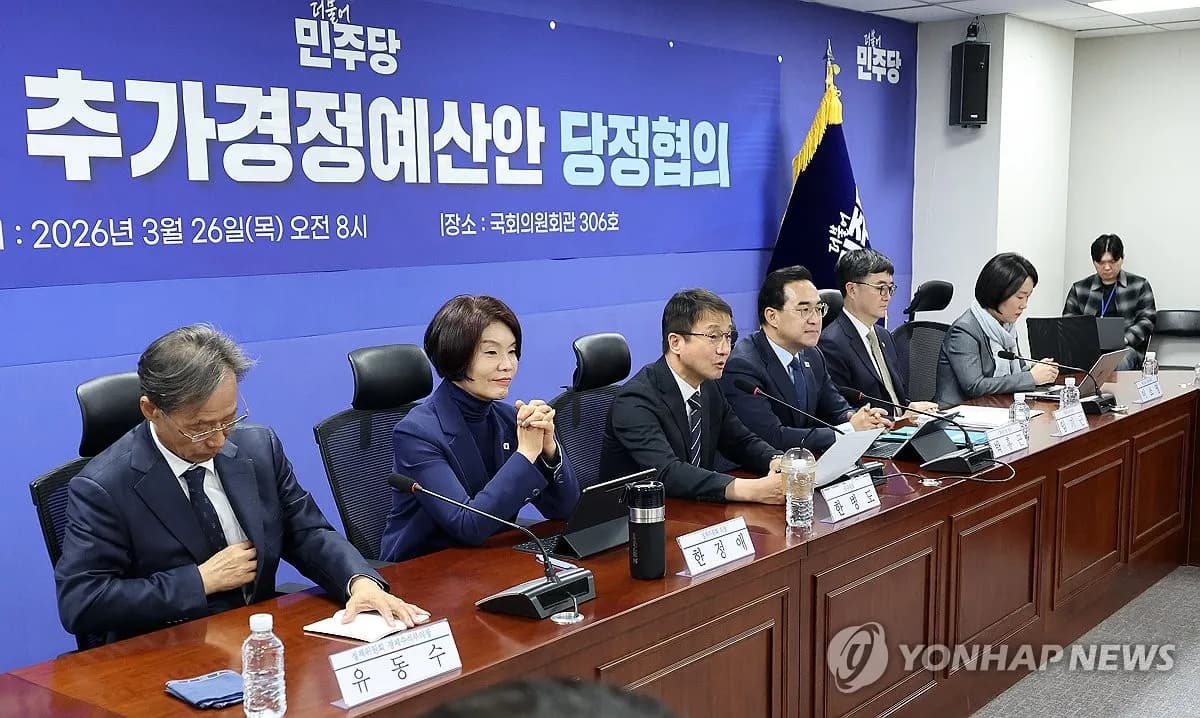
당정, 석유 최고가격제 손실 보전을 추경에 반영키로
당정이 석유 최고가격제 손실을 추경에 반영하기로 결정

6년 전 세 살 딸 살해한 30대 친모 구속송치
경찰, 6년 전 세 살 딸 살해 혐의 30대 친모를 구속송치

中企 수입 나프타의 80% 이상이 중동산…공급망 위기 심화
중소기업 수입 나프타의 80% 이상이 중동산으로 공급 의존도 높음

미·이란 긴장 한 달, 금융시장 요동…장기화 우려
미·이란 갈등으로 증시 변동성 확대, 코스피 6천 고지 후 등락

미·이란 전쟁 한 달, 미국 전문가 "종전·확전 기로"
미·이란 전쟁 1개월 도래, 종전·확전 기로 평가

미·이란 전쟁 1개월, 한국 안보·공급망 취약점 노출
미·이란 전쟁 장기화로 한국 안보·경제 취약점 노출