U.S. Senator Predicts AI Could Drive College Graduate Unemployment to 25% by 2028
Senator Mark Warner Calls for AI Companies to Bear 70-80% of Retraining Costs
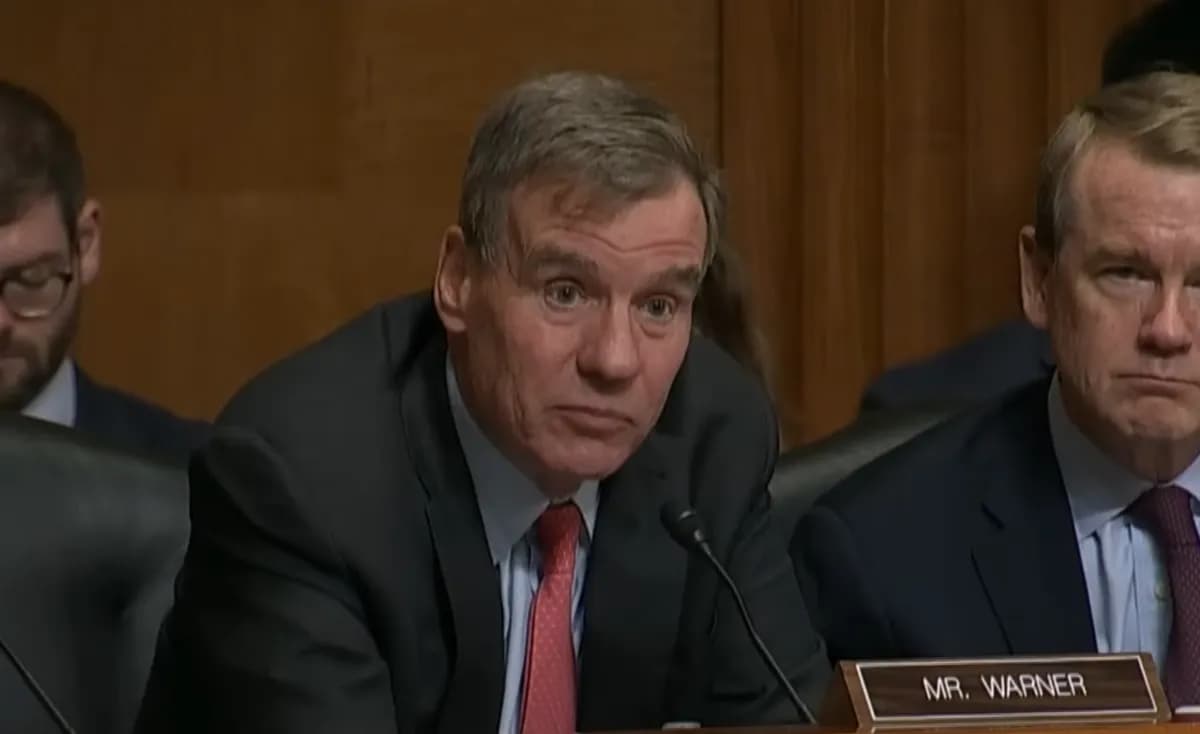
- •U.S. Senator Mark Warner warned that AI could cause college graduate unemployment to surge to 25% within 2-3 years.
- •Warner proposed that AI companies should bear 70-80% of retraining costs over five years, but diagnosed the likelihood of actual congressional legislation as low.
- •Current unemployment for U.S. college graduates aged 20-24 stands at 9.3%, up 1.9 percentage points from 7.4% two years ago.
AI's Coming Youth Unemployment Shock
U.S. Democratic Senator Mark Warner has warned that the rapid advancement of artificial intelligence (AI) technology could push unemployment among college graduates to as high as 25% within the next 2-3 years. In an interview with Bloomberg on the 18th, Warner stated, "By around 2028, this will be one of the most important issues," adding that it "will cause an unprecedented level of social disruption."
According to current U.S. Bureau of Labor Statistics (BLS) data, the unemployment rate for college graduates aged 20-24 stands at 9.3% as of August this year, up 1.9 percentage points from 7.4% two years ago. Senator Warner expects this trend to accelerate with the expanding adoption of AI.
Warner's Proposed Solution: AI Corporate Responsibility
Warner, a former telecom executive and recognized technology policy expert in the Senate, announced he is preparing a large-scale retraining program. The key proposal is that AI companies should bear 70-80% of retraining costs.
"Tech bros, think about how retraining should work, but pay for it over a five-year period," is his proposal. The logic is that companies profiting economically from AI adoption should also bear the social costs it creates.
This applies the 'beneficiary pays principle'—that those who benefit from technological advancement should also bear responsibility for its side effects—to the AI era. It reflects recognition that preemptive action is needed before frustration from families who paid for education and young people who lost jobs explodes into a political issue.
Congressional AI Regulation: All Talk, Zero Action
However, Senator Warner expressed skepticism about the likelihood of substantial AI regulatory legislation passing. "I see very little chance of actually getting a good bill," he noted, pointing out that "there's really no substantive progress at all right now."
Indeed, while the U.S. Congress has held multiple hearings on AI's labor market impact and put forward education and development-related proposals, it has failed to pass a single significant piece of legislation. Labor unions have repeatedly urged the establishment of rules to protect worker rights and adapt to technological change, but Congress has not acted.
This year, the Senate rejected a moratorium that would have blocked states from implementing AI-related consumer protection laws, and while some lawmakers argued for leading comprehensive AI regulatory legislation, this has not translated into concrete results.
In early November, Warner introduced legislation with Republican Senator Josh Hawley that would require companies and federal agencies to report quarterly on AI's job impact. However, even this bill's passage remains uncertain.
Data Center Power Crisis Poised to Become Midterm Election Issue
Along with AI unemployment, Warner predicted that surging data center power consumption will also become a major issue in the 2026 midterm elections. His home state of Virginia has the world's highest concentration of data centers.
He argued that hyperscalers like Amazon.com Inc. and Google parent Alphabet Inc. "should pay for their own power usage costs." The goal is to prevent the electricity cost burden from increased data centers from being passed on to ordinary households.
Warner's argument that "data center power costs should be separated from existing consumers" raises the fundamental question of who will bear the social costs of AI infrastructure expansion.
AI Job Impact by Sector Comparison
| Sector | AI Adoption Status | Expected Impact | Response Strategy |
|---|---|---|---|
| Big Tech | Expanding company-wide AI application | Accelerating automation of repetitive tasks | Partial introduction of retraining programs |
| Professional Services | Spreading AI assistant tools in legal/accounting | Reduction in entry-level work | Discussing job redefinition |
| Manufacturing | Smart factories combining robots and AI | Reduction in assembly line workforce | Government-led vocational training |
| Call Centers | Starting AI chatbot replacement | Projected large-scale workforce reduction | Inadequate transition training |
[AI Analysis] 2028: Job Crisis as Political Powder Keg
If Warner's 25% unemployment forecast materializes, it will likely become a political and social bomb beyond a mere economic indicator. If young people who graduated with student loan burdens cannot find jobs, distrust in the education system and overall economic structure could spread.
Considering the historical precedent of social unrest when youth unemployment exceeded 25% during the Great Depression of the 1930s, structural unemployment due to AI could become a powerful driver of populist politics. Warner's announcement that he will foreground this issue in his 2026 reelection campaign appears to take this political impact into account.
While the proposal for AI companies to share retraining costs is theoretically reasonable, the implementation mechanism is unclear. Details such as which companies will bear how much, whether retraining will actually lead to employment, and who will be responsible after five years remain ambiguous.
The more fundamental problem is Congress's lack of legislative will. With Warner himself acknowledging that "there's very little chance of actually getting a substantial bill passed," proposals alone cannot prevent the crisis coming in 2-3 years. Ultimately, there's no choice but to rely on voluntary market and corporate responses, but the likelihood of profit-maximizing companies voluntarily shouldering social responsibility is low.
The data center power issue is similar. Without legal means to force hyperscalers to bear their own power costs, electricity rate increases will likely be passed on to consumers. This could deepen inequality structures where AI benefits are enjoyed by a few while costs are shared by all.
2028 is also a U.S. presidential election year. If AI-driven youth unemployment and soaring electricity costs become reality, this will likely be a core issue that shakes up the electoral landscape. The problem is that without preparation starting now, it will already be too late when that time comes.
댓글 (6)
기사 잘 봤습니다. 다른 시각의 분석도 읽어보고 싶네요.
공감합니다. 참고하겠습니다.
간결하면서도 핵심을 잘 정리한 기사네요.
좋은 의견이십니다.
흥미로운 주제입니다. 주변에도 공유해야겠어요.
좋은 의견이십니다.
More in AI & Tech

영국 정치지도자들, 아동 성착취 혐의에 대한 긴급 조사 촉구

A humanoid robot performing in China has a child's face on it.

U.S. jury finds Meta and Google responsible for ‘social media addiction’… 3.7 billion won compensation ruling

Japanese X-ray Observatory makes first direct measurement of ultrafast 'cosmic wind' in galaxy M82

NASA selects 24 people for 2026 Astrophysics Postdoctoral Fellowships

Ethereum is at a crossroads to ‘redefine its identity’ ahead of the quantum computing and AI era
Latest News

"간부 잘 아는데 교통비 좀" 휴가 군인들 돈 뜯은 50대 구속
50대 A씨가 휴가 중인 군인들에게 부대 간부를 아는 척 접근해 돈을 사취

英 옥토퍼스, 이란 전쟁 이후 태양광 판매 50% 증가
이란 전쟁 이후 영국 옥토퍼스의 태양광 판매량 50% 증가
당정 "추경, 지방·취약계층에 더 지원되는 방식으로"
당정이 지방자치단체와 취약계층 중심의 추경 편성 방침 재확인
당정, 석유 최고가격제 손실 보전을 추경에 반영키로
당정이 석유 최고가격제 손실을 추경에 반영하기로 결정
어머니 폭행하고 금팔찌 빼앗은 30대 아들 경찰에 붙잡혀
어머니 폭행 후 금팔찌 빼앗은 30대 남성 체포

아이티 갱단 폭력사태로 10개월간 5천명 이상 사망
아이티에서 지난 10개월간 갱단 폭력으로 5천명 이상 사망

서방 정보당국 "러시아, 우크라이나 전쟁 후 이란에 드론·식량 공급"
서방 정보당국, 러시아의 이란 드론·식량 공급 작업 거의 완료 파악

6년 전 세 살 딸 살해한 30대 친모 구속송치
경찰, 6년 전 세 살 딸 살해 혐의 30대 친모를 구속송치