University of Virginia Examines AI's Impact on Democracy
Research Team Analyzes Social Media Algorithms and Information Dissemination Mechanisms
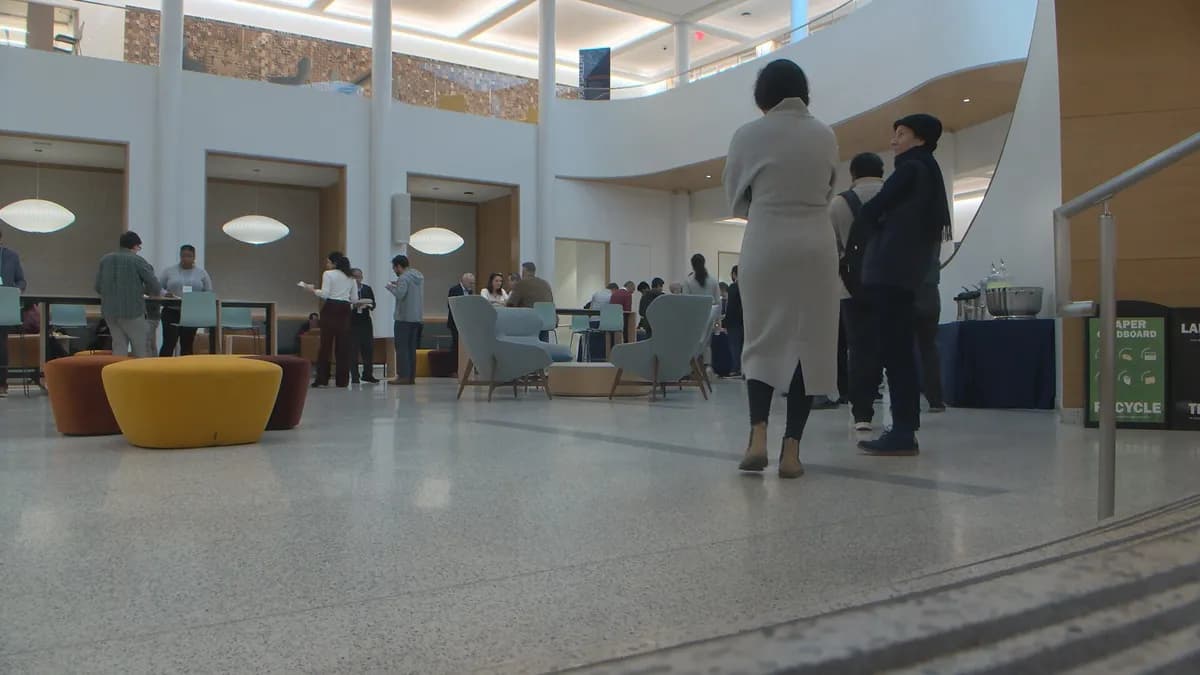
- •University of Virginia researchers held a research meeting analyzing how AI algorithms impact political discourse, misinformation spread, and social movements.
- •The research team noted that social media recommendation algorithms adjust user behavior, and the pace of technological change is outstripping society's deliberative capacity.
- •Through interdisciplinary collaboration, they are exploring algorithmic transparency and ways to protect democratic values, with plans for ongoing discussions.
AI Algorithms Reshaping the Democratic Ecosystem
Researchers at the University of Virginia (UVA) have convened a research meeting to analyze the impact of artificial intelligence (AI) on democratic systems. The discussion, held on January 9, examined from multiple angles how AI-based algorithms intervene in online information dissemination and public opinion formation.
Professor Steve Johnson of UVA's McIntire School of Commerce explained the research background, stating that "AI is having a tangible impact on the foundational elements of democracy." The research team is analyzing AI's role around three central axes: political discourse, misinformation spread, and social movements.
The Convergence of Social Contagion and Algorithms
The core of this research is the interaction between social contagion phenomena and AI algorithms. Researchers emphasized that what people see, share, and believe online is not merely individual choice but is structured by algorithmic design.
Professor Madhav Marathe, Distinguished Professor at UVA's Biocomplexity Institute, pointed out that "AI is no longer a buzzword. Democracy is at the center of this revolution," noting that the pace of technological change is outstripping society's adaptive capacity.
Professor Marathe explained how recommendation algorithms operate:
"Most of what you see is shaped by other people's responses. Algorithms leverage this to identify what people similar to you might like, and through this, they attempt to adjust your online behavior."
This means individuals' information consumption occurs within filter bubbles, where algorithms can shape public opinion by reinforcing or excluding certain perspectives.
Analyzing AI's Impact on Core Democratic Elements
The three areas UVA's research team is focusing on are:
1. Changes in Political Discourse
- How AI algorithms determine the visibility of political content
- Structural issues where extreme opinions gain higher engagement rates algorithmically
2. Misinformation Dissemination Mechanisms
- Recommendation systems that prioritize emotional responses over fact-checking
- Algorithmic characteristics where false information spreads faster than truth
3. Digital Organization of Social Movements
- Increased efficiency of grassroots movements using AI tools
- Simultaneous vulnerability to manipulated public opinion campaigns
Researchers warned that these phenomena are already progressing much faster in daily life than people realize.
The Pace of Technological Change and the Need for Social Deliberation
Professor Marathe emphasized that "the pace at which technology is advancing is somewhat uncomfortably fast for society" and "we need to think more carefully about this."
Currently, most social media platform algorithms operate privately. Users cannot know precisely by what criteria the content they see is selected, leading to issues of algorithmic transparency.
The UVA research team raises questions such as:
- In whose interest do algorithms operate?
- Which takes priority: improving the quality of public discourse or increasing user engagement?
- Can we pursue technological innovation while protecting democratic values?
Seeking Solutions Through Interdisciplinary Collaboration
Professor Johnson stated the goal of this discussion, saying "I hope people leave with new collaborative relationships and ideas" and "I want them to move forward with passion and excitement about these topics."
The research team believes that experts from various fields including business, computer science, political science, and sociology must collaborate to properly understand the relationship between AI and democracy. They particularly proposed the need for a structure where algorithm designers, policymakers, and civil society discuss together.
Researchers indicated they plan to continue similar discussions in the future but have not yet announced specific schedules.
[AI Analysis] New Challenges in Algorithm Governance
UVA's research demonstrates that AI technological advancement is going beyond mere convenience improvements to restructuring democratic decision-making structures themselves.
Demands for algorithmic transparency and explainability are leading to regulatory discussions such as the EU's AI Act and the U.S. Algorithmic Accountability Act. However, because the pace of technological change is faster than legislation, academic research and civil society monitoring are likely to become increasingly important.
A point to watch is approaches to democratizing algorithm design. Movements may emerge where users can partially adjust recommendation systems monopolized by platform companies, or where alternative algorithms for public purposes are developed. Additionally, enabling citizens to recognize and critically accept algorithmic influence through AI literacy education will become a core challenge in protecting democracy.
AI's impact on democracy is simultaneously a technical, political, and ethical issue. The UVA research team's interdisciplinary approach is evaluated as an important attempt to address this complex challenge.
댓글 (4)
간결하면서도 핵심을 잘 정리한 기사네요.
of에 대해 더 알고 싶어졌습니다. 후속 기사 부탁드립니다.
공감합니다. 참고하겠습니다.
Virginia 관련 기사 잘 읽었습니다. 유익한 정보네요.
More in AI & Tech

영국 정치지도자들, 아동 성착취 혐의에 대한 긴급 조사 촉구

A humanoid robot performing in China has a child's face on it.

U.S. jury finds Meta and Google responsible for ‘social media addiction’… 3.7 billion won compensation ruling

Japanese X-ray Observatory makes first direct measurement of ultrafast 'cosmic wind' in galaxy M82

NASA selects 24 people for 2026 Astrophysics Postdoctoral Fellowships

Ethereum is at a crossroads to ‘redefine its identity’ ahead of the quantum computing and AI era
Latest News

"간부 잘 아는데 교통비 좀" 휴가 군인들 돈 뜯은 50대 구속
50대 A씨가 휴가 중인 군인들에게 부대 간부를 아는 척 접근해 돈을 사취

英 옥토퍼스, 이란 전쟁 이후 태양광 판매 50% 증가
이란 전쟁 이후 영국 옥토퍼스의 태양광 판매량 50% 증가
당정 "추경, 지방·취약계층에 더 지원되는 방식으로"
당정이 지방자치단체와 취약계층 중심의 추경 편성 방침 재확인
당정, 석유 최고가격제 손실 보전을 추경에 반영키로
당정이 석유 최고가격제 손실을 추경에 반영하기로 결정

어머니 폭행하고 금팔찌 빼앗은 30대 아들 경찰에 붙잡혀
어머니 폭행 후 금팔찌 빼앗은 30대 남성 체포

아이티 갱단 폭력사태로 10개월간 5천명 이상 사망
아이티에서 지난 10개월간 갱단 폭력으로 5천명 이상 사망

서방 정보당국 "러시아, 우크라이나 전쟁 후 이란에 드론·식량 공급"
서방 정보당국, 러시아의 이란 드론·식량 공급 작업 거의 완료 파악

6년 전 세 살 딸 살해한 30대 친모 구속송치
경찰, 6년 전 세 살 딸 살해 혐의 30대 친모를 구속송치