US-China Rare Earth Hegemony Shifts as US-Australia Deal Triggers Seismic Change
Core Resource Security Strategy to Reduce China Dependency: Robotic Mining Technology Changes the Game

- •The United States and Australia formalized a rare earth supply agreement, launching a strategy to reduce China dependency in earnest.
- •Robotic mining technology has emerged as a key element reducing health risks in rare earth production while increasing economic viability.
- •South Korea gains opportunities to strengthen competitiveness in semiconductor and battery industries through securing a stable rare earth supply chain.
A Wild Card Thrown Into the Heart of Chinese Communist Party Strategic Meetings
On October 20, US President Donald Trump and Australian Prime Minister Anthony Albanese signed a rare earth and critical minerals supply agreement at the White House. This agreement goes beyond a simple resource transaction and carries significant geopolitical weight. It was announced precisely when the 19th Central Committee of the Chinese Communist Party's Fourth Plenum was taking place.
The Fourth Plenum is a critical meeting that determines President Xi Jinping's political future, where internal power struggles unfold intensely. Amid the confrontation between Xi Jinping's faction and party elders represented by General Zhang Youxia, China's strategy of using rare earth exports as a diplomatic bargaining chip has been shaken.
The Power and Limitations of the Rare Earth Card
Rare earths are essential minerals for advanced technology sectors including defense, communications, and electric vehicles. China accounts for over 70% of global rare earth production and has used this as leverage to pressure the United States and the West. However, the US-Australia agreement has the potential to significantly weaken China's influence.
Australia holds the world's largest lithium reserves but has lacked a stable commercial mining foundation. With this agreement, the combination of American technology and capital has established a development base. Particularly noteworthy is the utilization of robotic mining technology.
Robots Transforming the Future of Mining
Rare earth mining involves significant health risks. In one mining village in Inner Mongolia, China, reports indicate that miners' cancer rates are significantly higher than in other regions. These risks have made Western countries reluctant to produce rare earths, contributing to high dependence on China.
Australia is a world leader in automated mining technology. As the mineral export market, including iron ore, stagnates, robotic technology has become a key element in maintaining profitability. The technical capability to efficiently mine rare earths while minimizing human intervention is an important factor increasing the feasibility of this US-Australia agreement.
Strengthening AUKUS Alliance and Military Cooperation
Along with this agreement, President Trump reaffirmed the AUKUS alliance. The United States promised to deliver nuclear-powered attack submarines to Australia as planned. While it remains uncertain whether Australia can operate a nuclear submarine fleet long-term, the effect of demonstrating alliance solidarity is clear.
Washington is quietly expanding military support activities within Australia. Construction of bases for nuclear submarine maintenance, strategic bomber deployment, and other military force positioning is underway. Australia has also accelerated construction of forward military bases within the Asian region by signing agreements with the Philippines.
Impact on South Korea
South Korea is a country with high rare earth dependence in its semiconductor, battery, and display industries. As China's rare earth supply monopoly weakens, Korean companies gain opportunities to secure a more stable and diversified supply chain.
Particularly, stable supply of lithium, a core raw material for electric vehicles and secondary battery industries, is essential for maintaining Korean companies' competitiveness. As US-Australia cooperation materializes, South Korea may have opportunities to participate in the cooperation network, which carries important implications for resource security.
China's Response and Future Outlook [AI Analysis]
China is likely to strengthen rare earth export controls or accelerate technology development. However, it will take time for the US-Australia agreement to actually operate, and attention focuses on what strategies China will employ in the interim.
The speed of commercializing robotic mining technology, progress in Australian mine development, and the United States' sustained investment commitment will determine this agreement's success. While China's rare earth card remains effective in the short term, supply chain diversification appears increasingly likely to become reality in the medium to long term.
Technological capability is emerging as a new variable in the global resource hegemony competition.
댓글 (2)
댓글란이 과열되지 않았으면 합니다. 차분한 논의가 필요해요.
Rare 문제는 양쪽 입장을 모두 들어봐야 할 것 같습니다.
More in Global


Latest News
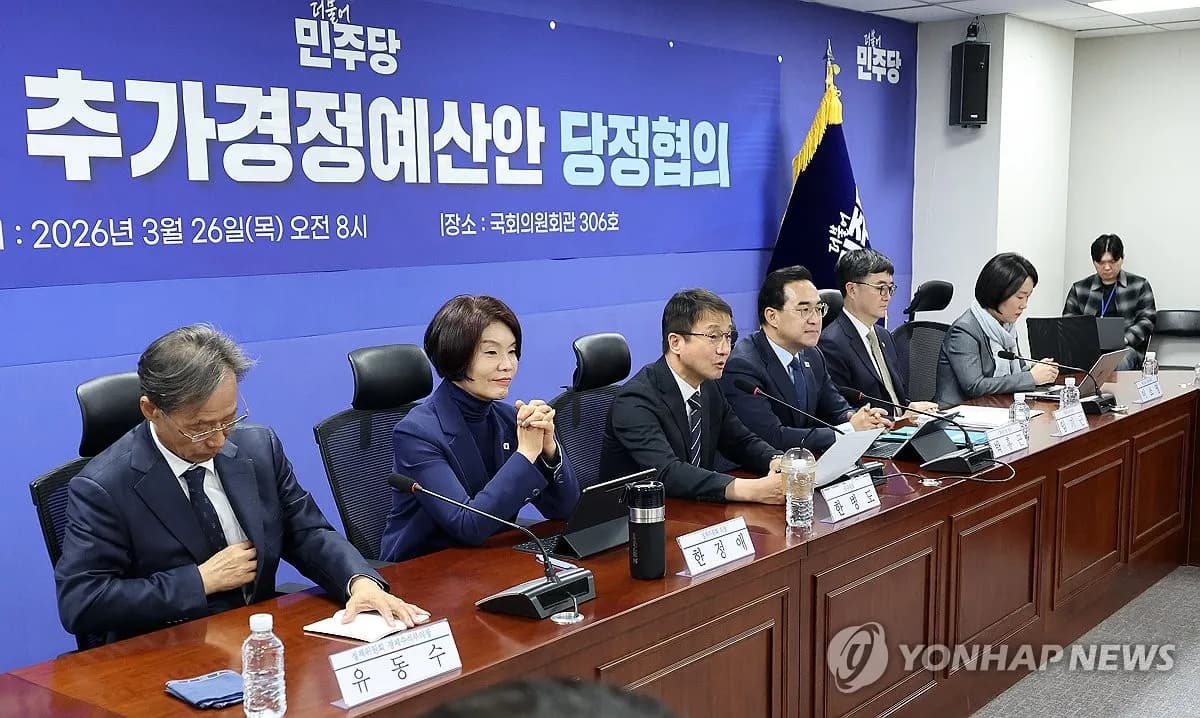
당정, 석유 최고가격제 손실 보전을 추경에 반영키로
당정이 석유 최고가격제 손실을 추경에 반영하기로 결정

6년 전 세 살 딸 살해한 30대 친모 구속송치
경찰, 6년 전 세 살 딸 살해 혐의 30대 친모를 구속송치

中企 수입 나프타의 80% 이상이 중동산…공급망 위기 심화
중소기업 수입 나프타의 80% 이상이 중동산으로 공급 의존도 높음

미·이란 긴장 한 달, 금융시장 요동…장기화 우려
미·이란 갈등으로 증시 변동성 확대, 코스피 6천 고지 후 등락

미·이란 전쟁 한 달, 미국 전문가 "종전·확전 기로"
미·이란 전쟁 1개월 도래, 종전·확전 기로 평가

미·이란 전쟁 1개월, 한국 안보·공급망 취약점 노출
미·이란 전쟁 장기화로 한국 안보·경제 취약점 노출