V&A East Rewrites British History Through Black Music
Opening exhibition 'The Music is Black' spanning 125 years, transforming archive into platform for cultural discourse
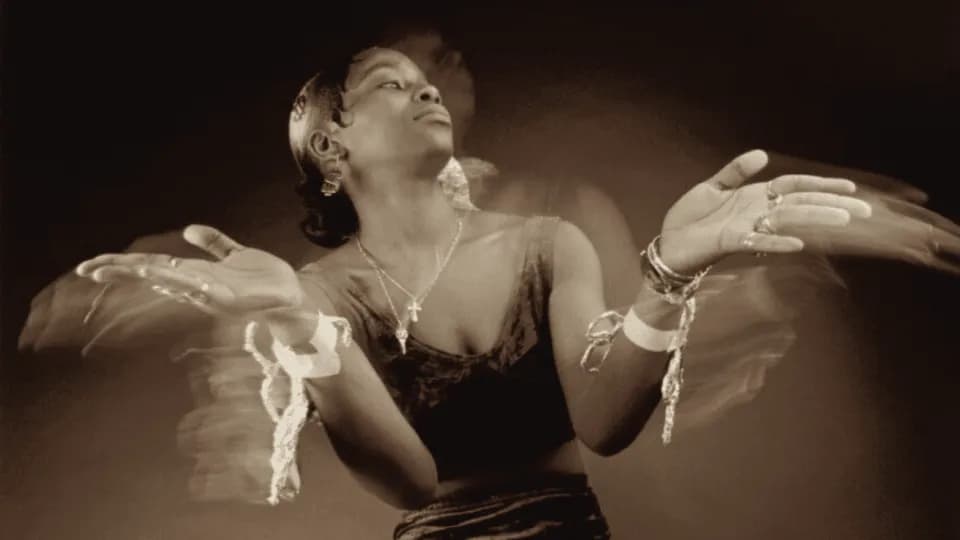
- •V&A East opened in London's Olympic Park with an open storage model and participatory curation approach.
- •The inaugural exhibition 'The Music is Black' reconstructs British contemporary history through 125 years of Black music.
- •With over 200 objects and newly commissioned works visualizing music, it attempts to restructure the museum's narrative framework itself.
V&A East Launches as a 'Platform,' Not Just a Museum
V&A East, newly opened in London's Queen Elizabeth Olympic Park, has taken a distinctive approach from the start. Unlike traditional museum architecture that projects authority, this institution emphasizes transparency and openness. The building itself was designed to dialogue with East London's long creative history, structured to break down barriers between visitors and collections.
Opened in 2025, V&A East comprises two buildings: the main museum and the Storehouse. The Storehouse is a facility that fully opens storage spaces typically closed to the public. Similar to Rotterdam's Depot Boijmans Van Beuningen, which revealed conservation processes through glass-enclosed storage, V&A East allows visitors to directly observe the preservation, restoration, and cataloging of collections.
This represents more than architectural openness. It's an institutional experiment that poses the question directly to visitors: whose history should be recorded, and how? The museum is no longer a place offering completed narratives, but a site where history is continuously reconstructed.
Choosing 'Black Music' as the Opening Exhibition
For its inaugural exhibition, V&A East presented 'The Music is Black: A British Story'. This choice was no accident. Positioning Black music as a central force driving British contemporary history, and making it the museum's opening statement, is a clear declaration of intent.
The exhibition unfolds over 125 years across four 'Acts.' The first act examines how African musical traditions were transformed under slavery and colonialism. Subsequently, it traces how genres like Lovers Rock, Brit Funk, Jungle, and Grime emerged within Britain's social and political landscape.
Black music is presented not merely as a cultural form but as a social language. Sounds created at the intersection of immigration, technology, and urban experience served as mediums of resistance, joy, and memory. The exhibition rejects linear progression, designed instead to allow resonances and overlaps between eras.
Over 200 Objects: Touching Music
The physical center of the exhibition consists of over 200 objects. These include Winifred Atwell's piano, Samuel Coleridge-Taylor's conductor's baton, Joan Armatrading's childhood guitar, and even the Super Nintendo that grime artist Jme used for early musical experiments.
Alongside fashion, photography, and personal collections, immersive sound and video installations are positioned throughout. The exhibition doesn't simply record the past but encompasses contemporary artistic responses through newly commissioned works. The curatorship values emotional immersion equally with historical context.
Exhibiting music in a museum where music cannot be heard is inherently paradoxical. However, this exhibition confronts that paradox head-on. It translates sound into visual and material language, encouraging visitors to 'touch' and 'see' music.
Who Writes History?
The true significance of this exhibition lies not in what was included but in whose voices were centered. By choosing Black music as its inaugural exhibition, V&A East attempted to restructure the narrative framework of British cultural history itself.
Traditionally, museums have served as instruments for constructing national identity. What to exhibit and what to leave in storage were political choices. V&A East inverts this structure. By opening storage facilities, centering Black music as the primary narrative, and presenting history as 'continually written' rather than 'completed,' it challenges established paradigms.
Future Prospects [AI Analysis]
V&A East's experiment is likely to become an important case study for the future of museum institutions. Within the broader European trend of major institutions adopting open storage and participatory curation, this venue has presented a model that simultaneously performs openness and political positioning.
The key question is whether V&A East can consistently elevate marginalized histories to central narratives, and whether this becomes an institutional identity rather than a one-off event. If museums can function as places that rewrite history rather than merely display it, that would constitute a fundamental redefinition of cultural institutions' role.
댓글 (3)
흥미로운 주제입니다. 주변에도 공유해야겠어요.
공감합니다. 참고하겠습니다.
기사 잘 봤습니다. 다른 시각의 분석도 읽어보고 싶네요.
More in Culture & Art

‘Crush’, ‘Tero’, ‘Jidae’… The languages of North and South Korea are becoming increasingly distant.
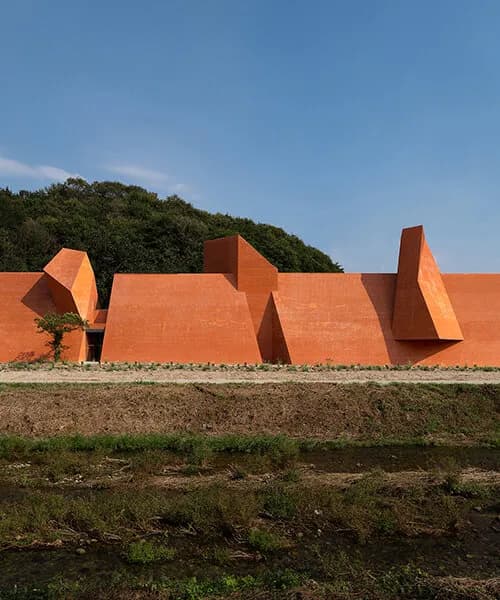
‘Fortress Café’ stands tall in the forests of Gangwon-do, reinterpreting ancient fortress walls through modern architecture.
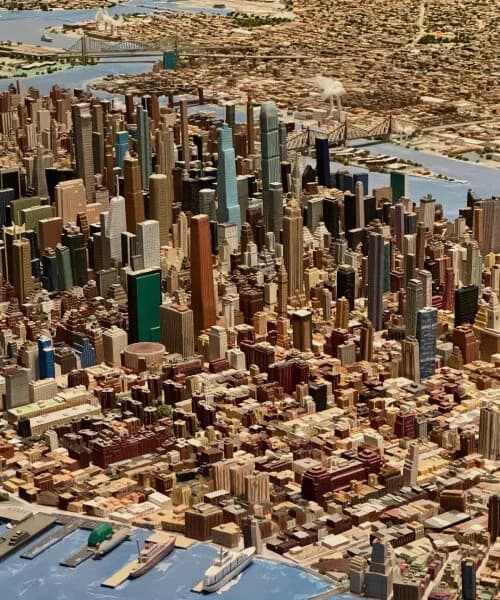
New York, hand-carved for 21 years, unveiled for the first time at an art museum
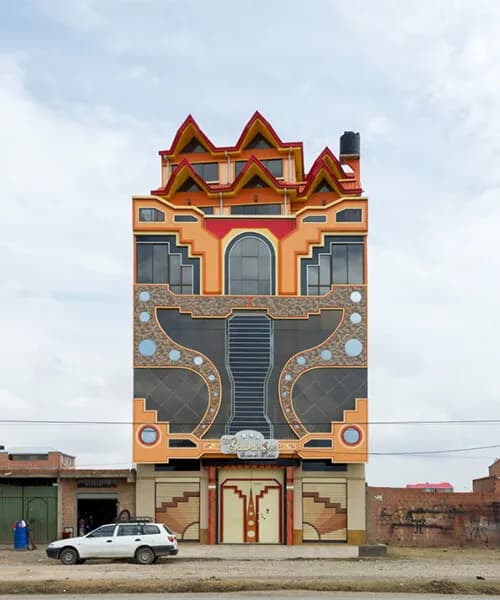
Freddie Mamani colors the city with Andean culture
An abandoned concrete pipe is reborn as a playground... Busan Museum of Art ‘Concrete Utopia’

A Swedish artist's house, the essence of architecture that becomes one with nature
Latest News

"간부 잘 아는데 교통비 좀" 휴가 군인들 돈 뜯은 50대 구속
50대 A씨가 휴가 중인 군인들에게 부대 간부를 아는 척 접근해 돈을 사취

英 옥토퍼스, 이란 전쟁 이후 태양광 판매 50% 증가
이란 전쟁 이후 영국 옥토퍼스의 태양광 판매량 50% 증가

당정 "추경, 지방·취약계층에 더 지원되는 방식으로"
당정이 지방자치단체와 취약계층 중심의 추경 편성 방침 재확인

당정, 석유 최고가격제 손실 보전을 추경에 반영키로
당정이 석유 최고가격제 손실을 추경에 반영하기로 결정

어머니 폭행하고 금팔찌 빼앗은 30대 아들 경찰에 붙잡혀
어머니 폭행 후 금팔찌 빼앗은 30대 남성 체포
아이티 갱단 폭력사태로 10개월간 5천명 이상 사망
아이티에서 지난 10개월간 갱단 폭력으로 5천명 이상 사망

서방 정보당국 "러시아, 우크라이나 전쟁 후 이란에 드론·식량 공급"
서방 정보당국, 러시아의 이란 드론·식량 공급 작업 거의 완료 파악

6년 전 세 살 딸 살해한 30대 친모 구속송치
경찰, 6년 전 세 살 딸 살해 혐의 30대 친모를 구속송치