Why Responsible AI Use Matters More Than Ever
OpenAI's updated guidelines intersect with a pivotal moment in global AI governance
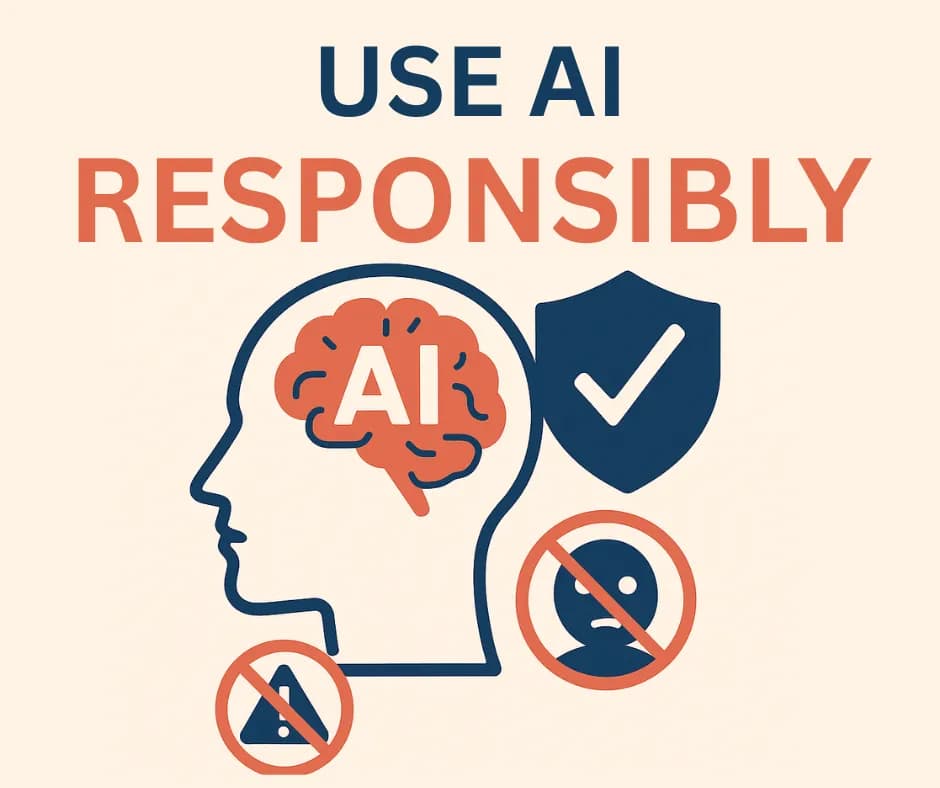
- •OpenAI refreshed its ChatGPT responsible-use guidelines around three pillars: safety, accuracy, and transparency.
- •As global AI regulations such as the EU AI Act take effect, the importance of private-sector voluntary standards is growing.
- •The AI literacy gap and unclear liability attribution remain the core obstacles to applying these principles in practice.
AI Is a Tool — But Not All Tools Are Equal
OpenAI has refreshed its official guidelines for the responsible use of artificial intelligence (AI) tools, including ChatGPT. Anchored by three pillars — safety, accuracy, and transparency — the framework goes beyond a simple user manual, effectively setting a minimum standard for the age of AI literacy. Its quiet release coincides precisely with a global surge in AI regulation debates.
Why It Matters — Filling the Governance Vacuum
The global AI governance landscape is in flux. The EU's AI Act began phased enforcement in 2025, but detailed rules for high-risk AI systems remain under development. The United States has no federal AI legislation, relying instead on executive orders and voluntary commitments. South Korea passed its AI Framework Act in 2025, yet subordinate regulations are still being drafted.
Against this regulatory backdrop, OpenAI's responsible use guidelines effectively serve as a de facto global standard. ChatGPT has surpassed 200 million monthly active users (MAUs), and its use across enterprise, education, healthcare, and legal sectors continues to accelerate. In practice, how OpenAI defines 'responsible use' becomes the behavioral benchmark for hundreds of millions of people.
The three core principles are:
- Safety: Be mindful of the usage context so that AI outputs do not harm individuals or society
- Accuracy: Do not accept AI-generated information at face value; always verify. Be aware of hallucination risks at all times
- Transparency: Disclose when content is AI-generated, especially in decision-making, media, and educational contexts
What Changed — The Evolution of AI Safety Discourse
| Period | Key Agenda | Representative Events/Documents |
|---|---|---|
| 2016–2019 | Algorithmic bias, fairness | Amazon hiring AI bias controversy, GDPR |
| 2020–2022 | Deepfakes, misinformation | GPT-3 release, US AI Bill of Rights draft |
| 2023 | Generative AI mainstreaming, copyright | ChatGPT explosion, EU AI Act draft |
| 2024 | Agentic AI, autonomous actions | GPT-4o, Gemini 1.5 multimodal race |
| 2025–2026 | Reasoning models, AI governance institutionalization | EU AI Act phased enforcement, national AI laws |
Early AI safety discourse focused primarily on bias and privacy. The center of gravity has now shifted to the reliability of generative AI outputs and their societal impact. OpenAI's updated guidelines reflect this turning point.
Historical Thread — The Trajectory of Responsible AI
The concept of 'Responsible AI' entered mainstream discourse around 2018. Google published its AI Principles that year; Microsoft released its Responsible AI framework. At this stage, AI ethics were largely internal guidelines with no external enforcement.
The inflection point came in November 2022 with ChatGPT's launch. As general users gained direct access to large language models (LLMs), AI safety discourse expanded from researchers and corporations to civil society as a whole.
In 2023, Italy temporarily blocked ChatGPT over privacy concerns; U.S. congressional hearings summoned AI company CEOs. Cases of hallucination-induced legal errors and AI-generated images threatening electoral integrity mounted. By 2025, the EU AI Act's prohibitions took effect, making conformity assessments mandatory for high-risk AI systems. OpenAI's latest guidelines update can also be read as proactive positioning ahead of this regulatory wave.
Barriers to Implementation — Between Principle and Practice
Experts note that while the guidelines' direction is positive, significant barriers exist in real-world application.
First, the literacy gap: the divide between users capable of verifying AI outputs and those who are not remains wide. In medical and legal settings, lay users accepting AI answers verbatim can cause serious harm.
Second, the practical difficulty of transparency disclosure: a culture of consistently labeling AI-generated documents has yet to take hold in corporate environments. Unchecked distribution of AI-generated content in media, marketing, and education continues.
Third, ambiguous liability attribution: when AI generates false information, existing law often fails to clearly assign responsibility between the developer, service provider, or end user.
[AI Analysis] What Comes Next
OpenAI's guideline refresh is likely best understood as part of a long-term structural shift, not a one-off event.
Regulatory linkage acceleration: As AI regulations concretize worldwide following the EU AI Act, voluntary corporate guidelines are likely to serve as baseline compliance evidence. OpenAI's documented principles may be strategic positioning for exactly this scenario.
Institutionalization of AI literacy education: The U.S., UK, and South Korea are actively working to embed AI literacy into formal curricula. OpenAI's guidelines are likely to be adopted as reference materials for these programs.
Competitive pressure for peers: Google DeepMind, Anthropic, and Meta are likely to strengthen their own responsible-use frameworks in response — potentially driving an industry-wide upward convergence of self-regulatory standards.
Rise of the trust economy: As functional competition among AI services approaches saturation, 'trustworthiness' and 'safety' are likely to become the new axes of market differentiation. How concretely a company embeds responsible AI principles may define the next competitive frontier.
In a world where AI is becoming social infrastructure faster than regulation can keep pace, voluntary responsibility frameworks from developers function not as stopgaps but as essential safety nets. The question is no longer whether the principles exist — but whether they actually work in the real world.
댓글 (111)
Why 관련 기사 잘 읽었습니다. 유익한 정보네요.
공감합니다. 참고하겠습니다.
Responsible에 대해 더 알고 싶어졌습니다. 후속 기사 부탁드립니다.
좋은 의견이십니다.
좋은 의견이십니다.
흥미로운 주제입니다. 주변에도 공유해야겠어요.
간결하면서도 핵심을 잘 정리한 기사네요.
공감합니다. 참고하겠습니다.
공감합니다. 참고하겠습니다.
기사 잘 봤습니다. 다른 시각의 분석도 읽어보고 싶네요.
그 부분은 저도 궁금했습니다.
그 부분은 저도 궁금했습니다.
그 부분은 저도 궁금했습니다.
Why 관련 기사 잘 읽었습니다. 유익한 정보네요.
그 부분은 저도 궁금했습니다.
좋은 의견이십니다.
공감합니다. 참고하겠습니다.
Responsible에 대해 더 알고 싶어졌습니다. 후속 기사 부탁드립니다.
그 부분은 저도 궁금했습니다.
공감합니다. 참고하겠습니다.
흥미로운 주제입니다. 주변에도 공유해야겠어요.
그 부분은 저도 궁금했습니다.
그 부분은 저도 궁금했습니다.
간결하면서도 핵심을 잘 정리한 기사네요.
좋은 의견이십니다.
그 부분은 저도 궁금했습니다.
그 부분은 저도 궁금했습니다.
기사 잘 봤습니다. 다른 시각의 분석도 읽어보고 싶네요.
공감합니다. 참고하겠습니다.
그 부분은 저도 궁금했습니다.
Why 관련 기사 잘 읽었습니다. 유익한 정보네요.
그 부분은 저도 궁금했습니다.
Responsible에 대해 더 알고 싶어졌습니다. 후속 기사 부탁드립니다.
흥미로운 주제입니다. 주변에도 공유해야겠어요.
간결하면서도 핵심을 잘 정리한 기사네요.
그 부분은 저도 궁금했습니다.
공감합니다. 참고하겠습니다.
좋은 의견이십니다.
기사 잘 봤습니다. 다른 시각의 분석도 읽어보고 싶네요.
좋은 의견이십니다.
Why 관련 기사 잘 읽었습니다. 유익한 정보네요.
그 부분은 저도 궁금했습니다.
Responsible에 대해 더 알고 싶어졌습니다. 후속 기사 부탁드립니다.
흥미로운 주제입니다. 주변에도 공유해야겠어요.
간결하면서도 핵심을 잘 정리한 기사네요.
그 부분은 저도 궁금했습니다.
기사 잘 봤습니다. 다른 시각의 분석도 읽어보고 싶네요.
그 부분은 저도 궁금했습니다.
그 부분은 저도 궁금했습니다.
Why 관련 기사 잘 읽었습니다. 유익한 정보네요.
그 부분은 저도 궁금했습니다.
Responsible에 대해 더 알고 싶어졌습니다. 후속 기사 부탁드립니다.
공감합니다. 참고하겠습니다.
흥미로운 주제입니다. 주변에도 공유해야겠어요.
공감합니다. 참고하겠습니다.
좋은 의견이십니다.
그 부분은 저도 궁금했습니다.
간결하면서도 핵심을 잘 정리한 기사네요.
기사 잘 봤습니다. 다른 시각의 분석도 읽어보고 싶네요.
그 부분은 저도 궁금했습니다.
공감합니다. 참고하겠습니다.
Why 관련 기사 잘 읽었습니다. 유익한 정보네요.
공감합니다. 참고하겠습니다.
공감합니다. 참고하겠습니다.
Responsible에 대해 더 알고 싶어졌습니다. 후속 기사 부탁드립니다.
좋은 의견이십니다.
그 부분은 저도 궁금했습니다.
흥미로운 주제입니다. 주변에도 공유해야겠어요.
좋은 의견이십니다.
좋은 의견이십니다.
간결하면서도 핵심을 잘 정리한 기사네요.
기사 잘 봤습니다. 다른 시각의 분석도 읽어보고 싶네요.
Why 관련 기사 잘 읽었습니다. 유익한 정보네요.
Responsible에 대해 더 알고 싶어졌습니다. 후속 기사 부탁드립니다.
공감합니다. 참고하겠습니다.
공감합니다. 참고하겠습니다.
좋은 의견이십니다.
흥미로운 주제입니다. 주변에도 공유해야겠어요.
공감합니다. 참고하겠습니다.
그 부분은 저도 궁금했습니다.
그 부분은 저도 궁금했습니다.
간결하면서도 핵심을 잘 정리한 기사네요.
그 부분은 저도 궁금했습니다.
공감합니다. 참고하겠습니다.
기사 잘 봤습니다. 다른 시각의 분석도 읽어보고 싶네요.
공감합니다. 참고하겠습니다.
좋은 의견이십니다.
공감합니다. 참고하겠습니다.
Why 관련 기사 잘 읽었습니다. 유익한 정보네요.
공감합니다. 참고하겠습니다.
공감합니다. 참고하겠습니다.
Responsible에 대해 더 알고 싶어졌습니다. 후속 기사 부탁드립니다.
공감합니다. 참고하겠습니다.
공감합니다. 참고하겠습니다.
흥미로운 주제입니다. 주변에도 공유해야겠어요.
좋은 의견이십니다.
간결하면서도 핵심을 잘 정리한 기사네요.
기사 잘 봤습니다. 다른 시각의 분석도 읽어보고 싶네요.
Why 관련 기사 잘 읽었습니다. 유익한 정보네요.
Responsible에 대해 더 알고 싶어졌습니다. 후속 기사 부탁드립니다.
흥미로운 주제입니다. 주변에도 공유해야겠어요.
간결하면서도 핵심을 잘 정리한 기사네요.
기사 잘 봤습니다. 다른 시각의 분석도 읽어보고 싶네요.
그 부분은 저도 궁금했습니다.
좋은 의견이십니다.
Why 관련 기사 잘 읽었습니다. 유익한 정보네요.
그 부분은 저도 궁금했습니다.
Responsible에 대해 더 알고 싶어졌습니다. 후속 기사 부탁드립니다.
공감합니다. 참고하겠습니다.
공감합니다. 참고하겠습니다.
좋은 의견이십니다.
More in this series
More in AI & Tech




Latest News

International Oil Prices Near $100 Threshold as Ceasefire Talks Collapse
Collapse of U.S.-Iran ceasefire talks triggers oil price surge, raising fears of $100 per barrel breach

Shooting at Chick-fil-A in Union Township, NJ: 1 Dead, 6 Injured
Shooting occurred inside a Chick-fil-A in Union Township, New Jersey

Rachel Zegler and Stars Grace Red Carpet at Olivier Awards
Rachel Zegler and stage stars attended the Olivier Awards red carpet

Two hospitalized after bus plunges down embankment in Scottish Highlands
A bus crashed down an embankment north of Aviemore in the Scottish Highlands

Stray Kids Earns RIAJ Platinum Certification for 'MANIAC' in Japan
Stray Kids' 'MANIAC' has surpassed 100 million streams in Japan.

US-Iran Nuclear Talks Collapse — Vance Says Iran Refused to Commit to Denuclearization
US-Iran nuclear talks collapse; Vance announces Iran refused to commit to giving up nuclear weapons

'Heart Signal 5' Drops Emotional Preview Ahead of April 14 Premiere
'Heart Signal 5' premieres April 14 on Channel A and streams on Viki.

Soriano Posts Historic ERA 0.33 Through Four Starts, First of Its Kind Since 1900
Soriano throws 7 scoreless innings with 10 strikeouts to improve to 4-0.