World's First: EV Charging Station Subsidies Paid in 'Deposit Tokens'
Government and BOK Push Blockchain-Based Treasury Disbursement Pilot Project… Goal to Convert Quarter of Treasury Funds to Digital Currency by 2030
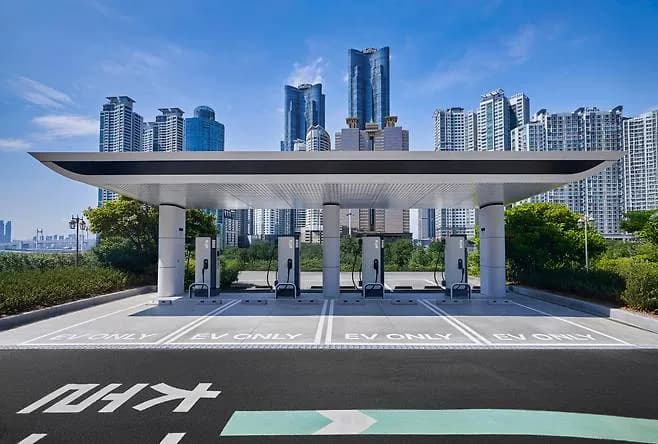
- •The government is pushing forward with the world's first pilot project to disburse 30 billion won in electric vehicle charging station subsidies using blockchain-based deposit tokens.
- •Deposit tokens can restrict usage location and time, fundamentally blocking fraudulent subsidy claims and shortening settlement periods.
- •The government aims to convert a quarter of treasury fund execution to digital currency by 2030.
World's First Attempt: Digital Currency for Government Subsidies
The government is launching the world's first pilot project to disburse electric vehicle charging facility construction subsidies using blockchain-based deposit tokens. Deputy Prime Minister and Minister of Economy and Finance Koo Yun-chul, Minister of Climate, Energy and Environment Kim Sung-hwan, and Bank of Korea Governor Rhee Chang-yong announced on the 19th that they will sign a memorandum of understanding (MOU) for a pilot project on treasury fund execution using digital currency at the Government Complex Seoul on the 24th.
This pilot project targets 30 billion won in subsidies for medium-speed charging facilities (maximum output 30-50kW) under the Ministry of Climate's electric vehicle charging facility construction program. The Korea Environment Corporation, the implementing agency, plans to begin recruiting project participants in May and disburse subsidies to selected operators in deposit tokens from June onward.
Deposit Tokens: 'Programmable Money' That Prevents Fraudulent Claims
Deposit tokens are digital payment instruments issued based on deposits held at banks. The Bank of Korea manufactures, issues, and distributes blockchain-based digital currency for financial institutions, which then issue linked deposit tokens. While similar to cash, the key feature is that usage conditions can be preset.
A Ministry of Economy and Finance official explained, "Deposit tokens are programmable tokens with pre-attached conditions, so payments are simply impossible outside the designated time and usage locations. This is a system that can prevent fraudulent use in advance."
In this pilot project, operators will be restricted to using deposit tokens only at charging equipment retailers and Korea Electric Power Corporation. This is expected to fundamentally block fraudulent subsidy claims and significantly shorten settlement periods.
Business Expense Cards Also Going Digital… Card Fee Savings Expected
The government is also preparing a second pilot project to convert operating expenses such as business promotion costs currently paid by credit card across various ministries to digital currency. A Ministry of Economy and Finance official stated, "With credit cards, inappropriate use can only be detected through post-audits, but deposit tokens can be given conditions on available stores and time periods."
Particularly for merchants such as restaurants receiving deposit tokens, the burden of card fees is expected to virtually disappear. The government plans to expand the system to enable payments at most existing terminals using NFC and QR code methods.
Converting Quarter of Treasury Funds to Digital Currency by 2030
The Bank of Korea verified the viability of digital currency and deposit tokens last year through real transaction tests involving the general public. This pilot project is the first case of applying those results to an actual government program. The World Bank is also known to have proposed cooperation on this project.
Deputy Prime Minister Koo Yun-chul stated, "This agreement will be the starting point for fiscal execution innovation using digital technology," adding, "We aim to convert a quarter of treasury fund execution to digital currency by 2030, and will actively identify digital currency utilization projects through consultations with relevant ministries and meetings with commercial banks."
This year, the government plans to support the installation of approximately 71,450 fast, medium-speed, and slow chargers with a total budget of 545.7 billion won. Medium-speed chargers are a newly established category this year, designed to be suitable for locations where people stay for 2-3 hours, such as large shopping malls or movie theaters.
댓글 (3)
기사 잘 봤습니다. 다른 시각의 분석도 읽어보고 싶네요.
First: 관련 기사 잘 읽었습니다. 유익한 정보네요.
그 부분은 저도 궁금했습니다.
More in Economy
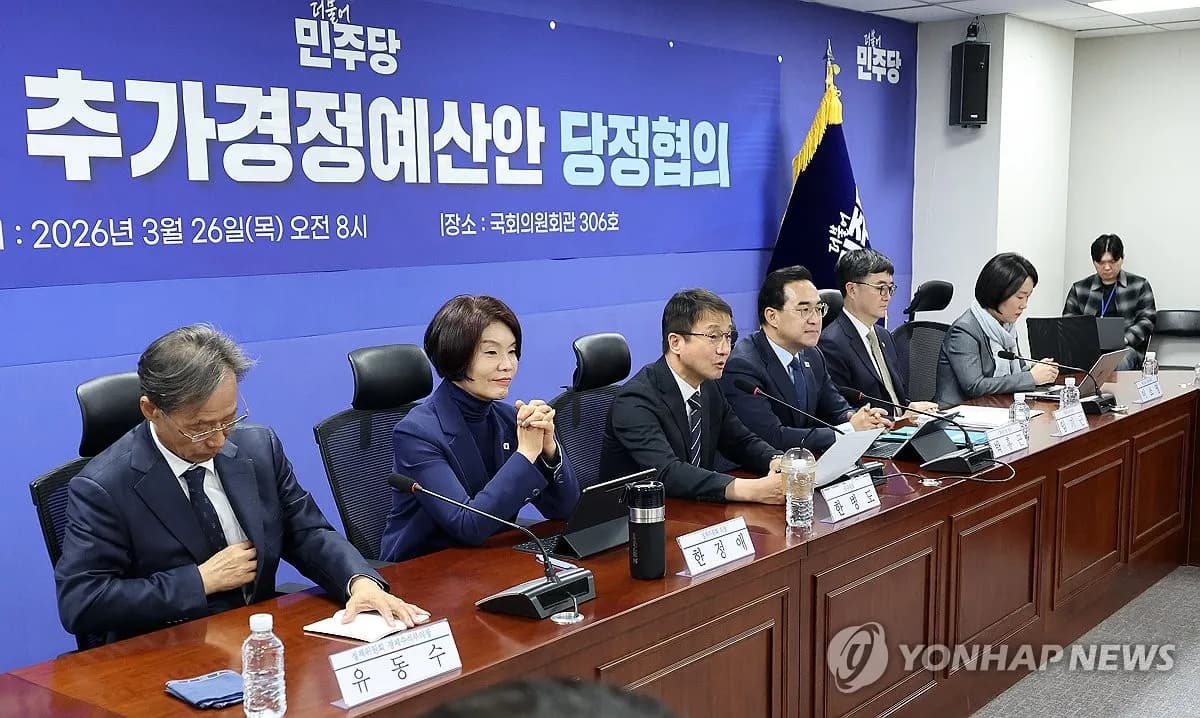
당정, 석유 최고가격제 손실 보전을 추경에 반영키로

미·이란 긴장 한 달, 금융시장 요동…장기화 우려
뉴욕증시 3대 지수 동반 상승…이란 휴전 기대감

Elon Musk's X recruits a cryptocurrency expert as head of design... ‘X Money’ launch imminent

BitGo-GK Sync plans to build ‘tokenized deposit’ infrastructure for banks
The other side of prediction markets: Ethical dilemmas of cryptocurrency platforms dealing in war and terrorism
Latest News
"간부 잘 아는데 교통비 좀" 휴가 군인들 돈 뜯은 50대 구속
50대 A씨가 휴가 중인 군인들에게 부대 간부를 아는 척 접근해 돈을 사취
英 옥토퍼스, 이란 전쟁 이후 태양광 판매 50% 증가
이란 전쟁 이후 영국 옥토퍼스의 태양광 판매량 50% 증가
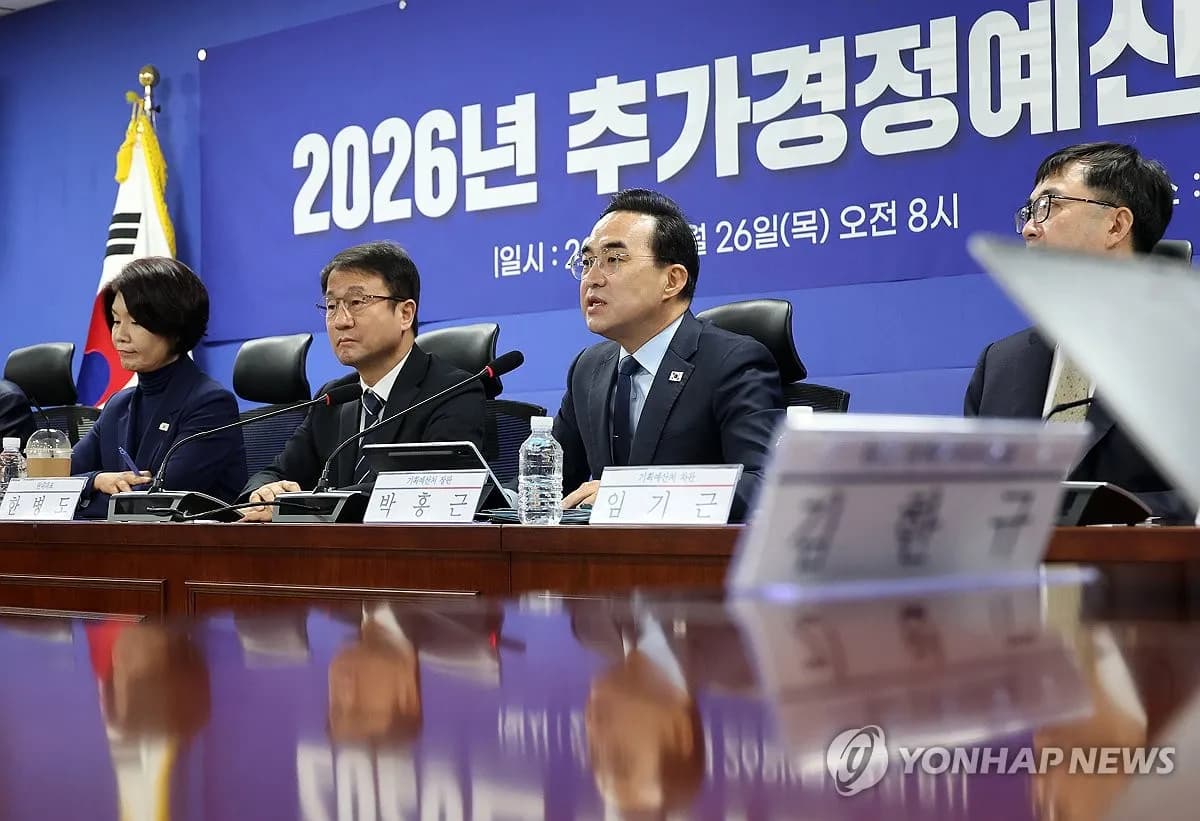
당정 "추경, 지방·취약계층에 더 지원되는 방식으로"
당정이 지방자치단체와 취약계층 중심의 추경 편성 방침 재확인
어머니 폭행하고 금팔찌 빼앗은 30대 아들 경찰에 붙잡혀
어머니 폭행 후 금팔찌 빼앗은 30대 남성 체포
아이티 갱단 폭력사태로 10개월간 5천명 이상 사망
아이티에서 지난 10개월간 갱단 폭력으로 5천명 이상 사망
서방 정보당국 "러시아, 우크라이나 전쟁 후 이란에 드론·식량 공급"
서방 정보당국, 러시아의 이란 드론·식량 공급 작업 거의 완료 파악

6년 전 세 살 딸 살해한 30대 친모 구속송치
경찰, 6년 전 세 살 딸 살해 혐의 30대 친모를 구속송치

中企 수입 나프타의 80% 이상이 중동산…공급망 위기 심화
중소기업 수입 나프타의 80% 이상이 중동산으로 공급 의존도 높음