US-Taiwan AI Military Cooperation Deepens, Dual-Use Technology Becomes New Investment Focus
From Drones to Satellites: How Taiwanese Companies Are Entering the US Defense Supply Chain
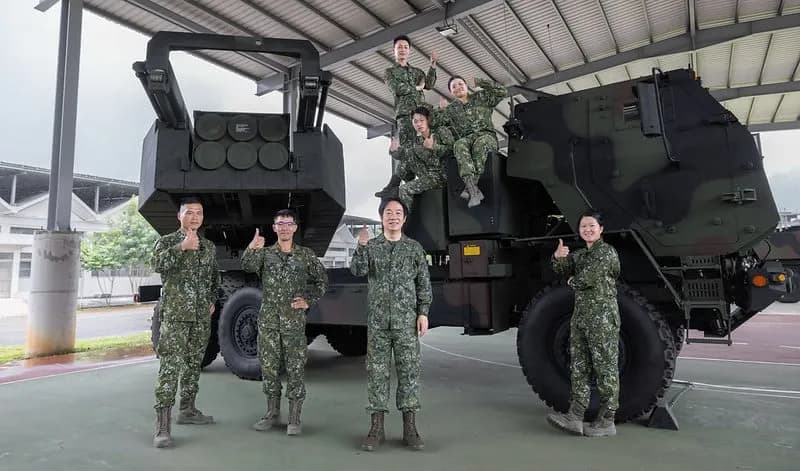
- •US-Taiwan AI and military cooperation deepening has elevated Taiwanese companies with dual-use technology as prominent investment targets.
- •Taiwanese companies in drones, servers, and satellite communications are playing key roles in the de-Sinicization transition of the US defense supply chain.
- •The 2026 US National Defense Authorization Act and large-scale procurement programs are expected to directly drive growth for related companies.
Dual-Use Technology Emerges as Investment Core
As AI and military cooperation between the United States and Taiwan intensifies, companies with 'dual-use' technology capabilities are gaining attention as investment targets. These companies are not only meeting the AI computing demand led by NVIDIA but also playing a crucial role in the 'de-Sinicization' transition of the US defense supply chain.
Taiwanese companies possess the capability to rapidly convert industrial robotics and autonomous vehicle technology into unmanned aerial vehicles (UAVs), unmanned surface vehicles (USVs), and automated defense systems. This technological flexibility aligns precisely with the supply chain restructuring strategy currently pursued by the US Department of Defense.
AI Edge Computing and Unmanned Systems Sector
AIDC (漢翔, 2634) has signed a cooperation agreement with US-based Shield AI to build a drone ecosystem. The company handles local assembly and maintenance, expanding its expertise from aircraft maintenance into the drone sector. With an order backlog exceeding 50 billion Taiwan dollars, AIDC expects drone-related orders to contribute approximately 13.58 billion Taiwan dollars in revenue by 2026.
Thunder Tiger (雷虎, 8033) is a beneficiary of Taiwan's Ministry of National Defense drone standardization program. Leading the development of commercial-off-the-shelf military drones, it forms the core of Taiwan's national drone team. The company is expected to play a significant role in the Ministry's 2026-2027 procurement program for 48,750 drones across five categories.
The company has obtained the US Department of Defense's 'Blue UAS' certification and is participating in the $1 billion total 'Drone Superiority Initiative'. In early 2026, it plans to expand its Chiayi factory to 7,000 ping through a 1.2 billion Taiwan dollar capital increase. The Ohio factory in the US is also targeting Q1 2026 operations, pursuing a 'Made in USA' strategy.
Coretronic (中光電, 5371) is researching AI image detection and guidance technology through subsidiaries, applicable to military drones and surveillance systems. In the procurement program for over 200,000 drones, its subsidiary 'Coretronic Smart Robotics' is active as a major contractor.
Getac (神基, 3005) manufactures rugged computers and is a major supplier of AI computing equipment used in military and extreme environments worldwide.
Core AI Computing Power and Server Infrastructure
The US Department of Defense relies heavily on AI for intelligence analysis and battlefield management, and Taiwan's supply chain handles over 90% of global server contract manufacturing.
TSMC (台積電, 2330) is the only company capable of mass-producing high-performance AI chips, supporting the core of all advanced defense systems in both the US and Taiwan.
Foxconn (鴻海, 2317) is collaborating with NVIDIA to build AI R&D centers and supercomputers, possessing global production and flexible supply capabilities for advanced AI servers.
Wiwynn (緯穎, 6669) and Quanta (廣達, 2382) provide large-scale data center architecture and are key partners in US and Taiwan defense cloud computing infrastructure.
Delta Electronics (台達電, 2308) provides high-efficiency power management and cooling solutions required for AI servers, playing a crucial role in military equipment stability.
Space and Low Earth Orbit Satellite Communications
In modern warfare such as the Ukraine-Russia conflict, the communication resilience provided by Low Earth Orbit (LEO) satellites is critical, and Taiwanese companies have already successfully entered SpaceX and related defense supply chains.
Tensor Tech (張量科技) specializes in satellite attitude control systems and is developing space-grade spherical motor technology, establishing itself as an emerging force in aerospace defense. The company's patented spherical motor technology can significantly reduce the volume and weight of satellite attitude control systems, expected to play a key role as Taiwan pursues its own LEO satellite constellation in 2026.
Auras Technology (奇鋐, 3017) provides cooling technology required for LEO satellite receivers, essential for AI computing and communications equipment. As a global leader in the cooling market, by 2026 it is not only a core partner of NVIDIA but has also entered the military computing cooling market.
SWIR Vision Systems (昇銳, 3128) specializes in AI video surveillance and recognition technology, applicable to battlefield environment awareness and border security. Transitioning from the security sector, the company deeply researches AI image recognition and military-grade surveillance systems, serving as a key component in the sensor sector of the 'de-Sinicization supply chain'.
Naval Vessels and Unmanned Surface Vehicles Sector
Lung Teh Shipbuilding (龍德造船, 6753) is a core company in the 'naval vessels and unmanned surface vehicles (USV)' sector. In 2026, delivery of five vessels from the second batch of Tuo Chiang-class ships will reach its peak, with revenue recognized according to completion rates. Additionally, as the Ministry of National Defense's '1,000 unmanned boats' initiative begins, Lung Teh is targeting a potential market worth 30 billion Taiwan dollars.
The company holds an order backlog exceeding 10 billion Taiwan dollars, with revenue visibility secured through the end of 2026. When the sixth factory becomes operational in Q1 2026, it is expected to contribute 3 billion Taiwan dollars in production value and acquire medium-to-large vessel contracting capabilities. The market forecasts 2025-2026 earnings per share (EPS) to challenge 4 Taiwan dollars or more.
Investment Observation Points
The key focus for investors should be 'de-Sinicization supply chain' certification status. Collaboration track records or MOU signings with US companies like AeroVironment, Anduril, and Shield AI serve as important criteria.
The 2026 US National Defense Authorization Act (NDAA) explicitly requires enhanced joint development in the drone sector between the US and Taiwan for the first time. This is expected to directly drive order momentum for related Taiwanese companies.
Future Outlook [AI Analysis]
The deepening US-Taiwan defense cooperation is likely to establish itself as a structural change rather than a short-term phenomenon. Particularly as US-China technological competition intensifies, Taiwanese dual-use technology companies are securing both geopolitical value and technological superiority simultaneously.
The unmanned systems market is expected to enter a full-scale growth phase starting in 2026. As Taiwan's Ministry of National Defense's large-scale procurement programs align with the US Department of Defense's de-Sinicization policy, the order backlogs of related companies are likely to remain stable for the next 2-3 years.
However, investors should carefully monitor production capacity achievement rates and gross profit margins, even when standardization program scales are large. AIDC may experience somewhat slower profitability in the short term due to R&D and conversion investments, while Thunder Tiger may face cost burden pressures after production capacity expansion.
The LEO satellite and space technology sector has the greatest long-term growth potential. If emerging technology leaders like Tensor Tech sign long-term contracts with the US military or global satellite operators in 2026, corporate valuations could surge dramatically.
Overall, this sector offers investment opportunities combining three elements: technological exclusivity, geopolitical necessity, and market scalability. However, close monitoring of defense budget review schedules and policy continuity is necessary.
댓글 (3)
US-Taiwan에 대해 더 알고 싶어졌습니다. 후속 기사 부탁드립니다.
AI 관련 기사 잘 읽었습니다. 유익한 정보네요.
좋은 의견이십니다.
More in Life

Beyond Vaccines: Refusal of Newborn Vitamin K Shots Spreads

NASA Restores Historic 80-Year-Old 'Hangar One' at Ames Research Center
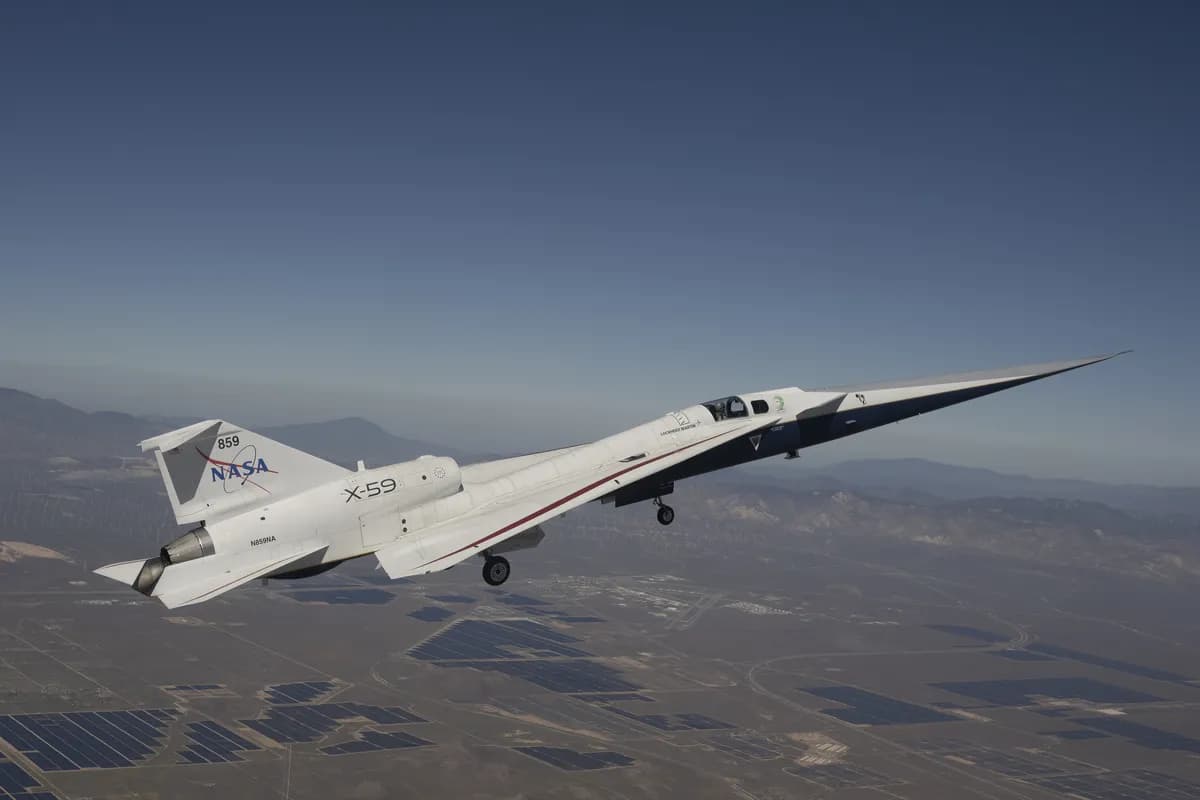
NASA X-59 Supersonic Experimental Aircraft Completes Second Test Flight Successfully
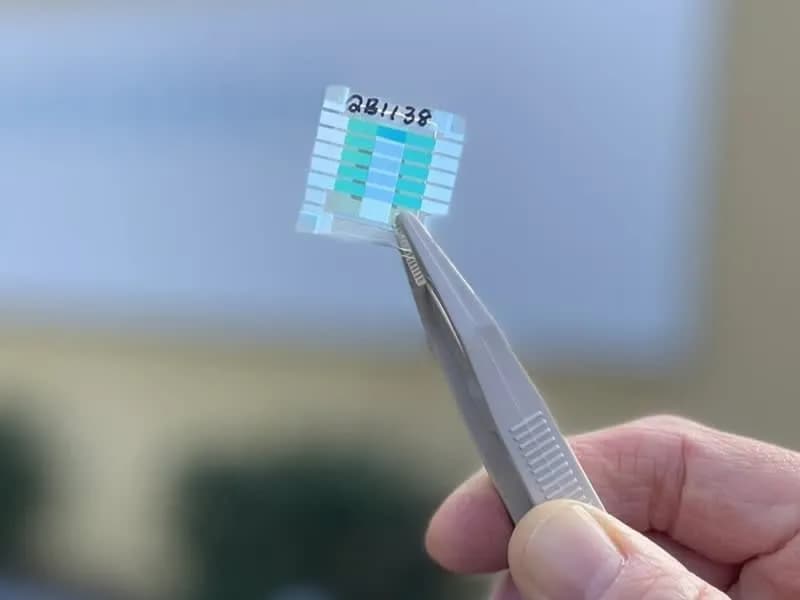
Australian Researchers Develop World's First Quantum Battery Prototype

The Ocean Was the True Driver of 3 Million Years of Climate Change

Heat Waves to Cause 700,000 Premature Deaths by 2050… Climate Crisis Undermines Exercise Habits
Latest News
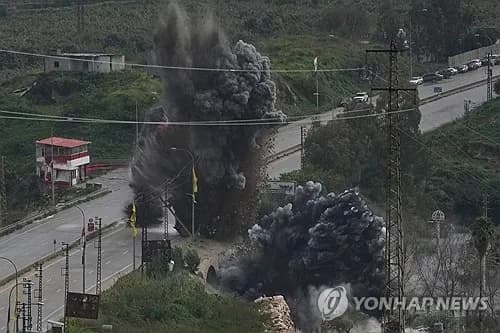
이스라엘, 헤즈볼라 무기 통로 레바논 다리 공습
이스라엘군, 헤즈볼라 무기 통로 레바논 다리 공습
중동행 전세기 전쟁보험료 최고 7천500만원
중동행 전세기 전쟁보험료가 최고 5만달러(7천500만원)로 상승

이란 탄도미사일, 이스라엘 방어망 뚫고 160명 부상
이란 탄도미사일이 이스라엘 방공망을 통과해 160명 부상

Middle East Conflict Drives Manufacturing Outlook to 10-Month Low
The Korea Institute for Industrial Economics & Trade survey shows April manufacturing outlook PSI plummeted to 88, falling below baseline for the first time in 10 months.

Lee Jae-myung Administration Excludes Multi-Home Officials from Real Estate Policymaking
President Lee Jae-myung has ordered the exclusion of multi-home owning public officials from all real estate policy processes.

Southeast Asia Growth Forecasts Cut Amid Oil Price Surge, Threatening Korean Exports
Maybank Research has downgraded ASEAN-6's 2026 growth forecast from 4.8% to 4.5%.

Volkswagen CEO Says Germany Should Learn from China's Industrial Strategy
Volkswagen CEO stated that Germany should learn from China's systematic industrial planning approach.

Reddit Considers Face ID to Block Bots While Maintaining Anonymity
Reddit is considering implementing biometric authentication systems such as Face ID and Touch ID to block AI bots while maintaining anonymity.