Russia Considers Retaliatory Measures Against Asset Freeze
Putin Government Prepares Legal and Economic Countermeasures in Response to Western Seizure of Russian Assets
- •The Russian government has announced it is actively considering retaliatory measures against Western asset freeze actions.
- •Since 2022, the West has frozen $300 billion in Russian central bank assets and is seeking to utilize them for Ukraine support.
- •This situation is triggering a restructuring of the dollar-centric financial order and accelerating non-Western countries' construction of alternative payment systems.
Russia Contemplates Retaliation Over Asset Freeze Controversy
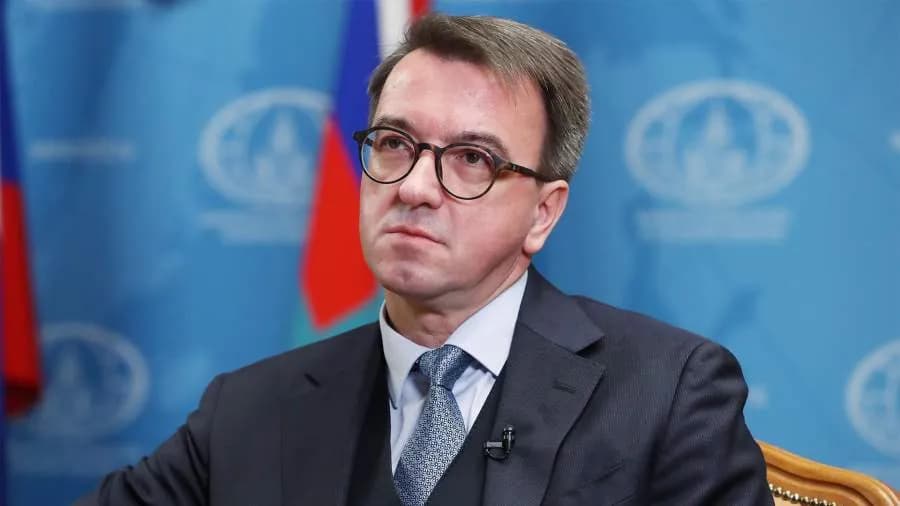
The Russian government is actively considering retaliatory measures against Western countries' freezing and seizure of Russian assets, according to Russian media outlet iz.ru. A Russian government official stated, "We will find ways to compensate for losses caused by illegal actions against Russian assets."
This statement is interpreted as a direct response to moves by the United States and European Union (EU) to freeze approximately $300 billion (about 400 trillion won) in Russian central bank assets since the Ukraine war and utilize them for Ukraine's reconstruction.
Western Seizure of Russian Assets Sparks International Law Controversy
Since Russia's invasion of Ukraine in 2022, Western countries have progressively intensified economic sanctions against Russia. The freezing of the Russian central bank's foreign-held assets is considered unprecedented in the history of financial sanctions.
Starting in 2023, plans to use interest income from frozen assets for Ukraine support were discussed, and at the 2024 G7 summit, a $50 billion loan backed by frozen assets was agreed upon. Some EU countries even proposed confiscating the entire assets, but this has not been implemented due to concerns about potential violations of international law and damage to financial system credibility.
Russia has strongly opposed these measures, defining them as "violations of international law" and "acts of robbery." In particular, Russia argues that asset freezing constitutes a violation of sovereignty and sets a dangerous precedent that shakes the foundation of the international financial system.
Historical Precedent of Asset Disputes [AI Analysis]
Asset freezing and retaliatory measures between nations are not a new phenomenon. During the 1979 Iranian Revolution, the United States froze Iranian central bank assets, and Iran responded by nationalizing American corporate assets. During the 2001 Argentine economic crisis, legal battles between creditors and the Argentine government over overseas assets continued for over 10 years.
However, the Russian case is fundamentally different from the past in terms of scale and impact. The freezing of $300 billion in central bank assets from the world's 11th largest economy has delivered an unprecedented shock to the international financial order. This has imprinted on the world the possibility of weaponizing the dollar-centric financial system, going beyond a simple bilateral dispute.
Particularly, countries holding large dollar assets such as China, India, and Middle Eastern oil-producing nations are closely monitoring this situation while accelerating the diversification of their foreign exchange reserves. According to International Monetary Fund (IMF) data, central banks' gold holdings have surged since 2022, and the proportion of yuan and euro has also been increasing.
Russia's Response Scenarios and Ramifications [AI Analysis]
Russia's potential retaliatory measures are expected to fall into three main categories.
First, nationalization or seizure of Western corporate assets. Russia has already sold or appropriated assets of withdrawing companies like McDonald's and Renault at bargain prices. There is a high possibility of applying the "Special Law on Unfriendly Countries' Assets" to a broader range of companies in the future.
Second, changes in energy export payment methods. Russia has already demanded that "unfriendly countries" pay for natural gas in rubles. This could be extended to oil exports in the future, or Russia could use the card of restricting energy supply to Western countries.
Third, international litigation and diplomatic pressure. Russia is expected to attempt to prove through the World Trade Organization (WTO) and International Court of Justice (ICJ) that Western measures violate international law. There is also a high possibility of pursuing strategies to neutralize Western financial sanctions by strengthening solidarity with non-Western countries such as China and India.
Signal of Global Financial Order Restructuring
This Russia-West asset dispute is interpreted as a signal heralding the end of the dollar hegemony era, going beyond a simple bilateral conflict. As the West uses the financial system as a political weapon, non-Western countries are accelerating the construction of alternative payment systems.
Mechanisms that bypass the dollar, such as China's yuan payment system (CIPS), Russia's SPFS, and India's rupee payments, are rapidly spreading. BRICS countries are discussing the introduction of payment systems based on their own currencies or digital currencies.
In the long term, the transition to a multipolar financial order is likely to accelerate. While the dollar will maintain its status as a reserve currency, it will become difficult to exercise the absolute dominance it once had. This could weaken the effectiveness of U.S. financial sanctions while causing fragmentation of the international financial system and increased transaction costs.
How Russia's specific retaliatory measures and the West's additional responses unfold will be key variables determining the global economic landscape going forward.
댓글 (5)
댓글란이 과열되지 않았으면 합니다. 차분한 논의가 필요해요.
균형 잡힌 시각이 필요하다는 데 동의합니다.
팩트에 기반한 냉정한 판단이 필요한 시점입니다.
중요한 포인트를 짚으셨네요.
이 사안은 신중하게 접근해야 한다고 봅니다.
More in Special
The Corsican Mafia Exposed: Breaking a Century of Silence

AI-Generated Fake Person Used to Sell Dubai Flight Seats

Facebook Groups Traded Endangered Species Using Code Language — Indonesian Broker Network Exposed
G6 Alliance Declares Support for Hormuz Strait Security... Reverses Stance Under Trump Pressure
Seoul's Average Monthly Rent Surpasses 1.51 Million Won as Soaring Official Property Prices Trigger 'Housing Cost Bomb'

Rihanna Tops Spotify Without New Album for 10 Years, Proving Power of Catalog
Latest News
이스라엘, 헤즈볼라 무기 통로 레바논 다리 공습
이스라엘군, 헤즈볼라 무기 통로 레바논 다리 공습
중동행 전세기 전쟁보험료 최고 7천500만원
중동행 전세기 전쟁보험료가 최고 5만달러(7천500만원)로 상승
이란 탄도미사일, 이스라엘 방어망 뚫고 160명 부상
이란 탄도미사일이 이스라엘 방공망을 통과해 160명 부상

Middle East Conflict Drives Manufacturing Outlook to 10-Month Low
The Korea Institute for Industrial Economics & Trade survey shows April manufacturing outlook PSI plummeted to 88, falling below baseline for the first time in 10 months.

Lee Jae-myung Administration Excludes Multi-Home Officials from Real Estate Policymaking
President Lee Jae-myung has ordered the exclusion of multi-home owning public officials from all real estate policy processes.

Southeast Asia Growth Forecasts Cut Amid Oil Price Surge, Threatening Korean Exports
Maybank Research has downgraded ASEAN-6's 2026 growth forecast from 4.8% to 4.5%.

Volkswagen CEO Says Germany Should Learn from China's Industrial Strategy
Volkswagen CEO stated that Germany should learn from China's systematic industrial planning approach.

Reddit Considers Face ID to Block Bots While Maintaining Anonymity
Reddit is considering implementing biometric authentication systems such as Face ID and Touch ID to block AI bots while maintaining anonymity.