Charlie Kirk Assassination in the U.S.: The Vicious Cycle of Political Hatred and Violence
Deepening Polarization Feared After Far-Right Activist Shot Dead; Trump Raises 'Radical Left Responsibility' Theory
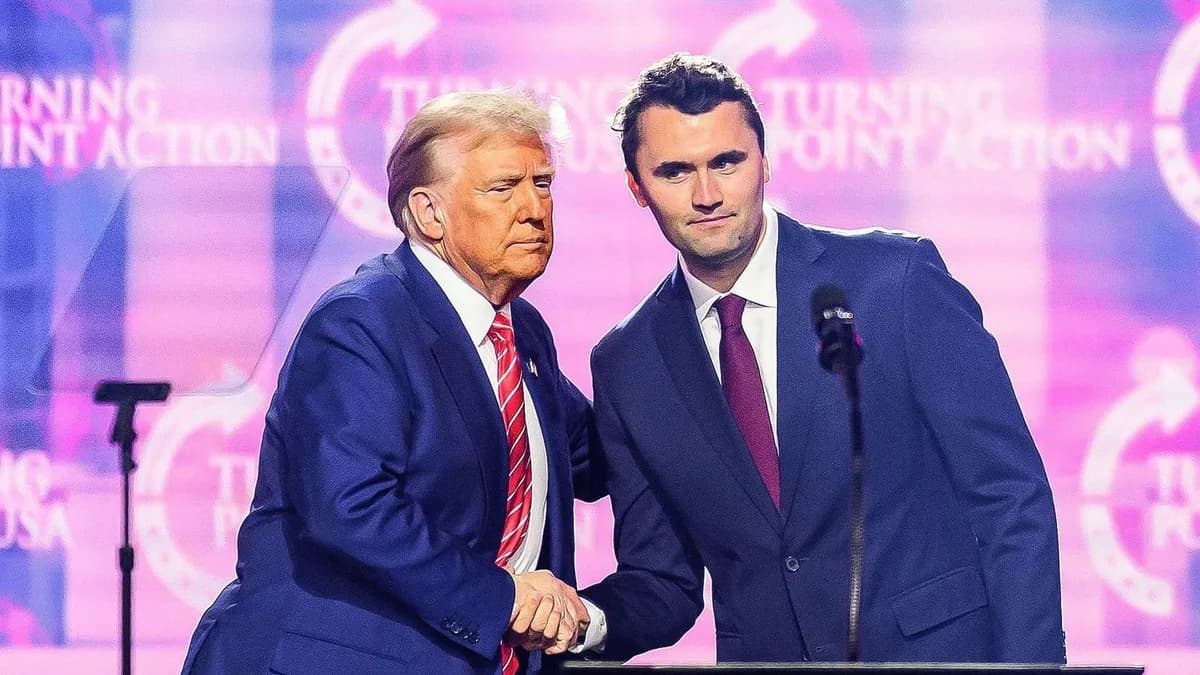
- •Far-right activist Charlie Kirk was shot and killed during a university lecture, as America's political polarization manifests as extreme violence.
- •President Trump blamed the 'radical left,' while social media saw the spread of messages suggesting hatred and retaliation.
- •Historically, political assassinations have caused social division, and without dialogue and compromise, the cycle of violence is likely to continue.
Mid-Speech Shooting: An Assassination That Shook America
On September 12 (local time), far-right activist Charlie Kirk was shot and killed during a speech at Utah Valley University. The scene erupted in panic as audience members dove to the floor or fled in chaos. The suspect escaped from the scene, and police launched a public manhunt.
President Donald Trump issued a statement expressing condolences: "He was loved and respected by all, especially by me. Now he is gone from us." Simultaneously, he claimed that 'radical left' rhetoric had fueled this 'terrorism' and emphasized that "this must stop immediately."
The Vicious Cycle of Hatred and Violence Explodes on Social Media
This incident raises concerns that it could become a turning point where America's political polarization manifests as extreme violence, going beyond a simple crime. Immediately after the incident, conflicting reactions clashed violently on social media.
Some progressive users posted messages 'justifying' or mocking Kirk's death based on his political positions. Conversely, in conservative circles, accepting Trump's statement, messages hinting at retaliation spread with claims that "Charlie Kirk is a victim of the political war happening in this country." Comments featuring expressions like "fight or die" appeared, as the logic justifying violence rapidly spread.
The Shadow of Political Assassinations in American History
America has previously experienced social division due to political assassinations. The 1865 assassination of President Abraham Lincoln caused extreme political chaos during the Reconstruction Era following the Civil War. In 1968, civil rights leader Martin Luther King Jr. and presidential candidate Robert F. Kennedy were assassinated in succession, plunging American society into deep trauma.
More recently, in the 2011 Arizona shooting, Congresswoman Gabrielle Giffords was seriously wounded, and in 2017, Republican congressmen were shot during baseball practice. The 2022 attack on House Speaker Nancy Pelosi's husband at their home was also suspected to have political motivations. These incidents demonstrate not mere individual aberrations, but a pattern where structural political hatred leads to violence.
Deepening Polarization: America's 'Cold War' State in the 2020s
Since President Trump's 2016 election, American politics has rapidly polarized. The 2020 election dispute and the 2021 Capitol attack shook the very foundation of democracy. During the 2024 presidential campaign, Trump survived two assassination attempts, heightening concerns about political violence.
American society currently exists in a state of 'hostile coexistence.' Republican and Democratic supporters increasingly view each other not as mere political competitors but as 'enemies of the state.' According to Pew Research Center polls, over 70% of both parties' supporters responded that the opposing camp is 'harmful to America.'
'Filter Bubbles' and the Ecosystem of Hatred Created by Social Media
Social media is a key factor accelerating this polarization. Algorithms provide content tailored to users' preferences, intensifying the 'filter bubble' phenomenon. As extreme opinions are amplified and opposing views are blocked, people become more convinced of their own beliefs.
Particularly on platforms like X (formerly Twitter), Truth Social, and Parler, unverified information and extreme rhetoric spread without restraint. Even after the Charlie Kirk assassination, conspiracy theories like 'leftist terrorism' and 'far-right false flag operation' proliferated before facts were clearly established. This undermines social trust and strengthens the logic justifying violence.
America's Gun Culture and Easy Access
Easy access to firearms also plays a crucial role in translating political hatred into actual violence. Approximately 400 million guns circulate in the United States, and regulations on gun purchases remain lax in many states.
Gun advocacy groups, including the National Rifle Association (NRA), have opposed stricter regulations, claiming "guns are symbols of freedom." Conversely, gun control advocates point to firearm accessibility as the reason for repeated incidents like political assassinations and school shootings. This issue forms another axis of political confrontation, making it difficult to find a solution.
The Responsibility of Media and Politicians
German newspaper OTZ noted that "hatred is growing in America," focusing attention on political leaders' rhetoric. Just as Trump blamed the 'radical left,' politicians' inflammatory language instills hostility in their supporters.
The perpetrator of the 2019 El Paso shooting issued a statement before the attack mentioning "Hispanic invasion," similar to language Trump had used at the time. The media also faces criticism for fueling polarization with clickbait and extreme framing. By simplifying political issues into 'battles between good and evil,' they narrow the space for dialogue and compromise.
Response Examples from Other Democratic Countries
Other democratic nations have experienced threats of political violence, but some have developed effective countermeasures. Germany suppresses political extremism through strict monitoring of far-right and far-left groups and educational programs. New Zealand passed legislation banning semi-automatic rifles just 26 days after the 2019 Christchurch mosque shooting.
Norway, following the 2011 attack by far-right terrorist Anders Breivik, shifted toward emphasizing social dialogue and inclusion. These cases demonstrate that change is possible when there is political will and social consensus.
Future Outlook [AI Analysis]
The Charlie Kirk assassination suggests that political polarization in American society has reached a critical point. If political leaders do not use responsible language and extreme rhetoric on social media continues unchecked, additional violent incidents are highly likely.
Particularly as political tensions escalate ahead of the 2026 midterm elections, such incidents could trigger a vicious cycle of retaliatory violence. Some experts warn that America may be entering a period of turmoil similar to the late 1960s.
However, history also shows the possibility of change. After Lincoln's assassination, America achieved Reconstruction, and after King's assassination, civil rights laws were strengthened. Crises sometimes become opportunities for social reflection and institutional improvement.
The key to resolution lies in restoring dialogue and compromise. If political leaders act as mediators instead of agitators, if the media highlights common ground rather than polarization, and if citizens step out of filter bubbles to listen to opposing views, America can overcome this crisis. However, that path appears long and arduous.
댓글 (3)
Charlie 관련 기사 잘 읽었습니다. 유익한 정보네요.
공감합니다. 참고하겠습니다.
Kirk에 대해 더 알고 싶어졌습니다. 후속 기사 부탁드립니다.
More in Special

The Corsican Mafia Exposed: Breaking a Century of Silence

AI-Generated Fake Person Used to Sell Dubai Flight Seats

Facebook Groups Traded Endangered Species Using Code Language — Indonesian Broker Network Exposed

G6 Alliance Declares Support for Hormuz Strait Security... Reverses Stance Under Trump Pressure

Seoul's Average Monthly Rent Surpasses 1.51 Million Won as Soaring Official Property Prices Trigger 'Housing Cost Bomb'

Rihanna Tops Spotify Without New Album for 10 Years, Proving Power of Catalog
Latest News
이스라엘, 헤즈볼라 무기 통로 레바논 다리 공습
이스라엘군, 헤즈볼라 무기 통로 레바논 다리 공습
중동행 전세기 전쟁보험료 최고 7천500만원
중동행 전세기 전쟁보험료가 최고 5만달러(7천500만원)로 상승
이란 탄도미사일, 이스라엘 방어망 뚫고 160명 부상
이란 탄도미사일이 이스라엘 방공망을 통과해 160명 부상

Middle East Conflict Drives Manufacturing Outlook to 10-Month Low
The Korea Institute for Industrial Economics & Trade survey shows April manufacturing outlook PSI plummeted to 88, falling below baseline for the first time in 10 months.

Lee Jae-myung Administration Excludes Multi-Home Officials from Real Estate Policymaking
President Lee Jae-myung has ordered the exclusion of multi-home owning public officials from all real estate policy processes.

Southeast Asia Growth Forecasts Cut Amid Oil Price Surge, Threatening Korean Exports
Maybank Research has downgraded ASEAN-6's 2026 growth forecast from 4.8% to 4.5%.

Volkswagen CEO Says Germany Should Learn from China's Industrial Strategy
Volkswagen CEO stated that Germany should learn from China's systematic industrial planning approach.

Reddit Considers Face ID to Block Bots While Maintaining Anonymity
Reddit is considering implementing biometric authentication systems such as Face ID and Touch ID to block AI bots while maintaining anonymity.