The Female Photographer Who Created Bauhaus's Visual Identity
Lucia Moholy's photographs became symbols of modernist aesthetics, but why was she erased from history?
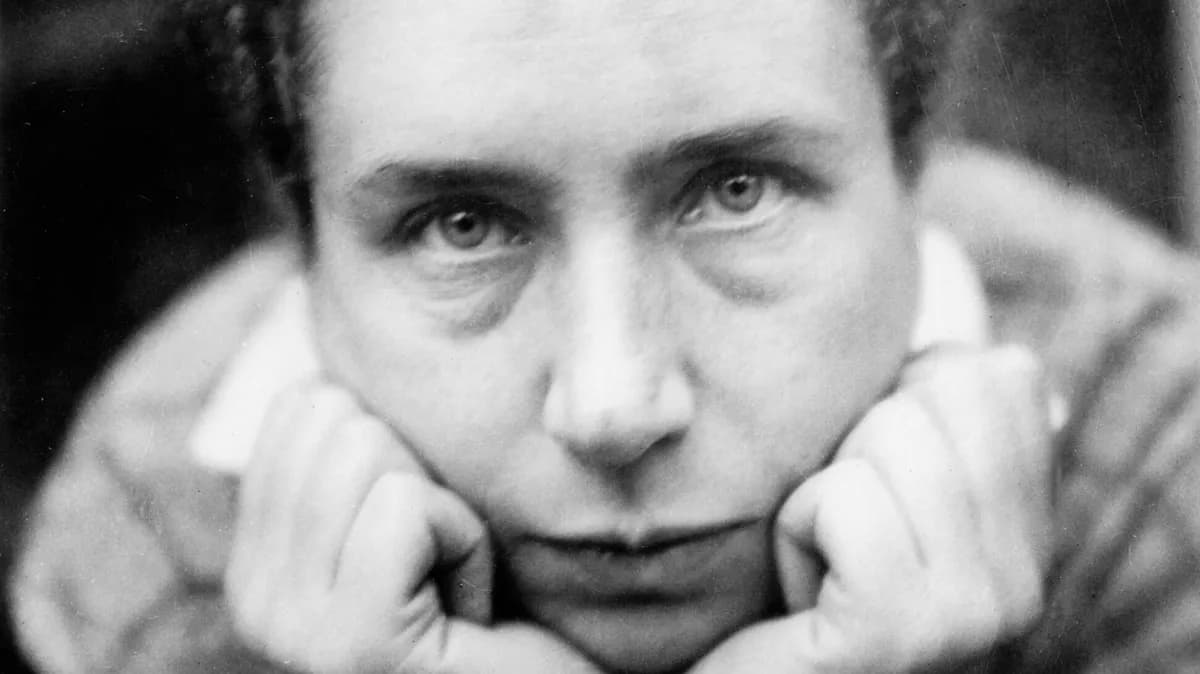
- •Lucia Moholy was the photographer who created Bauhaus's visual identity in the 1920s, but was long forgotten by history.
- •Her photographs became symbols of modernist aesthetics, yet she received no credit as an artist and even engaged in legal disputes with Walter Gropius.
- •The 2024 exhibition reassessment reveals the structural problems that systematically erased the contributions of mid-20th century female artists.
The Forgotten Documenter of Bauhaus
In the mid-1920s at the Bauhaus campus in Dessau, Germany, precisely and beautifully composed photographs captured the architecture, students, teachers, and their works. These images defined Bauhaus as a bastion of progressive and empowering cultural and social idealism, and they are still regarded as the epitome of modernist aesthetics today.
The person behind these photographs was Lucia Moholy. This Czech-born photographer created Bauhaus's visual identity, yet she herself was long forgotten by history.
The Beginning of Reassessment
The 2024 exhibition 'Lucia Moholy: Exposures' at Kunsthalle Prague in the Czech Republic and Fotostiftung Winterthur in Switzerland illuminated the full scope of her work. The exhibition showcased not only photography but also her writing, editing, and documentary filmmaking, revealing Moholy's true range.
However, a critical question remains: Why was such a talented and charismatic woman overlooked for so long? And why was she denied credit for her most important work?
Legal Battles and Hostile Relations
In 1956, Ise Gropius, wife of Bauhaus founder Walter Gropius, wrote to a friend:
"Recently we are on unfriendly terms with her. She has filed or is about to file a lawsuit claiming that Walter monopolized her Bauhaus photographs. The emotional divide runs deep on both sides."
Ise Gropius earnestly asked her friend not to invite "her" to a dinner for Walter in London. "She" was Lucia Moholy.
Moholy's photographs quickly became famous, but the woman who created them disappeared into the shadows of history. This paradoxical situation unfolded amid mid-20th century European misogyny and geopolitical turmoil.
Growth as an Avant-Garde Intellectual
Born in Prague in 1894 as Lucie Schulz (later changing her name to Lucia), she enjoyed a comfortable childhood thanks to her father's successful law practice. As one of the first generation of women (limited to the wealthy class) encouraged to attend university in Europe, she obtained teaching credentials in German and English in 1912, and later studied philosophy and art history at Charles University in Prague.
After spending most of World War I in Germany, she settled in Berlin and worked in publishing while writing experimental literature under the male pseudonym Ulrich Steffen.
During this period, she was part of an avant-garde group of intellectuals, artists, and activists. They were followers of the Mazdaznan sect, which advocated meditation, strict vegetarian diets, wild swimming, and rigorous exercise regimens including countryside hiking.
Encounter with Bauhaus
In early 1920s Berlin, she met and married Hungarian-born artist László Moholy-Nagy. When her husband was appointed as a Bauhaus professor in 1923, Lucia also moved to Dessau.
At Bauhaus, she was not merely a professor's wife. She performed a pivotal role as the official photographer systematically documenting the school's architecture, design, and educational philosophy. Her photographs played a decisive role in disseminating Bauhaus ideology worldwide.
Her still-life photographs of chess tables and sculptures, and architectural photographs emphasizing geometric structures of buildings, became icons of modernism. However, when these photographs were published and exhibited, her name was often omitted.
Why She Was Erased from History [Analysis]
The structural misogyny of the mid-20th century systematically erased the contributions of female artists like Lucia Moholy. The fact that her photographs were recognized only as "Bauhaus's" and her identity as an individual artist was denied directly reflects the gender dynamics of the time.
The legal dispute with Walter Gropius centered on copyright and ownership issues, but beneath it lay the larger context of male-centered art historical narratives. While Bauhaus is recognized as a progressive educational institution, it was conservative in acknowledging the contributions of female artists.
Recent reassessment movements go beyond simply rehabilitating one individual—they are part of rewriting the history of modernism. Without Lucia Moholy's photographs, the image of Bauhaus as we know it would not exist. Given that the visual language formed through her lens continues to influence design and architecture today, her rediscovery is likely to serve as an important opportunity to fill gaps in art history.
댓글 (3)
The 관련 기사 잘 읽었습니다. 유익한 정보네요.
그 부분은 저도 궁금했습니다.
Female에 대해 더 알고 싶어졌습니다. 후속 기사 부탁드립니다.
More in Culture & Art
Government Provides 1 Billion Won in Emergency Disaster Funds for Daejeon Factory Fire Recovery

Existence Blooming Through Vulnerability: Massimo Lagrotteria Solo Exhibition

Milan Design Week 2026: Hotels Transform into Laboratories of Dreams

The Future of Living on the Moon, Mars, and Deep Sea: Houses Designed by Architects

15,000-Year-Old Clay Beads Made by Children Rewrite Prehistoric Art History

Reuters Reports Banksy's Identity Revealed, Reigniting Anonymity Debate
Latest News

이스라엘, 헤즈볼라 무기 통로 레바논 다리 공습
이스라엘군, 헤즈볼라 무기 통로 레바논 다리 공습

중동행 전세기 전쟁보험료 최고 7천500만원
중동행 전세기 전쟁보험료가 최고 5만달러(7천500만원)로 상승

이란 탄도미사일, 이스라엘 방어망 뚫고 160명 부상
이란 탄도미사일이 이스라엘 방공망을 통과해 160명 부상
Middle East Conflict Drives Manufacturing Outlook to 10-Month Low
The Korea Institute for Industrial Economics & Trade survey shows April manufacturing outlook PSI plummeted to 88, falling below baseline for the first time in 10 months.

Lee Jae-myung Administration Excludes Multi-Home Officials from Real Estate Policymaking
President Lee Jae-myung has ordered the exclusion of multi-home owning public officials from all real estate policy processes.

Southeast Asia Growth Forecasts Cut Amid Oil Price Surge, Threatening Korean Exports
Maybank Research has downgraded ASEAN-6's 2026 growth forecast from 4.8% to 4.5%.

Volkswagen CEO Says Germany Should Learn from China's Industrial Strategy
Volkswagen CEO stated that Germany should learn from China's systematic industrial planning approach.

Reddit Considers Face ID to Block Bots While Maintaining Anonymity
Reddit is considering implementing biometric authentication systems such as Face ID and Touch ID to block AI bots while maintaining anonymity.