Vietnam Declares 'Second Economic Reform' to Achieve Economic Leap
Communist Party's 14th National Congress Sets Double-Digit Growth Target... Unlocking Potential Is Key

- •The Communist Party of Vietnam declared a second economic reform at its 14th National Congress, setting a double-digit economic growth target for 2026-2030.
- •Despite achievements from 40 years of reform and opening policy, structural problems such as quantitative growth bias, dependence on foreign investment, and regional disparities remain.
- •Vietnam plans to secure growth momentum by actively developing untapped potential in science and technology innovation, digital transformation, and cultural industries, while reforming state-owned enterprises and investing in human capital.
40 Years of Reform: Achievements and Limitations
The Communist Party of Vietnam has expressed its strong commitment to comprehensive economic restructuring through its 14th National Congress. At the congress held in Hanoi on January 21, 30 policy documents submitted by central and local party organizations were announced, with most containing specific measures to achieve double-digit economic growth.
Nguyen Anh Tuan, Vice Chairman of the Central Policy and Strategy Committee, pointed out that while Vietnam has achieved historic accomplishments through 40 years of Đổi Mới (reform and opening) policy, fundamental problems remain. The analysis indicates that qualitative growth has been inadequate due to an emphasis on quantitative growth, regional development gaps have widened, and an economic structure heavily dependent on foreign investment has become entrenched.
Particularly noteworthy is the assessment that Vietnam's economy still has enormous untapped potential. The committee stated that key growth drivers such as investment capital, labor productivity, and technological innovation are not functioning properly, and industrial restructuring and growth model innovation are progressing slowly.
Background of the Second Economic Reform
The Vietnamese government has set a goal of double-digit economic growth for the 2026-2030 period to achieve its '100-year goal' of becoming a developed nation by 2045. Vice Chairman Nguyen Anh Tuan emphasized, "This is a great challenge, but Vietnam has the conditions, potential, wisdom, and political determination to make it happen."
The rationale presented by the government is clear. Since current economic efficiency remains at low levels, improving it could create breakthrough-level growth momentum. Additionally, new growth drivers such as science and technology, innovation, and digital transformation are not being properly utilized, and cultural industries, new economic models, and new development spaces following regional integration remain largely unexplored.
Deputy Prime Minister Pham Thi Thanh Tra stated in a government statement, "The new development stage requires fundamental innovation not only in mindset but also in governance methods and execution capacity," expressing strong reform determination.
Historical Context of Vietnam's Economy
Vietnam's economic reform began with the Đổi Mới policy in 1986. Transitioning from a Soviet-style planned economy to a market economy, it achieved rapid growth, and in the 2000s emerged as a global manufacturing hub. Particularly since the mid-2010s, amid US-China trade tensions, foreign direct investment (FDI) surged as Vietnam gained attention as a production base replacing China.
However, this growth model has begun to show limitations. As FDI companies came to occupy the core of Vietnam's economy, the competitiveness of domestic enterprises relatively weakened, and technology transfer did not occur as expected. As the COVID-19 pandemic accelerated global supply chain restructuring, Vietnam recognized the urgent need to develop high-value-added industries beyond being a simple assembly base.
In recent years, Vietnam has rapidly pursued reforms previously considered impossible. It has achieved notable results in building digital government, simplifying administrative procedures, and combating corruption, which has given the government the confidence that "we can do it."
Future Outlook [AI Analysis]
For Vietnam's 'Second Economic Reform' to succeed, several key challenges likely need to be addressed.
First, the speed and depth of state-owned enterprise reform will be crucial. While state-owned enterprises still account for a large proportion of Vietnam's economy, their efficiency is lower than that of private companies. How boldly the government can pursue restructuring and privatization will be a measure of the reform's sincerity.
Second, human capital investment is urgent. To sustain double-digit growth, improving labor productivity is essential, which is impossible without a major overhaul of the education and training system. Training technical personnel needed for the digital economy and advanced manufacturing will be a core challenge.
Third, how to achieve balanced regional development is also an important variable. As growth continues to center on Hanoi and Ho Chi Minh City, the relative underdevelopment of rural areas and small cities is intensifying. This could become a factor in political instability, requiring an inclusive growth strategy.
Fourth, climate change response and green transition are also unavoidable challenges. Rising sea levels in the Mekong Delta region and increasing extreme weather events pose direct threats to Vietnam's economy. Without a strategy that balances growth and environmental protection, long-term sustainability may be questioned.
International circumstances are also a variable. Amid US-China competition, Vietnam has maintained strategic neutrality while expanding economic cooperation with both sides. However, if pressure from both major powers increases, such diplomatic tightrope walking may become increasingly difficult.
Nevertheless, Vietnam possesses considerable strengths: a young, highly educated population, political stability, strategic geographic location, and above all, fast decision-making and execution capacity. If the reform commitment presented at this congress translates into concrete policies and can overcome vested interest resistance during implementation, Vietnam has a high likelihood of emerging as a new economic powerhouse in Southeast Asia.
댓글 (5)
Vietnam 정말 대단하네요! 좋은 소식입니다.
Declares 소식 반갑습니다. 앞으로가 더 기대됩니다.
좋은 소식에 기분이 좋아지네요.
이런 긍정적인 뉴스가 더 많았으면 좋겠습니다.
좋은 소식에 기분이 좋아지네요.
More in Life

Beyond Vaccines: Refusal of Newborn Vitamin K Shots Spreads

NASA Restores Historic 80-Year-Old 'Hangar One' at Ames Research Center

NASA X-59 Supersonic Experimental Aircraft Completes Second Test Flight Successfully

Australian Researchers Develop World's First Quantum Battery Prototype

The Ocean Was the True Driver of 3 Million Years of Climate Change

Heat Waves to Cause 700,000 Premature Deaths by 2050… Climate Crisis Undermines Exercise Habits
Latest News

이스라엘, 헤즈볼라 무기 통로 레바논 다리 공습
이스라엘군, 헤즈볼라 무기 통로 레바논 다리 공습
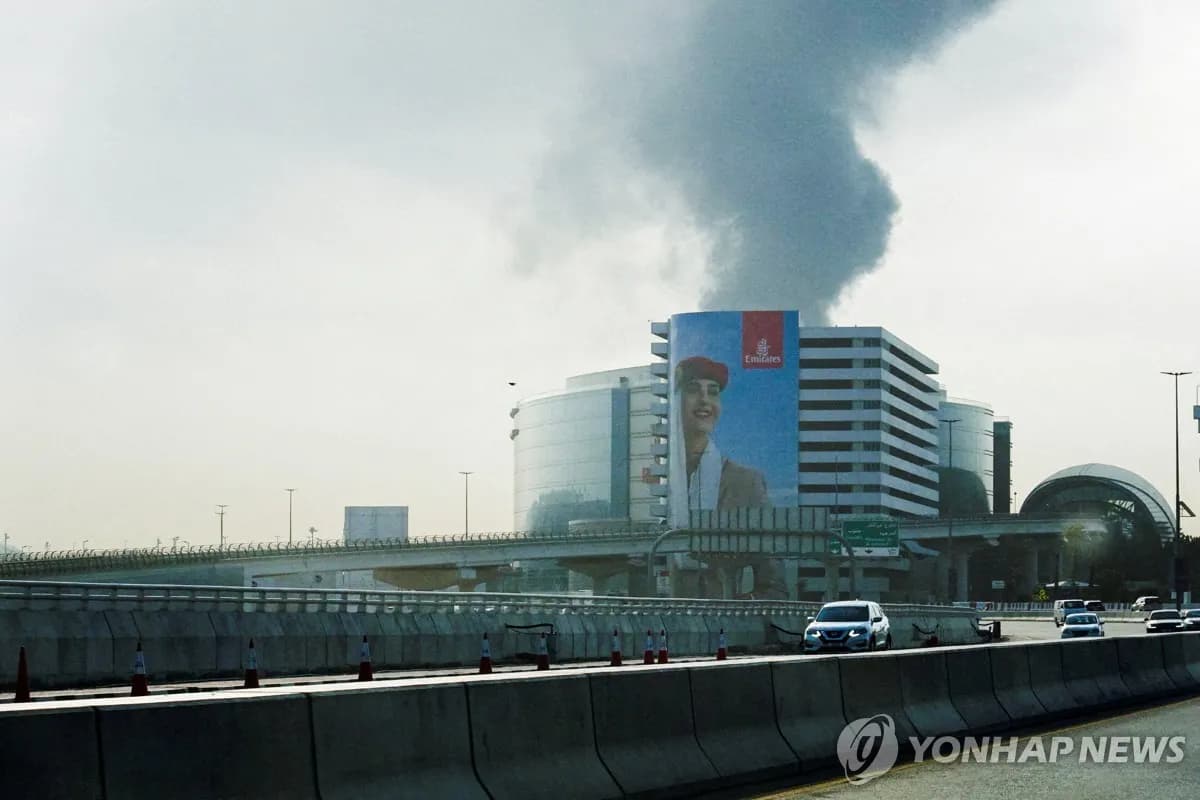
중동행 전세기 전쟁보험료 최고 7천500만원
중동행 전세기 전쟁보험료가 최고 5만달러(7천500만원)로 상승

이란 탄도미사일, 이스라엘 방어망 뚫고 160명 부상
이란 탄도미사일이 이스라엘 방공망을 통과해 160명 부상
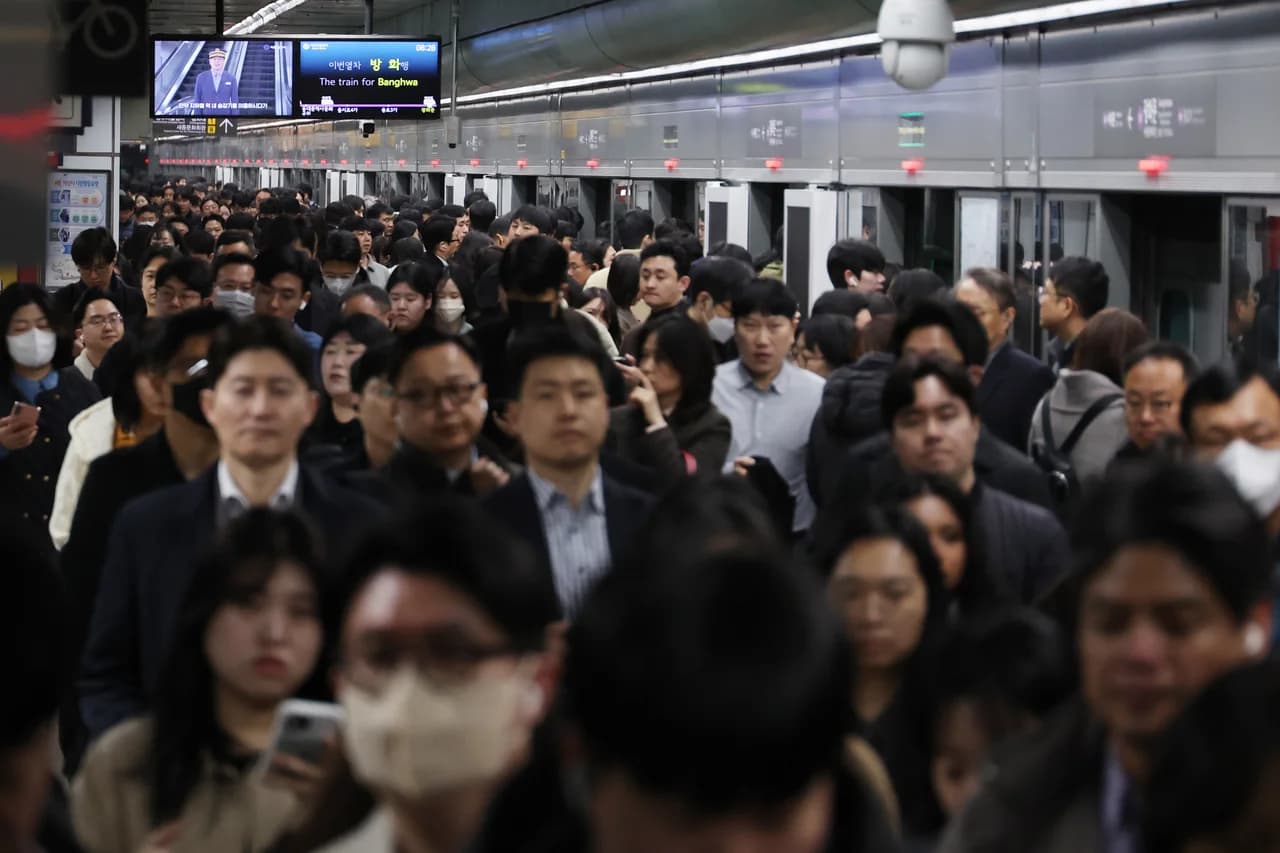
Middle East Conflict Drives Manufacturing Outlook to 10-Month Low
The Korea Institute for Industrial Economics & Trade survey shows April manufacturing outlook PSI plummeted to 88, falling below baseline for the first time in 10 months.

Lee Jae-myung Administration Excludes Multi-Home Officials from Real Estate Policymaking
President Lee Jae-myung has ordered the exclusion of multi-home owning public officials from all real estate policy processes.

Southeast Asia Growth Forecasts Cut Amid Oil Price Surge, Threatening Korean Exports
Maybank Research has downgraded ASEAN-6's 2026 growth forecast from 4.8% to 4.5%.

Volkswagen CEO Says Germany Should Learn from China's Industrial Strategy
Volkswagen CEO stated that Germany should learn from China's systematic industrial planning approach.

Reddit Considers Face ID to Block Bots While Maintaining Anonymity
Reddit is considering implementing biometric authentication systems such as Face ID and Touch ID to block AI bots while maintaining anonymity.