Amazon Indigenous Groups Occupy U.S. Grain Giant Cargill Entrance for One Week
Protest Against Brazilian Government Decree Opening Tapajós River to Private Sector, Demanding Protection of Traditional Fishing Grounds
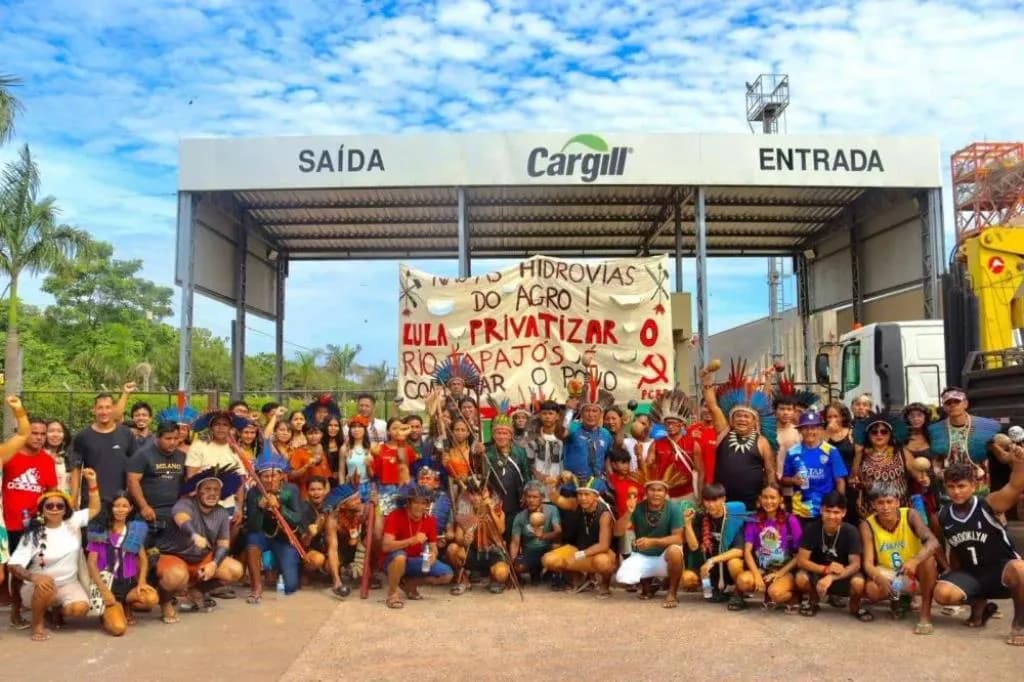
- •Brazilian Amazon indigenous communities have been occupying U.S. grain corporation Cargill's terminal for one week in protest against a decree opening the Tapajós River to private sector
- •The government is pursuing waterway dredging to improve soybean export logistics, but indigenous peoples fear destruction of traditional fishing ecosystems
- •Negotiations with senior federal government officials are scheduled for January 30, but indigenous representatives maintain that dialogue without decree repeal is meaningless
One Week of Occupation, Demanding Federal Government Dialogue
Indigenous communities in Brazil's Amazon region have been occupying the entrance to U.S. grain corporation Cargill's Santarém terminal for one week. Indigenous communities in the Baixo Tapajós region of western Pará state have been blocking access to Cargill facilities since January 22, demanding direct negotiations with the federal government.
Indigenous representatives announced that a meeting with government delegates is scheduled for 3 PM on January 30 in Santarém. However, they emphasized that the occupation will continue until federal government officials visit the site or the problematic decree is repealed.
Flashpoint of the Dispute: River Privatization Decree
The core issue behind this occupation protest is Decree No. 12.600/25. Signed by President Luiz Inácio Lula da Silva on August 28, 2025, this decree allows private companies to be contracted for waterway research and operations on major Amazon rivers.
The Madeira, Tocantins, and Tapajós Rivers covered by the decree are critical logistics corridors in central-northern Brazil, transporting approximately 40 million tons of cargo annually. The government aims to reduce logistics costs for agricultural exports, including soybeans, through this decree.
However, indigenous communities criticize this measure as serving only the interests of export-oriented agribusiness. They particularly worry that dredging operations to expand waterways—which remove riverbed sediment to deepen channels—will destroy traditional fishing ecosystems.
First Government Meeting Ends Without Concrete Agreement
On Sunday, January 25, the first video conference was held, mediated by the Federal Public Prosecutor's Office (MPF). Officials from the Ministry of Ports and Airports, National Transportation Infrastructure Department (DNIT), Presidential Office, and Ministry of Indigenous Peoples (MPI) participated.
Indigenous representatives presented three core demands:
- Immediate repeal of Decree No. 12.600/25
- Demarcation and protection of indigenous, quilombola (Black community), and traditional community territories in the Baixo Tapajós region
- On-site visits and direct dialogue with senior federal government officials
Kelly Mafort, representing the Presidential Office, stated that Minister Guilherme Boulos would proceed with prior consultation with traditional communities before the Tapajós River waterway project, as promised at the 'People's Summit.'
However, indigenous leader Elia Cumaruara countered: "Consultation while the decree remains valid is meaningless. Prior consultation only has genuine value after the decree is repealed."
Resistance Expands to Water-Based Protests
On Wednesday, January 28, a new form of protest emerged in Santarém. Indigenous peoples, riverside residents (ribeirinhos), small boat operators (catraieiros), and local residents staged a water-based protest (barqueata) in the Alter do Chão district.
They boarded small boats and traveled along the Tapajós River, chanting slogans demanding the decree's repeal. The water-based protest symbolically demonstrated the crisis facing communities whose livelihoods depend on the river.
Agribusiness Logistics vs. Traditional Livelihoods
The Tapajós River basin is a critical route for soybeans produced in Brazil's central-western grain belt to be exported overseas through the northern port of Santarém. Cargill operates a major grain terminal in Santarém and sits at the center of this logistics network.
The government seeks to enable larger vessel navigation and reduce transportation costs through waterway improvements. However, indigenous and traditional communities argue that water pollution from dredging, fish stock depletion, and riverbank erosion threaten a way of life preserved for hundreds of years.
Elia Cumaruara stated: "We were born in the river and have lived with the river. Dredging drives away fish and destroys our homeland."
Government Promises High-Level Participation from Environment and Indigenous Affairs Ministries
According to indigenous representatives, the January 30 meeting is expected to include senior officials from the Ministry of Environment (MMA), Ministry of Indigenous Peoples (MPI), and the president of the National Indigenous Foundation (Funai). This represents a higher-level negotiation table than the previous video conference.
However, indigenous leaders have made clear: "We welcome dialogue, but we cannot accept consultation without decree repeal." The occupation is expected to continue until the decree is repealed or the government promises concrete protective measures.
Future Outlook [AI Analysis]
This dispute reveals the dilemma facing the Brazilian government as it must find balance between economic growth and environmental and human rights protection. The Lula government campaigned on environmental protection but is also pursuing economic recovery through increased agricultural exports.
The Tapajós River case suggests that conflicts of interest surrounding Amazon development will continue. If the government does not repeal the decree, similar resistance is likely to spread to the Madeira and Tocantins River basins.
Depending on the outcome of the January 30 meeting, the Brazilian government's Amazon policy direction may be recalibrated. Accepting indigenous community demands could trigger backlash from agribusiness interests, while maintaining the decree would likely intensify criticism from international environmental organizations.
댓글 (6)
기사 잘 봤습니다. 다른 시각의 분석도 읽어보고 싶네요.
좋은 의견이십니다.
간결하면서도 핵심을 잘 정리한 기사네요.
공감합니다. 참고하겠습니다.
흥미로운 주제입니다. 주변에도 공유해야겠어요.
그 부분은 저도 궁금했습니다.
More in Life

Beyond Vaccines: Refusal of Newborn Vitamin K Shots Spreads

NASA Restores Historic 80-Year-Old 'Hangar One' at Ames Research Center

NASA X-59 Supersonic Experimental Aircraft Completes Second Test Flight Successfully

Australian Researchers Develop World's First Quantum Battery Prototype
The Ocean Was the True Driver of 3 Million Years of Climate Change

Heat Waves to Cause 700,000 Premature Deaths by 2050… Climate Crisis Undermines Exercise Habits
Latest News
이스라엘, 헤즈볼라 무기 통로 레바논 다리 공습
이스라엘군, 헤즈볼라 무기 통로 레바논 다리 공습
중동행 전세기 전쟁보험료 최고 7천500만원
중동행 전세기 전쟁보험료가 최고 5만달러(7천500만원)로 상승
이란 탄도미사일, 이스라엘 방어망 뚫고 160명 부상
이란 탄도미사일이 이스라엘 방공망을 통과해 160명 부상

Middle East Conflict Drives Manufacturing Outlook to 10-Month Low
The Korea Institute for Industrial Economics & Trade survey shows April manufacturing outlook PSI plummeted to 88, falling below baseline for the first time in 10 months.

Lee Jae-myung Administration Excludes Multi-Home Officials from Real Estate Policymaking
President Lee Jae-myung has ordered the exclusion of multi-home owning public officials from all real estate policy processes.

Southeast Asia Growth Forecasts Cut Amid Oil Price Surge, Threatening Korean Exports
Maybank Research has downgraded ASEAN-6's 2026 growth forecast from 4.8% to 4.5%.

Volkswagen CEO Says Germany Should Learn from China's Industrial Strategy
Volkswagen CEO stated that Germany should learn from China's systematic industrial planning approach.

Reddit Considers Face ID to Block Bots While Maintaining Anonymity
Reddit is considering implementing biometric authentication systems such as Face ID and Touch ID to block AI bots while maintaining anonymity.