UK PM Starmer Visits China After 8 Years... Seeking Economic Reset Amid US Tensions
Accompanied by 50-Member Economic Delegation, Summit with President Xi... Balancing Security Concerns and Economic Interests
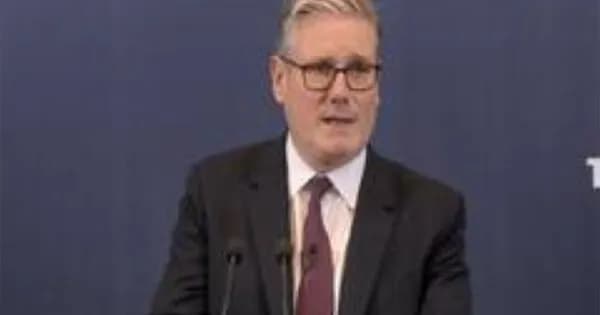
- •UK Prime Minister Keir Starmer is visiting China for the first time in 8 years, holding a summit with President Xi Jinping to pursue economic relationship reset.
- •A 50-member economic delegation accompanies him to discuss trade and investment expansion, though domestic criticism has emerged over security concerns and human rights issues.
- •This visit, occurring amid US-China tensions, is viewed as an example of Britain's pragmatic diplomacy and search for new balance within the Western alliance.
First UK Prime Minister Visit to China in 8 Years
UK Prime Minister Keir Starmer is visiting China from January 28 to 31. This marks the first visit by a British Prime Minister to China in 8 years since 2018, representing a high-level diplomatic effort to reset relations with the world's second-largest economy.
Prime Minister Starmer will be accompanied by over 50 business leaders and key cabinet ministers for a series of meetings with President Xi Jinping, Premier Li Qiang, and National People's Congress Standing Committee Chairman Zhao Leji. The agenda will focus on expanding trade and investment and building mutual trust between the two nations.
China's Ministry of Commerce has expressed its willingness to strengthen cooperation with the UK, stating it is "ready to promote agreements to facilitate mutual trade and investment."
China as Economic Recovery Strategy
Prime Minister Starmer is emphasizing this visit domestically as a key component of economic recovery. With the UK economy facing a period of slow growth, strengthening ties with Beijing is seen as an opportunity to expand markets in finance, manufacturing, and services sectors.
A Downing Street official described it as "a pragmatic approach that balances commercial interests with national security considerations." The UK has been seeking new economic partners since Brexit, and expanded trade with China is being considered as a strategic option to fill the economic void left by EU departure.
Domestic Backlash and Security Concerns
However, this visit has sparked considerable controversy within the UK. Several parliamentarians and commentators have expressed concerns citing national security threats.
Debate has intensified particularly over the UK government's recent approval of China's construction of a large embassy in London, with concerns about "espionage activities and foreign influence expansion." Some Conservative Party members have criticized the move, arguing that "security principles should not be compromised for economic benefits."
Human rights issues also remain a sensitive point. There is keen interest in what position Prime Minister Starmer will take regarding Hong Kong's democratic suppression and the human rights situation in Xinjiang.
Diplomatic Tightrope Walk Amid US Tensions
This visit is taking place amid strained relations with the United States, adding complexity to the situation. As President Donald Trump pushes a hardline trade policy toward China while pressuring allies, Britain's approach to China is being interpreted as a signal of rifts within the Western alliance.
Some analysts view Britain's move as "Western nations seeking alternatives to unpredictable US policy." As the Trump administration weakens NATO commitments and criticizes key allies, European countries have begun exploring independent diplomatic courses.
The UK Foreign Office has clarified that "relations with the US remain strong, and dialogue with China does not undermine the Atlantic alliance," though discomfort has been detected in some Washington circles.
Signal of Global Economic Order Realignment
Starmer's visit to China reflects broader trends in global economic order realignment beyond simple bilateral relations. As US-China tensions intensify, middle powers are pursuing strategies to maximize benefits between the two sides.
China is seeking to strengthen relations with European nations to counter US-led containment strategies, while the UK needs diversified partnerships to overcome economic isolation following Brexit.
China's Ministry of Commerce welcomed the move, stating that "expanded cooperation with the UK benefits both countries." Concrete discussions are expected in finance, advanced manufacturing, and clean energy sectors.
Historical Context: UK-China Relations' Ups and Downs
UK-China relations have experienced fluctuations since the 2015 "Golden Era" declaration. Then-Prime Minister David Cameron actively pursued economic cooperation with China, but relations later cooled over Hong Kong issues, Huawei 5G exclusion, and Xinjiang human rights concerns.
In 2020, Boris Johnson's government decided to phase out Huawei equipment from 5G networks, causing relations with China to deteriorate sharply. In 2022, then-Foreign Secretary Liz Truss designated China as a "strategic competitor."
However, Starmer's Labour government is attempting a different approach from the Conservatives. Emphasizing a "consistent, sustainable, and respect-based" bilateral relationship, it is prioritizing pragmatism over ideology.
Future Outlook [AI Analysis]
The outcomes of this visit will likely serve as a litmus test for the direction of UK policy toward China. If concrete trade agreements or investment commitments emerge, other European countries may consider similar approaches.
However, balancing security concerns with economic benefits will remain a challenge for the UK government. As economic cooperation with China deepens, risks including technology leakage, infrastructure control, and information security will also increase.
The US reaction is another variable. If the Trump administration views Britain's move as "alliance betrayal," it could create rifts in transatlantic relations. Conversely, if the US shows flexibility, multilayered approaches to China within the Western alliance could become possible.
In the long term, whether the UK can build a model that simultaneously maintains its "special relationship with the US" and "economic cooperation with China" will be crucial. This could represent a new experiment in middle-power diplomacy.
댓글 (3)
UK 문제는 양쪽 입장을 모두 들어봐야 할 것 같습니다.
이 사안은 신중하게 접근해야 한다고 봅니다.
이 문제의 본질이 무엇인지 깊이 생각해볼 필요가 있습니다.
More in Economy
Middle East Conflict Drives Manufacturing Outlook to 10-Month Low
Lee Jae-myung Administration Excludes Multi-Home Officials from Real Estate Policymaking
Volkswagen CEO Says Germany Should Learn from China's Industrial Strategy

Russia Anticipates Economic Gains from US-Iran Conflict
U.S. Federal Reserve Unveils Bank Capital Regulation Modernization Plan
Federal Reserve Announces Enforcement Actions Against Two Former Bank Employees
Latest News
이스라엘, 헤즈볼라 무기 통로 레바논 다리 공습
이스라엘군, 헤즈볼라 무기 통로 레바논 다리 공습
중동행 전세기 전쟁보험료 최고 7천500만원
중동행 전세기 전쟁보험료가 최고 5만달러(7천500만원)로 상승

이란 탄도미사일, 이스라엘 방어망 뚫고 160명 부상
이란 탄도미사일이 이스라엘 방공망을 통과해 160명 부상

Southeast Asia Growth Forecasts Cut Amid Oil Price Surge, Threatening Korean Exports
Maybank Research has downgraded ASEAN-6's 2026 growth forecast from 4.8% to 4.5%.

Reddit Considers Face ID to Block Bots While Maintaining Anonymity
Reddit is considering implementing biometric authentication systems such as Face ID and Touch ID to block AI bots while maintaining anonymity.
BTS Tops March Artist Brand Reputation Rankings with First Full Group Comeback in 4 Years
BTS ranked first in the Korean Corporate Reputation Research Institute's March Artist Brand Reputation Rankings based on 99 million data points.

Santo Domingo's Malecón Sports Park Construction Progressing Smoothly
Construction of a soccer field and skate park is progressing smoothly in the Malecón area of Santo Domingo, Dominican Republic.

Pogačar Overcomes Crash to Win Milano-Sanremo, Achieves Four Monument Victories
Tadej Pogačar defeated Tom Pidcock to win Milano-Sanremo, achieving his fourth Monument victory.