UNESCO World Heritage Village Residents Request Removal from List
Slovakia's Vlkolínec transforms from living community to 'open-air museum' due to excessive tourism
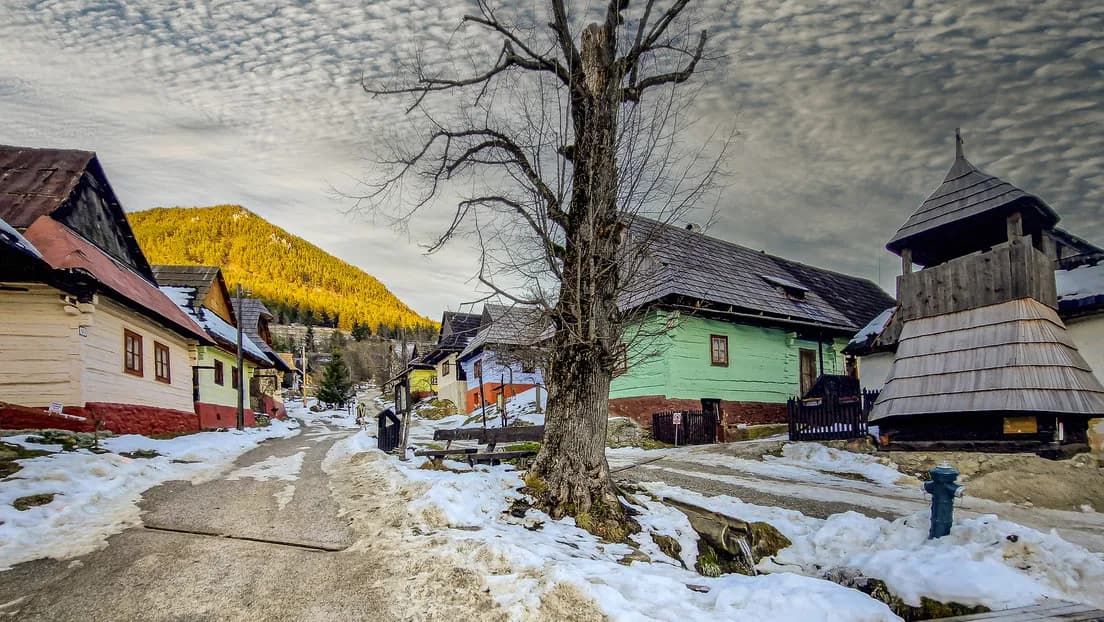
- •Residents of Vlkolínec, Slovakia have requested removal from the UNESCO World Heritage List.
- •With 100,000 tourists visiting annually, residents' privacy is violated and strict preservation regulations restrict their daily lives.
- •The population has declined from 27 to 14 since World Heritage designation, undermining the 'living community' condition.
World Heritage Status Becomes a Curse
The small Slovak village of Vlkolínec is requesting to be removed from the World Heritage List. Designated as a UNESCO World Heritage Site in 1993, the village was recognized as a "living community" at the time, but 33 years later, it has become a "dying museum" that residents are abandoning, according to local media Denník N.
Anton Sabuca (67), the village's longest-term resident, stated, "UNESCO protects houses, but not people." Approximately 100,000 tourists visit the village annually, walking through private properties, peering through windows, and even touring the interiors of inhabited homes.
Strict Preservation Rules and Violated Daily Life
The problem extends beyond tourist visits. Strict preservation regulations imposed with the World Heritage designation restrict residents' daily lives.
Residents are prohibited from keeping animals or even maintaining small vegetable gardens. Freedom of living has been constrained under the pretext of maintaining the traditional village appearance. Meanwhile, tourists enter private properties without restriction, violating residents' privacy.
Under these conditions, the population has sharply declined. The number of residents has dropped from 27 at the time of World Heritage designation to just 14 today.
From Living Community to Tourist Commodity
Vlkolínec is a village with well-preserved traditional wooden architecture. A key condition for UNESCO designation was "continued maintenance as a living village." It was recognized not merely for architectural preservation but for its value as a functioning community.
However, as the tourism industry expanded, this condition effectively collapsed. The village is no longer a space where people live, but an open-air museum for outsiders to observe.
Heritage experts emphasize that Vlkolínec was recognized not only for its wooden architecture but as a living community, pointing out that the current situation has completely deviated from the original designation purpose.
Finding Balance Between Preservation and Life [AI Analysis]
The Vlkolínec case demonstrates how cultural heritage preservation policies can conflict with local residents' lives. While World Heritage designation prioritizes preservation values, the rights of people actually living in those spaces are often pushed aside.
Going forward, UNESCO and national governments need to strengthen resident-participatory preservation policies. It's important to recognize that cultural heritage is not simply a tourism resource but a space where people live, and to find balance between preservation and living rights.
Moretheless, without concrete measures such as tourist capacity limits, private property access restrictions, and resident income guarantees, cases like Vlkolínec are likely to repeat in other World Heritage sites.
댓글 (3)
간결하면서도 핵심을 잘 정리한 기사네요.
좋은 의견이십니다.
World에 대해 더 알고 싶어졌습니다. 후속 기사 부탁드립니다.
More in Culture & Art
Government Provides 1 Billion Won in Emergency Disaster Funds for Daejeon Factory Fire Recovery

Existence Blooming Through Vulnerability: Massimo Lagrotteria Solo Exhibition

Milan Design Week 2026: Hotels Transform into Laboratories of Dreams

The Future of Living on the Moon, Mars, and Deep Sea: Houses Designed by Architects

15,000-Year-Old Clay Beads Made by Children Rewrite Prehistoric Art History

Reuters Reports Banksy's Identity Revealed, Reigniting Anonymity Debate
Latest News

이스라엘, 헤즈볼라 무기 통로 레바논 다리 공습
이스라엘군, 헤즈볼라 무기 통로 레바논 다리 공습
중동행 전세기 전쟁보험료 최고 7천500만원
중동행 전세기 전쟁보험료가 최고 5만달러(7천500만원)로 상승
이란 탄도미사일, 이스라엘 방어망 뚫고 160명 부상
이란 탄도미사일이 이스라엘 방공망을 통과해 160명 부상

Middle East Conflict Drives Manufacturing Outlook to 10-Month Low
The Korea Institute for Industrial Economics & Trade survey shows April manufacturing outlook PSI plummeted to 88, falling below baseline for the first time in 10 months.

Lee Jae-myung Administration Excludes Multi-Home Officials from Real Estate Policymaking
President Lee Jae-myung has ordered the exclusion of multi-home owning public officials from all real estate policy processes.

Southeast Asia Growth Forecasts Cut Amid Oil Price Surge, Threatening Korean Exports
Maybank Research has downgraded ASEAN-6's 2026 growth forecast from 4.8% to 4.5%.

Volkswagen CEO Says Germany Should Learn from China's Industrial Strategy
Volkswagen CEO stated that Germany should learn from China's systematic industrial planning approach.

Reddit Considers Face ID to Block Bots While Maintaining Anonymity
Reddit is considering implementing biometric authentication systems such as Face ID and Touch ID to block AI bots while maintaining anonymity.