Europe Seeks Trade Diversification Strategy Amid U.S. Tariff Pressure
Trump Administration Threatens 30% Tariffs on EU and Mexico—Supply Chain Disruption Concerns Spread
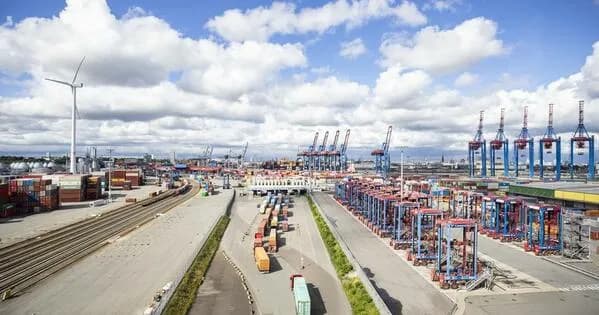
- •The Trump administration's announcement of 30% tariffs on EU and Mexican exports is sending shockwaves through the European economy.
- •Direct and indirect damage—including 15,000 jobs in Slovenia and Finland's pharmaceutical industry—is spreading throughout Europe's supply chains.
- •European countries are exploring strategies to reduce U.S. dependence through trade diversification with China, Southeast Asia, and other regions.
Economic Shock to Europe from Tariff War
Alarm bells are ringing across Europe after U.S. President Donald Trump announced over the weekend that he would impose 30% tariffs on exports from the European Union (EU) and Mexico. The Trump administration cited long-standing bilateral trade imbalances as justification for the tariff measures.
Mary Lou McDonald, leader of Ireland's Sinn Féin party, characterized the tariff threats as "highly volatile and utterly unhelpful." She emphasized that "this is a challenge for Ireland, for Europe, and for the entire world."
Chain Reaction Threatening Entire Supply Chains
The U.S. tariff offensive is not merely a problem for direct exporters. It is delivering indirect blows across Europe's entire value chain.
Slovenia's central bank estimates that U.S. tariffs could affect approximately 15,000 jobs—a significant figure for a nation of 2.1 million people.
The Bank of England also identified U.S. tariffs as a downside risk factor for the global economy in its latest Financial Stability Report. Despite the UK and U.S. reaching a trade agreement in May, the intensifying global trade disputes could amplify financial stress and hinder UK economic growth, the bank warned.
Nev Čupin, CEO of Croatian fig jam producer Hermes International, cited specific damage figures: "We're losing about $20,000 per week with the 10% tariff. What happens if tariffs reach 30% or 50%? The situation is so unstable that I can't sleep at night."
Finland's pharmaceutical industry also faces crisis. With 40% of exports heading to the United States, Johanna Sipola, Deputy Director of the Finnish Chamber of Commerce, called the tariffs "unrealistic" and pointed out that the greater danger lies in the uncertainty they create.
"If tariffs are actually imposed, the impact on international pharmaceutical production will be substantial. Because the supply chains in this industry are highly global, even minor disruptions can cause major changes in drug prices and demand."
Indirect Damage Spreads: From the Balkans to Czechia
Even countries with low direct export shares cannot rest easy. Economic analyst Gabran Igor of Bosnia and Herzegovina notes that Balkans manufacturers are integrated into EU-based industries, particularly automotive supply chains, making long-term damage potentially more severe.
Czech Finance Minister Zbyněk Stanjura explained that although U.S. exports account for less than 3% of total exports, Czechia will feel indirect effects through European partners who purchase Czech products and components.
Seeking Risk Distribution Through Trade Diversification
In this crisis situation, European countries are seeking responses through trade partner diversification. Experts particularly recommend strengthening trade cooperation with China, Southeast Asia, and other regions.
There is growing recognition that even if direct trade volumes with the world's largest economy are small, the ripple effects from Washington's unpredictable policy changes are unavoidable. Accordingly, voices are growing louder calling for European countries to reduce dependence on specific markets and expand trade networks as a long-term strategy.
Future Outlook [AI Analysis]
If U.S. tariff policies continue, the European economy is likely to experience short-term growth slowdowns and employment instability. Structural adjustments appear inevitable, particularly in industries with high dependence on the U.S. market such as automotive, pharmaceuticals, and food.
In the medium to long term, Europe's trade landscape is expected to be reshaped. The EU is already accelerating FTA negotiations with China, Southeast Asia, and Africa, while expanding investment in strengthening intra-regional supply chains. These changes are likely to become factors promoting multipolarization of the global trading order.
However, considerable time will be required before trade diversification strategies yield real results. For the time being, European companies are expected to face complex challenges including exchange rate volatility, rising logistics costs, and declining demand.
댓글 (4)
댓글란이 과열되지 않았으면 합니다. 차분한 논의가 필요해요.
Seeks 문제는 양쪽 입장을 모두 들어봐야 할 것 같습니다.
이 사안은 신중하게 접근해야 한다고 봅니다.
차분한 논의가 필요하다는 말에 공감합니다.
More in Economy
Middle East Conflict Drives Manufacturing Outlook to 10-Month Low

Lee Jae-myung Administration Excludes Multi-Home Officials from Real Estate Policymaking

Volkswagen CEO Says Germany Should Learn from China's Industrial Strategy

Russia Anticipates Economic Gains from US-Iran Conflict
U.S. Federal Reserve Unveils Bank Capital Regulation Modernization Plan
Federal Reserve Announces Enforcement Actions Against Two Former Bank Employees
Latest News
이스라엘, 헤즈볼라 무기 통로 레바논 다리 공습
이스라엘군, 헤즈볼라 무기 통로 레바논 다리 공습
중동행 전세기 전쟁보험료 최고 7천500만원
중동행 전세기 전쟁보험료가 최고 5만달러(7천500만원)로 상승

이란 탄도미사일, 이스라엘 방어망 뚫고 160명 부상
이란 탄도미사일이 이스라엘 방공망을 통과해 160명 부상

Southeast Asia Growth Forecasts Cut Amid Oil Price Surge, Threatening Korean Exports
Maybank Research has downgraded ASEAN-6's 2026 growth forecast from 4.8% to 4.5%.

Reddit Considers Face ID to Block Bots While Maintaining Anonymity
Reddit is considering implementing biometric authentication systems such as Face ID and Touch ID to block AI bots while maintaining anonymity.

BTS Tops March Artist Brand Reputation Rankings with First Full Group Comeback in 4 Years
BTS ranked first in the Korean Corporate Reputation Research Institute's March Artist Brand Reputation Rankings based on 99 million data points.

Santo Domingo's Malecón Sports Park Construction Progressing Smoothly
Construction of a soccer field and skate park is progressing smoothly in the Malecón area of Santo Domingo, Dominican Republic.
Pogačar Overcomes Crash to Win Milano-Sanremo, Achieves Four Monument Victories
Tadej Pogačar defeated Tom Pidcock to win Milano-Sanremo, achieving his fourth Monument victory.