Carrying Wounds That Follow Like Ghosts
Guyanese-British Artist Hew Locke Docks at Yale with Ships Bearing Colonial Memories
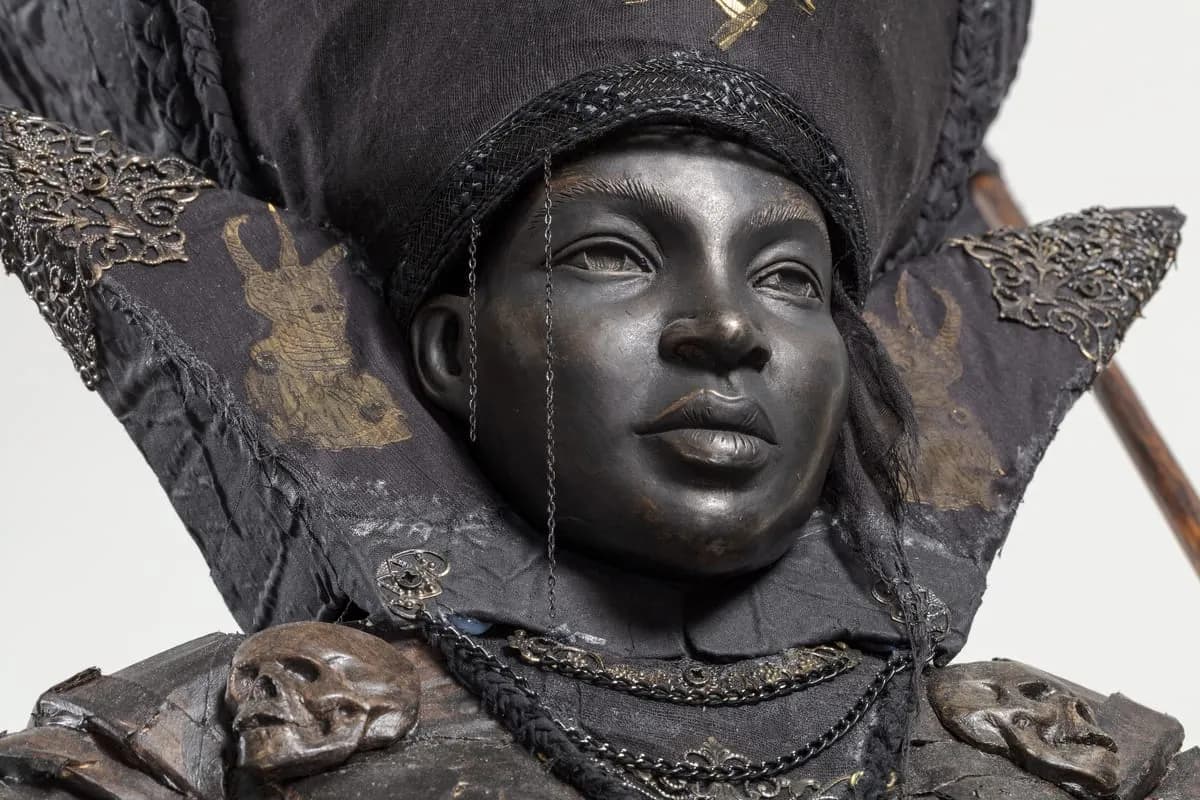
- •Guyanese-British artist Hew Locke has opened an exhibition at the Yale Center for British Art featuring ship sculptures that embody colonial history.
- •The three ships suspended from the ceiling carry the legacy of the colonial era, including plantation houses and images of sugarcane harvesting.
- •The work metaphorically represents the immigrant identity of carrying past habits and wounds while living in a postcolonial era.
Three Ships Suspended from the Ceiling
Upon entering the lobby of the Yale Center for British Art, visitors are greeted by three ships suspended from the ceiling by wires. "The Survivor" (2022), "The Relic" (2022), and "Desire" (2018). The prows of all three ships point in the same direction, packed with cargo as if they had been retrieved from the sea mid-voyage and shrunk down.
The ships hang on ropes, swaying subtly. As if they still remember the rhythm of the waves. They are densely loaded with burlap sacks, potted plants, bundles of dried herbs hanging from the ship's sides, wooden crates marked 'fragile', fishing nets, and sacks whose contents remain unknown. Only two of the three ships carry sails, and even those are nothing more than torn and tattered pieces of cloth.
Carrying Rusted History
While the hulls of "The Relic" and "The Survivor" have been recently painted, most of their components are rusted and corroded, clearly showing the marks of being battered by wind and salt water. Nevertheless, these ships still appear as models of vessels capable of preserving human life.
"The Relic" carries a particularly intriguing structure. A two-story bungalow house erected on supports, complete with stairs, a porch, tilted window shutters, and a severely damaged corrugated metal roof. According to the exhibition brochure, this structure is a replica of a British colonial-era plantation house.
If this work is meant to convey the experience of being an immigrant from Guyana after independence, why bring this house along? And why create a house designed to float on water?
An Artist Who Has Battled Imperial Legacy
Hew Locke is known for work that sharply and repeatedly addresses the legacy of empire, symbols of political, social, legal, and economic power, and the aftermath of nation-building in response to the impoverishment caused by global superpowers. The key term binding all this historical complexity is 'colonialism' or 'postcolonialism'.
Although born in Scotland, Locke's family originally came from Guyana. He arrived by ship in Guyana (1966), known as 'the land of many waters'. There, as a child, he witnessed the colony's struggle for and declaration of independence from Britain. In 1980, he returned to England by ship and settled in London.
Ships Moving Both Forward and Backward
The names of the ships reveal an intention to merge the desire to travel and constantly move with the drive to survive. However, the movement of these ships points both forward and backward simultaneously.
They bring the past along with them. From the form of the loaded house, from the images of cutting and harvesting sugarcane engraved on the sail of "The Survivor", the past seeps into the present. The reason labor practices, social hierarchies, and forms of punitive violence repeat in the present is because we cling to certain habits even as we move toward postcolonial reality.
Invisible Cargo
The exhibition Passages is Locke's retrospective, being held at the Yale Center for British Art. Some of the cargo the ships carry is visible, but some is hidden inside sacks, their contents unknown.
The question Locke asks is this: When we survive, what survives with us? Do our ghosts and wounds sail along?
In addition to the ships, the exhibition includes works such as "Souvenir 6 (Princess Alexandra)" (2019), mixed media on Victorian porcelain. These works reveal the history of violence and exploitation hidden beneath the empire's glamorous surface.
Memories Adrift on Water
Locke's ships are not museum exhibits. They are still moving, swaying, heading somewhere. Despite torn sails and rusted hulls, they do not stop.
Making a colonial-era plantation house float on water may be a metaphor for a history that cannot take root, an identity that cannot be fixed. Like Locke's life, moving from Guyana to Scotland and then to London, these ships do not belong to one place.
But that does not signify weakness. Rather, it is evidence of survival. The cargo the ships carry—plants, food, tools—are the things needed to start again in a new land. Even while carrying ghosts and wounds together, they move forward.
댓글 (5)
Carrying 관련 기사 잘 읽었습니다. 유익한 정보네요.
공감합니다. 참고하겠습니다.
Wounds에 대해 더 알고 싶어졌습니다. 후속 기사 부탁드립니다.
그 부분은 저도 궁금했습니다.
간결하면서도 핵심을 잘 정리한 기사네요.
More in Culture & Art
Government Provides 1 Billion Won in Emergency Disaster Funds for Daejeon Factory Fire Recovery

Existence Blooming Through Vulnerability: Massimo Lagrotteria Solo Exhibition

Milan Design Week 2026: Hotels Transform into Laboratories of Dreams
The Future of Living on the Moon, Mars, and Deep Sea: Houses Designed by Architects

15,000-Year-Old Clay Beads Made by Children Rewrite Prehistoric Art History

Reuters Reports Banksy's Identity Revealed, Reigniting Anonymity Debate
Latest News

이스라엘, 헤즈볼라 무기 통로 레바논 다리 공습
이스라엘군, 헤즈볼라 무기 통로 레바논 다리 공습
중동행 전세기 전쟁보험료 최고 7천500만원
중동행 전세기 전쟁보험료가 최고 5만달러(7천500만원)로 상승

이란 탄도미사일, 이스라엘 방어망 뚫고 160명 부상
이란 탄도미사일이 이스라엘 방공망을 통과해 160명 부상
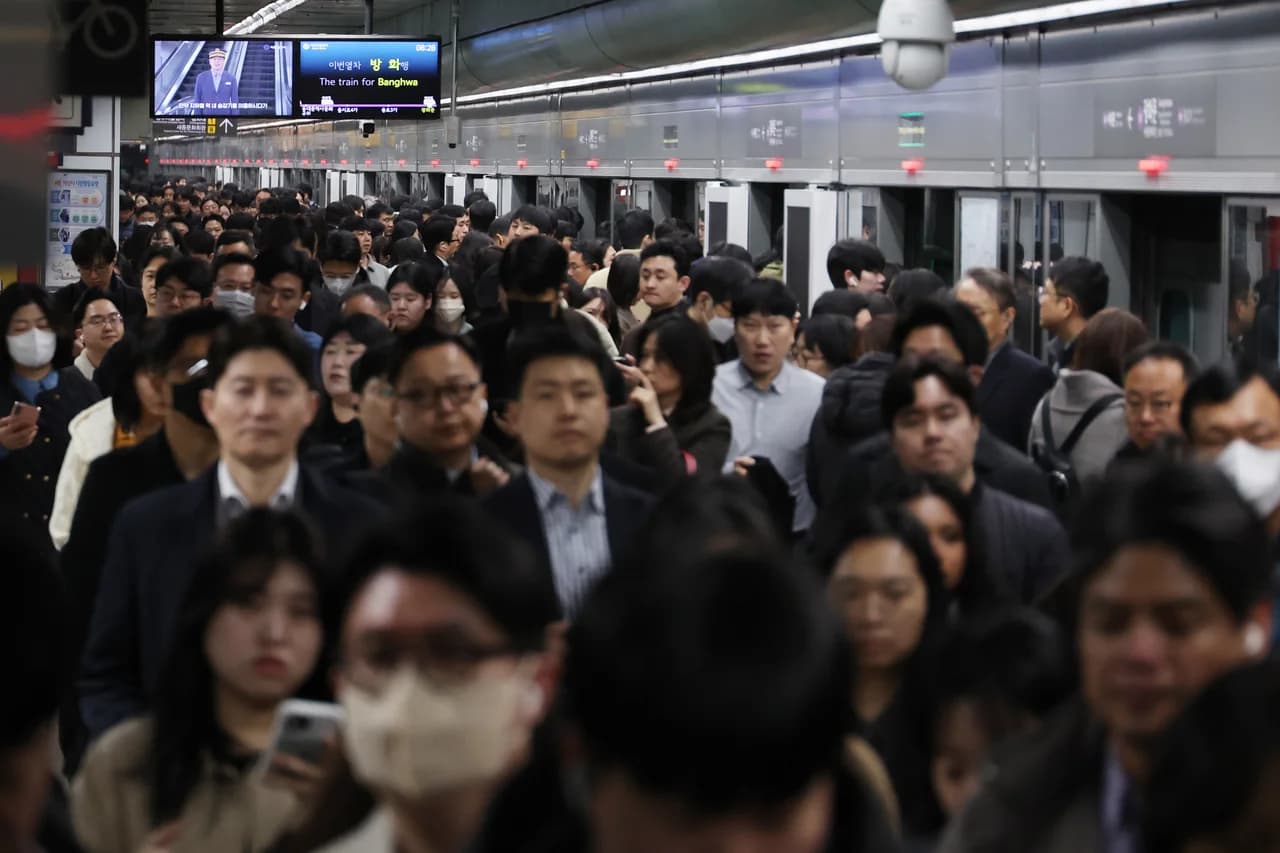
Middle East Conflict Drives Manufacturing Outlook to 10-Month Low
The Korea Institute for Industrial Economics & Trade survey shows April manufacturing outlook PSI plummeted to 88, falling below baseline for the first time in 10 months.

Lee Jae-myung Administration Excludes Multi-Home Officials from Real Estate Policymaking
President Lee Jae-myung has ordered the exclusion of multi-home owning public officials from all real estate policy processes.
Southeast Asia Growth Forecasts Cut Amid Oil Price Surge, Threatening Korean Exports
Maybank Research has downgraded ASEAN-6's 2026 growth forecast from 4.8% to 4.5%.

Volkswagen CEO Says Germany Should Learn from China's Industrial Strategy
Volkswagen CEO stated that Germany should learn from China's systematic industrial planning approach.

Reddit Considers Face ID to Block Bots While Maintaining Anonymity
Reddit is considering implementing biometric authentication systems such as Face ID and Touch ID to block AI bots while maintaining anonymity.