Japanese X-ray Observatory makes first direct measurement of ultrafast 'cosmic wind' in galaxy M82
Hot gas erupting at 3.2 million kilometers per hour confirmed to be the driving force of galactic-scale winds

- •XRISM telescope makes first direct measurement of superhot gas velocity in M82 galaxy at 3.2 million kilometers per hour
- •These hot winds have been identified as the main force driving galactic-scale cold winds
- •Study suggests galactic winds can be formed from heat alone, without cosmic rays
The speed of the most violent wind in space has been measured
For the first time, astronomers have succeeded in directly measuring the speed of ultra-hot gas erupting from the center of nearby galaxy M82, which is experiencing explosive star formation activity. As a result of analyzing data collected through the Resolve equipment of the
“Before XRISM, we didn’t have the ability to measure speeds to test this hypothesis,” said Dr. Erin Boettcher of the University of Maryland and NASA’s Goddard Space Flight Center, who led the study.
Why the M82 galaxy is important
M82, also known as the 'Cigar Galaxy', is located in the constellation Ursa Major, about 12 million light-years away from Earth. This galaxy is classified as a 'starburst galaxy', with a rate of star formation relative to its size that is about 10 times faster than that of our Galaxy. In particular, M82's cold wind extends up to 40,000 light-years and emits a huge amount of gas and dust, and several space telescopes, including NASA's Chandra, Webb, and Hubble, have intensively studied this phenomenon.
The key significance of this study is that it demonstrated the link between star formation activity and large-scale gas outflow with measured data. The researchers measured the speed of the wind by analyzing X-ray signals emitted from ultra-hot iron at the center of the galaxy. As a result of checking the temperature using the X-ray emission of elements including iron, it met the predicted value of about 25 million degrees Celsius.
Starburst galaxy research continued for over 30 years
Systematic research on M82 began in earnest with the development of X-ray astronomy in the 1990s. In the 2000s, the Chandra However, the actual speed of the hot wind could not be directly measured due to technical limitations.
XRISM's resolve equipment, which began full operation in 2024, has the high resolution and sensitivity to solve this difficult problem. This is a method of calculating the moving speed of gas by analyzing the degree of expansion of iron's spectral line using the Doppler effect. XRISM is an international mission led by JAXA and cooperated with NASA and the European Space Agency (ESA), and the Resolve equipment was jointly developed by NASA and JAXA.
Future outlook [AI analysis]
This study is likely to spark a new debate about the role of cosmic rays. Previous theories have assumed that cosmic rays, which are high-speed charged particles, may be the main pressure source of the galactic wind, but the results of this measurement show that heat and speed alone are enough to drive the cold wind.
However, there remains another mystery revealed by the researchers. The center of M82 is calculated to release gas equivalent to 7 solar masses every year, but at the measured wind speed, it can only push out gas equivalent to 4 solar masses per year. This suggests the possibility that additional gas outflow mechanisms exist.
In the future, comparative studies with other starburst galaxies are expected to be conducted through continued observations by XRISM, which is expected to advance the understanding of galaxy evolution and material circulation. The results of this study were published in Nature on March 25.
댓글 (3)
이런 긍정적인 뉴스가 더 많았으면 좋겠습니다.
관계자분들의 노력에 박수를 보냅니다.
Observatory 소식 반갑습니다. 앞으로가 더 기대됩니다.
More in AI & Tech

영국 정치지도자들, 아동 성착취 혐의에 대한 긴급 조사 촉구

A humanoid robot performing in China has a child's face on it.

U.S. jury finds Meta and Google responsible for ‘social media addiction’… 3.7 billion won compensation ruling

NASA selects 24 people for 2026 Astrophysics Postdoctoral Fellowships

Ethereum is at a crossroads to ‘redefine its identity’ ahead of the quantum computing and AI era

Ethereum Foundation launches a hub dedicated to responding to quantum computer threats... 10 or more teams involved
Latest News

아이티 갱단 폭력사태로 10개월간 5천명 이상 사망
아이티에서 지난 10개월간 갱단 폭력으로 5천명 이상 사망
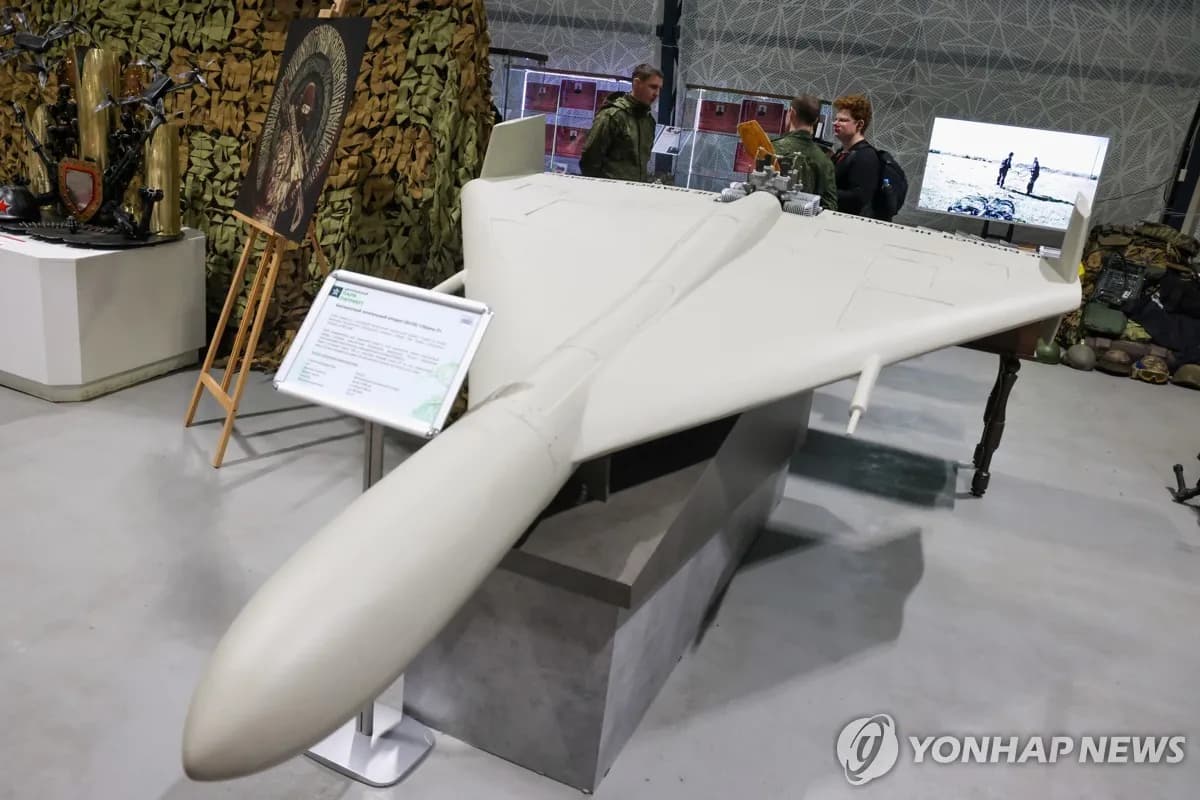
서방 정보당국 "러시아, 우크라이나 전쟁 후 이란에 드론·식량 공급"
서방 정보당국, 러시아의 이란 드론·식량 공급 작업 거의 완료 파악

6년 전 세 살 딸 살해한 30대 친모 구속송치
경찰, 6년 전 세 살 딸 살해 혐의 30대 친모를 구속송치

中企 수입 나프타의 80% 이상이 중동산…공급망 위기 심화
중소기업 수입 나프타의 80% 이상이 중동산으로 공급 의존도 높음

미·이란 긴장 한 달, 금융시장 요동…장기화 우려
미·이란 갈등으로 증시 변동성 확대, 코스피 6천 고지 후 등락

미·이란 전쟁 한 달, 미국 전문가 "종전·확전 기로"
미·이란 전쟁 1개월 도래, 종전·확전 기로 평가

미·이란 전쟁 1개월, 한국 안보·공급망 취약점 노출
미·이란 전쟁 장기화로 한국 안보·경제 취약점 노출

미·이란 군사작전 개시 1개월, 긴장 고조
미국·이스라엘 대이란 군사작전 개시 1개월 경과