The Forgotten Female Architect: Truth Behind a 20th Century Masterpiece
Lilly Reich, the True Co-Designer of Barcelona's German Pavilion, Restored to History After 100 Years
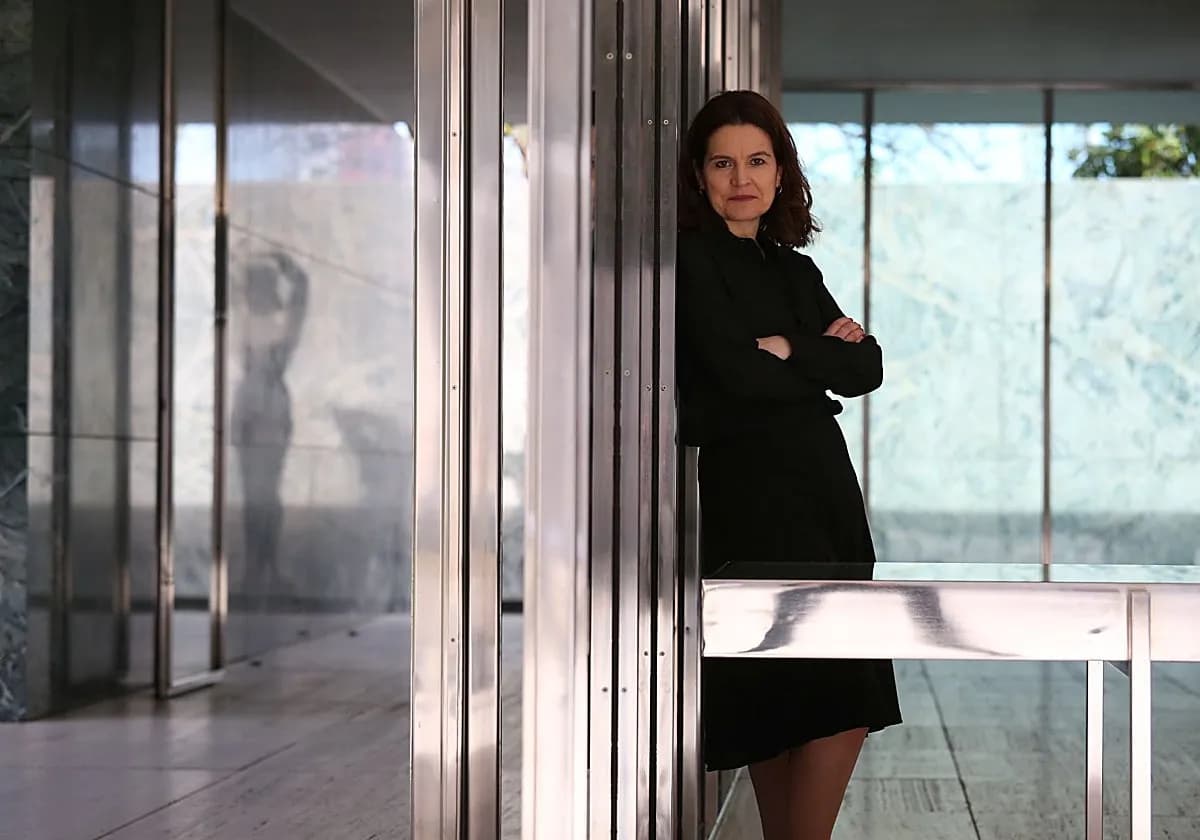
- •Spanish researcher's investigation revealed that the actual co-designer of the 1929 Barcelona German Pavilion was female architect Lilly Reich.
- •This building, known for nearly 100 years as Mies van der Rohe's solo work, is one of the most influential works in modern architectural history.
- •Reich's rediscovery is expected to be an important turning point not only for reinterpreting architectural history but also for restoring the achievements of female artists.
The Hidden Protagonist Behind a Building That Changed 20th Century Architecture
The German Pavilion built for the 1929 Barcelona International Exposition is considered one of the most influential architectural works in modern architectural history. Spanish researcher Laura Martínez de Guereñu's investigation has revealed that this building, known as a masterpiece by Mies van der Rohe, was actually the result of collaboration with female architect Lilly Reich.
As Reich's name, erased from history for nearly 100 years, is being restored, an important turning point is being established not only for architectural history but also for the reassessment of female artists' achievements.
Why Did Her Name Disappear?
Lilly Reich was not merely an assistant. She played a crucial role in interior design, furniture arrangement, and spatial composition, working closely with Mies van der Rohe. However, due to the male-centered practices of the architectural field at the time and the loss of records after World War II, her contributions were omitted from official history.
Researcher Martínez de Guereñu emphasizes through her investigation at the restored German Pavilion in Barcelona that "without Reich, the spatial completeness of this building would have been impossible." Her research goes beyond simply restoring one person's name—it is a project to reinterpret the entire architectural history of the 20th century.
The Birth of Modern Architecture and the Role of Female Architects
The 1920s were a period when architecture began to break away from decorative traditions and pursue the essence of function and space. It was a time when the Bauhaus movement was expanding and a new architectural language utilizing steel and glass was being formed.
The Barcelona German Pavilion stands at the pinnacle of this trend. Open floor plans, flowing spatial composition, and beauty maximized with minimal materials influenced all subsequent modern architecture. Major museums including the Museum of Modern Art (MoMA) in New York treat this building as a symbol of 20th century architecture.
However, behind this innovation was Lilly Reich, a hidden designer. She had already gained renown in the fields of textile design and exhibition design, and with her original sense of space, she made Mies van der Rohe's architectural vision realizable.
Rediscovering Female Artists in History
Lilly Reich's case represents a pattern that has repeated throughout art history. Before Frida Kahlo, she was known only as Diego Rivera's wife, and there was a time when Camille Claudel was remembered only as Auguste Rodin's student and lover.
Recently, the art and architecture worlds have seen active movements to re-examine the achievements of female creators. Since the 2010s, major museums have expanded exhibitions of female artists, and academia has continued research re-examining historical records. Laura Martínez de Guereñu's research is evaluated as an important achievement filling a gap in architectural history within this trend.
Future Prospects [AI Analysis]
The rediscovery of Lilly Reich is highly likely to trigger the rewriting of architectural history textbooks and exhibition descriptions. As the Barcelona German Pavilion is an architectural landmark visited by hundreds of thousands annually, it is expected to be introduced in the future as a joint work by Mies van der Rohe and Lilly Reich.
Furthermore, this research could lead to re-examination of other historical buildings. Follow-up research on female architects who were active in the early-to-mid 20th century architectural world but were omitted from records is expected to become more active.
Discussions about gender balance and historical justice in the fields of art and architecture will continue to expand. Reich's case carries significance beyond simply correcting the past—it lays the foundation for current and future female creators to receive proper recognition.
댓글 (4)
기사 잘 봤습니다. 다른 시각의 분석도 읽어보고 싶네요.
공감합니다. 참고하겠습니다.
간결하면서도 핵심을 잘 정리한 기사네요.
Female에 대해 더 알고 싶어졌습니다. 후속 기사 부탁드립니다.
More in Culture & Art

Government Provides 1 Billion Won in Emergency Disaster Funds for Daejeon Factory Fire Recovery

Existence Blooming Through Vulnerability: Massimo Lagrotteria Solo Exhibition

Milan Design Week 2026: Hotels Transform into Laboratories of Dreams

The Future of Living on the Moon, Mars, and Deep Sea: Houses Designed by Architects

15,000-Year-Old Clay Beads Made by Children Rewrite Prehistoric Art History

Reuters Reports Banksy's Identity Revealed, Reigniting Anonymity Debate
Latest News

이스라엘, 헤즈볼라 무기 통로 레바논 다리 공습
이스라엘군, 헤즈볼라 무기 통로 레바논 다리 공습

중동행 전세기 전쟁보험료 최고 7천500만원
중동행 전세기 전쟁보험료가 최고 5만달러(7천500만원)로 상승

이란 탄도미사일, 이스라엘 방어망 뚫고 160명 부상
이란 탄도미사일이 이스라엘 방공망을 통과해 160명 부상

Middle East Conflict Drives Manufacturing Outlook to 10-Month Low
The Korea Institute for Industrial Economics & Trade survey shows April manufacturing outlook PSI plummeted to 88, falling below baseline for the first time in 10 months.

Lee Jae-myung Administration Excludes Multi-Home Officials from Real Estate Policymaking
President Lee Jae-myung has ordered the exclusion of multi-home owning public officials from all real estate policy processes.

Southeast Asia Growth Forecasts Cut Amid Oil Price Surge, Threatening Korean Exports
Maybank Research has downgraded ASEAN-6's 2026 growth forecast from 4.8% to 4.5%.

Volkswagen CEO Says Germany Should Learn from China's Industrial Strategy
Volkswagen CEO stated that Germany should learn from China's systematic industrial planning approach.

Reddit Considers Face ID to Block Bots While Maintaining Anonymity
Reddit is considering implementing biometric authentication systems such as Face ID and Touch ID to block AI bots while maintaining anonymity.