Juno Hair Sale Demonstrates K-Service Era: Hair Salons Prove Global Competitiveness
Launch of 150 Trillion Won National Growth Fund and K-Content Popularity Expected to Revitalize SME M&A Market

- •Juno Hair's sale to Blackstone demonstrates the global competitiveness of K-services, showing that Korean companies' overseas expansion strategies are extending from manufacturing to the service sector.
- •As the government's 150 trillion won National Growth Fund begins full-scale operation, Korea's M&A market and cross-border transactions with Japan are expected to become more active in 2026.
- •In response to the Financial Services Commission's strengthened private equity fund regulations, the introduction of ESG due diligence is becoming important, and large corporations are expected to accelerate portfolio restructuring through the sale of underperforming business units and investment in future industries.
K-Beauty Salons' Global Expansion: A New Signal for Export Strategy
Global private equity firm Blackstone's acquisition of domestic hair salon chain Juno Hair last year has drawn attention to new possibilities for Korea's service industry. Kim Yi-dong, head of the Deal Advisory division at Samjong KPMG, evaluated the deal as "a case where Juno Hair's sale was recognized for the possibility that Korean companies' 'systems' can expand overseas."
This transaction goes beyond a simple corporate sale, serving as a symbolic event showing that Korean companies' competitiveness is expanding from manufacturing to the service sector. As the influence of K-content extends beyond movies and dramas to lifestyle-oriented service areas such as beauty and cosmetics, global investors have begun to take interest in Korean products and services as a whole.
150 Trillion Won National Growth Fund: A Catalyst for M&A Market Activation
Kim cited the National Growth Fund and internationalization as key keywords for Korea's M&A market in 2026. As the government's 150 trillion won National Growth Fund, which will be invested in high-tech strategic industries such as AI, semiconductors, bio, secondary batteries, and future vehicles over the next five years, begins full-scale operation, M&A activities and overseas expansion of ecosystem companies are expected to become more active.
"We are looking forward to this year's M&A market. As 150 trillion won is invested in future growth sectors, M&A of ecosystem companies, overseas expansion, and joint venture establishments will become more active," he emphasized, adding that "companies must construct and execute persuasive logic that they contribute to the national economy based on investment funds."
Korea's M&A market has been in a slump since peaking in 2021. In this situation, large-scale government investment is expected to serve as a catalyst to inject vitality into the market.
Expected Increase in Cross-Border Deals with Japan
Along with improvements in the domestic investment environment, cross-border M&A transactions are also expected to expand. Deals with Japan are particularly drawing attention. Kim noted, "Japan's M&A market has recently been activated. Japan has many companies with source technologies and precision manufacturing capabilities that Korean companies desire," forecasting that bilateral cooperation attempts will lead to M&A activation.
Japanese companies are also actively seeking cooperation to establish a foundation for supplying to Korea's semiconductor and automotive conglomerates, suggesting a high possibility of forming mutually complementary relationships.
Accelerating Portfolio Restructuring Among Large Corporations
Kim forecasted that the trend of business reorganization and carve-outs (business division spin-offs) among large corporations will continue this year. "Portfolio restructuring seems to become a 'routine' management activity. The Trump administration's tariff issues and pressure for U.S. investment were unpredictable," he emphasized, noting that constant business evaluation, sales, and new investments are necessary to respond to rapidly changing circumstances.
Specifically, he expects companies to sell underperforming business units in petrochemicals, steel, distribution, construction, and some consumer goods industries, and invest the secured resources in semiconductors, AI, healthcare, power infrastructure, defense industry, senior industry, and K-content.
Samjong KPMG Innovates Operations with AI Platform
Samjong KPMG introduced AI-based platform 'Deal Mind' in July last year as the first in the industry. This platform integrates and manages information collected by domestic and international partners to identify acquisition and sale opportunities, dramatically reducing the time required for potential investor listing work.
Expectations are particularly high for the Carve-out TF (Task Force). Kim explained, "When a place that was a business unit of one company becomes 'independent,' opportunities and problems arise simultaneously," noting that advisory activities are needed to estimate costs that can be reduced through separation, new customers, IT service transfers, and personnel redeployment.
Responding to Strengthened Private Equity Regulations with ESG Due Diligence
On December 22 last year, the Financial Services Commission announced private equity fund (PEF) improvement measures, outlining the contours of regulatory strengthening. Measures to establish governance and internal controls at the level of financial companies are expected to be required to strengthen the responsibility and transparency of general partners (GPs).
Kim emphasized the need to accept the expanding concept of 'stakeholders' surrounding private equity funds. "The scope of consideration surrounding private equity funds is getting broader. Industry stakeholders must also accept this and form some degree of consensus," he said, noting the need to move away from viewing private equity funds only as private contracts between GPs and limited partners (LPs).
As a countermeasure, the importance of introducing Environmental, Social, and Governance (ESG) due diligence is being highlighted. Non-financial risks such as ESG should be examined during the M&A due diligence stage to consider more stakeholders. Kim forecasted, "The scope of due diligence should include the impact on expanded stakeholders and coordination should be made within a socially acceptable range."
While regulatory strengthening may act as a burden on the market in the short term, it is expected to contribute to enhancing transparency and establishing a foundation for sustainable growth in the long term.
댓글 (4)
Juno 소식 반갑습니다. 앞으로가 더 기대됩니다.
동의합니다. 앞으로가 더 기대됩니다.
Hair 정말 대단하네요! 좋은 소식입니다.
이런 긍정적인 뉴스가 더 많았으면 좋겠습니다.
More in Economy

Middle East Conflict Drives Manufacturing Outlook to 10-Month Low
Lee Jae-myung Administration Excludes Multi-Home Officials from Real Estate Policymaking

Volkswagen CEO Says Germany Should Learn from China's Industrial Strategy

Russia Anticipates Economic Gains from US-Iran Conflict

U.S. Federal Reserve Unveils Bank Capital Regulation Modernization Plan

Federal Reserve Announces Enforcement Actions Against Two Former Bank Employees
Latest News
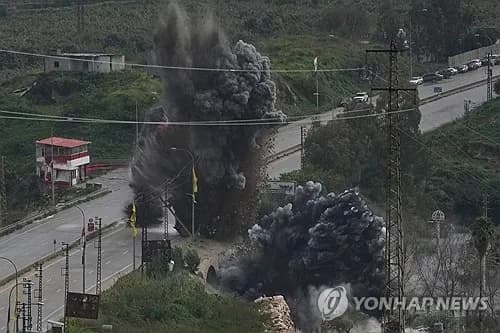
이스라엘, 헤즈볼라 무기 통로 레바논 다리 공습
이스라엘군, 헤즈볼라 무기 통로 레바논 다리 공습

중동행 전세기 전쟁보험료 최고 7천500만원
중동행 전세기 전쟁보험료가 최고 5만달러(7천500만원)로 상승

이란 탄도미사일, 이스라엘 방어망 뚫고 160명 부상
이란 탄도미사일이 이스라엘 방공망을 통과해 160명 부상

Southeast Asia Growth Forecasts Cut Amid Oil Price Surge, Threatening Korean Exports
Maybank Research has downgraded ASEAN-6's 2026 growth forecast from 4.8% to 4.5%.

Reddit Considers Face ID to Block Bots While Maintaining Anonymity
Reddit is considering implementing biometric authentication systems such as Face ID and Touch ID to block AI bots while maintaining anonymity.

BTS Tops March Artist Brand Reputation Rankings with First Full Group Comeback in 4 Years
BTS ranked first in the Korean Corporate Reputation Research Institute's March Artist Brand Reputation Rankings based on 99 million data points.

Santo Domingo's Malecón Sports Park Construction Progressing Smoothly
Construction of a soccer field and skate park is progressing smoothly in the Malecón area of Santo Domingo, Dominican Republic.

Pogačar Overcomes Crash to Win Milano-Sanremo, Achieves Four Monument Victories
Tadej Pogačar defeated Tom Pidcock to win Milano-Sanremo, achieving his fourth Monument victory.