Constantin Rădulescu-Motru: Laying the Foundation of Modern Romanian Philosophy
The Founder of Personalist Energeticism Who Fused Individualism with National Identity
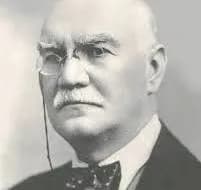
- •Constantin Rădulescu-Motru was an intellectual who established modern Romanian philosophy by combining German experimental psychology with Kantian idealism.
- •He founded Personalist Energeticism and advocated cultural nationalism while criticizing superficial Westernization.
- •Though marginalized under the communist regime in 1947, his thought is being reevaluated as an important legacy in Romanian philosophical history.
Romanian Philosophical Giant Reexamined After 68 Years
Constantin Rădulescu-Motru (1868-1957) was an intellectual who played a decisive role in shaping modern Romanian philosophy. Active as a philosopher, psychologist, pedagogue, and sociologist, he connected Romanian intellectual circles with mainstream European scholarship.
Born in 1868 to an aristocratic family in Butoiești, Mehedinți County, he graduated from the Faculty of Law in Bucharest but was captivated by philosophy and studied under Wilhelm Wundt, the founder of experimental psychology, at the University of Leipzig in Germany. His 1892 doctoral dissertation 'Personality: A Philosophical-Psychological Study' became the starting point of his lifelong intellectual work.
After returning home, he served as a professor at the University of Bucharest and held the position of President of the Romanian Academy from 1938 to 1941. He was also active in cultural circles, serving as director of the National Theatre, and during the interwar period maintained close ties with conservative political movements.
Personalist Energeticism: The Dialectic of Individual and Culture
The core of Rădulescu-Motru's thought is Personalist Energeticism. First presented in his 1904 work 'Romanian Culture and Politicianism', this theory argues that 'personality' is formed only when an individual's psychological energy is organized and disciplined within culture.
This original perspective, which combined Kantian idealism with German psychological positivism, embodies a humanistic vision that individuals grow into moral subjects through education, labor, and social responsibility.
Critique of 'Form Without Content' Modernization
He inherited and developed the 'forms without content' critique initiated by his mentor Titu Maiorescu, sharply pointing out the illusions of Romanian modernization. He argued that while Western institutions were imported, the spiritual and moral foundations to support them were not established, resulting in superficial imitation.
In his 1923 work 'Nationalism in Romanian Culture', he advocated cultural nationalism. This was not aggressive or exclusionary nationalism, but rather a call to organically develop the national spirit through education and culture while maintaining an open attitude toward universality. It was a balanced perspective that warned against mechanical imitation of foreign models while rejecting isolationism.
Pioneer of Modern Romanian Education and Sociology
In the field of pedagogy, Rădulescu-Motru was a pioneer of modern educational theory emphasizing personality formation and social responsibility. His educational philosophy, which prioritized individual moral growth rather than mere knowledge transmission, influenced the formation of Romania's public education system.
As a sociologist, he actively participated in debates on Romanian social modernization while exploring the relationship between individual and community. He led intellectual circles by contributing to major academic journals including 'Noua Revistă Română' (New Romanian Review), which he founded, as well as 'Philosophy Journal', 'European Ideas', and 'Thought'.
Political Vicissitudes and Final Days in Isolation
Politically, he was initially close to conservative circles but later collaborated with King Carol II's authoritarian regime. However, he did not support the fascism of the Iron Guard (Garda de Fier).
After the establishment of the communist regime in 1947, he was thoroughly marginalized. Publication of his writings was banned and he was excluded from official events, dying in silence in 1957. Even after his death, his name could not be mentioned in Romanian academic circles for some time.
Legacy in Romanian Philosophy [AI Analysis]
Rădulescu-Motru's intellectual legacy can be summarized in three points.
First, he introduced modern methodology to Romanian philosophy and psychology. While accepting Wundt's experimental psychology, he constructed an independent philosophical system that enhanced the autonomy of Romanian scholarship.
Second, he established personalist theory suitable for Romanian culture. His approach of importing Western philosophy but reinterpreting it to fit Romanian reality can serve as a reference point for cultural identity discussions even today.
Third, he sought balance between cultural nationalism and universalism. His perspective, which rejected both blind Westernization and closed nationalism, offers insights for the cultural strategies of small nations in the era of globalization.
Although his thought was forgotten during the communist era suppression, reevaluation has been underway in Romania since 1989. The question he posed—'What is genuine modernization?'—remains valid today.
댓글 (5)
간결하면서도 핵심을 잘 정리한 기사네요.
좋은 의견이십니다.
Laying에 대해 더 알고 싶어졌습니다. 후속 기사 부탁드립니다.
the 관련 기사 잘 읽었습니다. 유익한 정보네요.
좋은 의견이십니다.
More in Special
The Corsican Mafia Exposed: Breaking a Century of Silence

AI-Generated Fake Person Used to Sell Dubai Flight Seats

Facebook Groups Traded Endangered Species Using Code Language — Indonesian Broker Network Exposed

G6 Alliance Declares Support for Hormuz Strait Security... Reverses Stance Under Trump Pressure

Seoul's Average Monthly Rent Surpasses 1.51 Million Won as Soaring Official Property Prices Trigger 'Housing Cost Bomb'

Rihanna Tops Spotify Without New Album for 10 Years, Proving Power of Catalog
Latest News

이스라엘, 헤즈볼라 무기 통로 레바논 다리 공습
이스라엘군, 헤즈볼라 무기 통로 레바논 다리 공습

중동행 전세기 전쟁보험료 최고 7천500만원
중동행 전세기 전쟁보험료가 최고 5만달러(7천500만원)로 상승

이란 탄도미사일, 이스라엘 방어망 뚫고 160명 부상
이란 탄도미사일이 이스라엘 방공망을 통과해 160명 부상

Middle East Conflict Drives Manufacturing Outlook to 10-Month Low
The Korea Institute for Industrial Economics & Trade survey shows April manufacturing outlook PSI plummeted to 88, falling below baseline for the first time in 10 months.

Lee Jae-myung Administration Excludes Multi-Home Officials from Real Estate Policymaking
President Lee Jae-myung has ordered the exclusion of multi-home owning public officials from all real estate policy processes.

Southeast Asia Growth Forecasts Cut Amid Oil Price Surge, Threatening Korean Exports
Maybank Research has downgraded ASEAN-6's 2026 growth forecast from 4.8% to 4.5%.
Volkswagen CEO Says Germany Should Learn from China's Industrial Strategy
Volkswagen CEO stated that Germany should learn from China's systematic industrial planning approach.

Reddit Considers Face ID to Block Bots While Maintaining Anonymity
Reddit is considering implementing biometric authentication systems such as Face ID and Touch ID to block AI bots while maintaining anonymity.