Trump Overhauls Washington Bureaucracy Over 7 Months
From Federal Reserve Board Dismissal to Intelligence Agency Restructuring, 'Deep State' Dismantling Accelerates
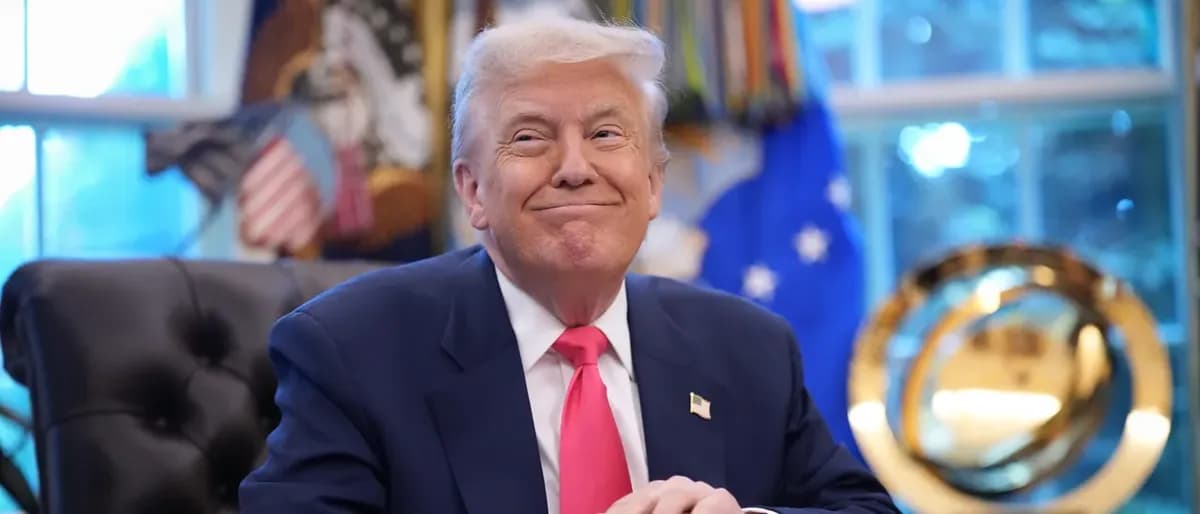
- •President Trump has conducted a comprehensive federal bureaucracy overhaul over seven months, dismissing a Federal Reserve Board governor, firing over 20 Inspectors General, and revoking security clearances for approximately 40 intelligence professionals.
- •A February executive order restructured independent regulatory agencies under direct White House control, with personnel overhauls extending to the Bureau of Labor Statistics and the Department of Justice.
- •Trump declared a crime emergency in Washington DC and deployed the National Guard, with plans to extend similar security operations to Chicago and New York.
Beginning of Massive Personnel Overhaul
President Donald Trump has been conducting a sweeping overhaul of Washington DC's federal bureaucratic system during his first seven months in office. The Trump administration is focused on drastically reducing the autonomy of federal agencies and replacing key personnel to dismantle what was an election campaign promise: the 'Deep State.'
The most recent example is the dismissal of Federal Reserve Board Governor Lisa Cook. President Trump immediately removed Cook, citing allegations of document fraud for registering residences in two states, invoking the Federal Reserve Act. Cook, nominated by former President Joe Biden, was dismissed shortly after Federal Housing Finance Agency (FHFA) Director Bill Pulte referred the matter to the Department of Justice for investigation.
Subordination of Regulatory Agencies to the White House
The Trump administration's overhaul began in earnest with an executive order that took effect in February. This order restructured all regulatory agencies that had maintained independence for decades, placing them directly under White House control. Agencies like the Consumer Financial Protection Bureau (CFPB) and the U.S. Agency for International Development (USAID) were either significantly downsized or restructured.
According to the New York Times, Trump has fired or demoted more than 20 Inspectors General since taking office. Inspectors General serve as independent positions that monitor fraud and misconduct within federal agencies, and their mass replacement represents a fundamental change in the administration's oversight system.
Economic Statistics Agencies Under Control
Trump's overhaul has extended to the Bureau of Labor Statistics (BLS), which handles economic data. Following the July jobs report showing only 73,000 nonfarm payroll additions, Trump nominated economist E.J. Antoni as BLS Commissioner and ordered the dismissal of current Commissioner Erica Groshen.
Trump claimed that Groshen "manipulated job numbers ahead of the 2024 election to increase Kamala Harris's chances of winning." This has sparked controversy over the political neutrality of government statistical agencies.
Washington DC Security Operations
Alongside administrative restructuring, Trump has moved to strengthen security in the capital region. Earlier this month, he declared a crime emergency in Washington DC and deployed the National Guard. Trump told reporters on Friday that "once the DC operation is complete, Chicago will be next," adding that "New York will follow."
Trump refers to himself as the "chief law enforcement officer" and is overseeing criminal investigations related to 'Russiagate' through the Department of Justice.
Mass Revocation of Intelligence Community Security Clearances
The Office of the Director of National Intelligence (ODNI) released documents related to 'Russiagate'—allegations that Trump's 2016 campaign colluded with Russia. Subsequently, Director of National Intelligence Tulsi Gabbard revoked security clearances for approximately 40 current and former intelligence professionals.
Gabbard criticized them for "politicizing intelligence and abusing public trust," with many reportedly involved in the 2017 Intelligence Community Assessment (ICA) under then-Director of National Intelligence James Clapper during the Obama administration.
Historical Context: Presidential Attempts to Control Bureaucracy
Presidential attempts to control the federal bureaucracy are not a new phenomenon in the United States. Since the Pendleton Act of 1883 established a merit-based civil service system, presidential personnel authority has been limited.
President Richard Nixon attempted to control bureaucracy through the concept of the 'Administrative Presidency' in the 1970s, but failed due to the Watergate scandal. Ronald Reagan used executive orders for deregulation, but the autonomy of independent agencies was maintained.
During Trump's first administration (2017-2021), he attempted to convert policy-related civil servants to political appointees through the 'Schedule F' executive order, which was later rescinded by the Biden administration. The current overhaul in his second administration appears far more extensive and systematic than the first.
Future Outlook [AI Analysis]
The Trump administration's bureaucratic restructuring is likely to bring fundamental changes to the U.S. administrative system. While weakening the autonomy of independent regulatory agencies may improve policy implementation efficiency in the short term, concerns are raised about long-term damage to political neutrality and expertise.
Particularly, the weakening independence of key institutions like economic statistics agencies and the Federal Reserve could affect financial market confidence. If market participants doubt the objectivity of government-released statistics, confusion in investment decisions and policy evaluation may arise.
The legal community and academia are already debating the legal basis for dismissing Federal Reserve Board governors. Future judicial decisions are likely to redefine the scope of the executive branch's personnel authority, potentially setting an important precedent for the principle of separation of powers in the United States.
The massive revocation of security clearances in intelligence agencies could create gaps in information-sharing systems. Concerns are also being raised about the national security implications of excluding experienced intelligence professionals.
댓글 (4)
Trump에 대해 더 알고 싶어졌습니다. 후속 기사 부탁드립니다.
그 부분은 저도 궁금했습니다.
기사 잘 봤습니다. 다른 시각의 분석도 읽어보고 싶네요.
Washington 관련 기사 잘 읽었습니다. 유익한 정보네요.
More in Special

The Corsican Mafia Exposed: Breaking a Century of Silence

AI-Generated Fake Person Used to Sell Dubai Flight Seats

Facebook Groups Traded Endangered Species Using Code Language — Indonesian Broker Network Exposed

G6 Alliance Declares Support for Hormuz Strait Security... Reverses Stance Under Trump Pressure

Seoul's Average Monthly Rent Surpasses 1.51 Million Won as Soaring Official Property Prices Trigger 'Housing Cost Bomb'

Rihanna Tops Spotify Without New Album for 10 Years, Proving Power of Catalog
Latest News

이스라엘, 헤즈볼라 무기 통로 레바논 다리 공습
이스라엘군, 헤즈볼라 무기 통로 레바논 다리 공습

중동행 전세기 전쟁보험료 최고 7천500만원
중동행 전세기 전쟁보험료가 최고 5만달러(7천500만원)로 상승

이란 탄도미사일, 이스라엘 방어망 뚫고 160명 부상
이란 탄도미사일이 이스라엘 방공망을 통과해 160명 부상
Middle East Conflict Drives Manufacturing Outlook to 10-Month Low
The Korea Institute for Industrial Economics & Trade survey shows April manufacturing outlook PSI plummeted to 88, falling below baseline for the first time in 10 months.

Lee Jae-myung Administration Excludes Multi-Home Officials from Real Estate Policymaking
President Lee Jae-myung has ordered the exclusion of multi-home owning public officials from all real estate policy processes.

Southeast Asia Growth Forecasts Cut Amid Oil Price Surge, Threatening Korean Exports
Maybank Research has downgraded ASEAN-6's 2026 growth forecast from 4.8% to 4.5%.

Volkswagen CEO Says Germany Should Learn from China's Industrial Strategy
Volkswagen CEO stated that Germany should learn from China's systematic industrial planning approach.

Reddit Considers Face ID to Block Bots While Maintaining Anonymity
Reddit is considering implementing biometric authentication systems such as Face ID and Touch ID to block AI bots while maintaining anonymity.