Faria Lima Wants Crime Money But Doesn't Want to Dirty Its Hands
PCC Researcher and Sociologist Points to Symbiotic Relationship Between Brazilian Finance and Organized Crime

- •Brazil's Federal Police exposed the financial network of PCC, the country's largest criminal organization, revealing the involvement of Faria Lima financiers.
- •Professor Feltran, a leading PCC researcher, pointed out a symbiotic relationship where the financial sector actively wants criminal money.
- •21st century organized crime is characterized by crossing between legal and illegal economies and evading investigation by replacing intermediaries.
Brazil's Largest Criminal Organization Deeply Infiltrates Financial Sector
Last week, a large-scale joint investigation by Brazil's Federal Police (PF) and São Paulo Public Prosecutor's Office (MPSP) revealed the complex financial network of Brazil's largest criminal organization, PCC (Primeiro Comando da Capital). The organization was found to have established a multi-billion dollar money laundering system spanning the entire economy, from fuel imports to gas station operations and even investment funds.
Brazilian society has been shocked by the revelation that funds and fintech companies in Faria Lima, São Paulo's financial district, were used as channels for organized crime money. In this operation, over 200 arrest warrants were issued, exposing multi-layered criminal structures including illegal fuel imports, tax evasion, and money laundering.
Not Infiltration but Symbiosis: The Active Role of the Financial Sector
Gabriel Feltran, a leading authority on PCC research, challenges the very perspective on this case. A research director at France's National Center for Scientific Research (CNRS) and professor at Sciences Po, he disputes the expression that "organized crime has infiltrated Faria Lima."
"I don't know who is 'infiltrating' whom. Perhaps it's the financiers and politicians of Faria Lima who are trying to infiltrate to capture a multi-billion dollar illegal market economy?" Professor Feltran pointed out in an interview with BBC Brasil.
He added that "the financial market actively wants crime money and is figuring out how to get that money without dirtying its hands." This means there exists a structural symbiotic relationship where the financial sector not only tolerates but even welcomes the influx of criminal funds, rather than simply criminal organizations seeping into the legitimate economy.
Characteristics of 21st Century Organized Crime: Blurring the Lines Between Legal and Illegal
In his book "Irmãos: Uma História do PCC" (Brothers: A History of PCC), Professor Feltran has analyzed the key characteristics of modern organized crime. What he emphasizes is that 21st century criminal organizations simultaneously operate legal and illegal economies, breaking down the boundaries between them.
PCC has not limited itself to traditional crimes like drug trafficking or robbery, but has created complex financial structures disguised as legitimate business activities. They have built a system to launder and reinvest criminal proceeds through fuel import companies, gas station chains, and investment funds.
In recent years, Professor Feltran has studied transnational illegal markets spanning the Americas, Europe, and Africa. According to his research, organizations like PCC have already formed global networks across borders and have developed operational systems so sophisticated that they are difficult to distinguish from legitimate companies.
Limitations of Investigation: Only Intermediaries Are Replaced
Finance Minister Fernando Haddad evaluated this operation as having reached "the upper echelons of PCC." However, Professor Feltran is skeptical of such optimism.
"When intermediaries are arrested, does the entire organization collapse? Or do they replace them? Until now, PCC has easily replaced intermediaries just as delivery apps replace delivery workers," he points out.
There was a similar large-scale operation called "Rei do Crime" (King of Crime) in 2020, and dozens of major operations targeting PCC before that. However, far from being damaged, the organization has continued to grow.
While 200 arrest warrants were issued in this operation, PCC is a massive network with tens of thousands of members and millions of intermediaries. The scale of funds under management, which was already in the billions of dollars in 2020, has now grown even larger.
Future Outlook [AI Analysis]
While this investigation by Brazilian authorities is significant in exposing the collusive structure between organized crime and the financial sector, it is unlikely to provide a fundamental solution. As Professor Feltran points out, unless the structural problem of the financial system itself needing criminal money is resolved, there will be limits to enforcement alone.
Given that organizations like PCC are forming global networks, international cooperative investigations and strengthened financial regulations will need to proceed in parallel. In particular, there is a need to further strengthen anti-money laundering (AML) systems for new financial services such as investment funds and fintech.
As the boundaries between organized crime and the legitimate economy become increasingly blurred not only in Brazil but worldwide, cooperation among governments and financial authorities of each country is expected to become more important.
댓글 (4)
흥미로운 주제입니다. 주변에도 공유해야겠어요.
기사 잘 봤습니다. 다른 시각의 분석도 읽어보고 싶네요.
공감합니다. 참고하겠습니다.
간결하면서도 핵심을 잘 정리한 기사네요.
More in Economy

Middle East Conflict Drives Manufacturing Outlook to 10-Month Low

Lee Jae-myung Administration Excludes Multi-Home Officials from Real Estate Policymaking

Volkswagen CEO Says Germany Should Learn from China's Industrial Strategy

Russia Anticipates Economic Gains from US-Iran Conflict
U.S. Federal Reserve Unveils Bank Capital Regulation Modernization Plan
Federal Reserve Announces Enforcement Actions Against Two Former Bank Employees
Latest News
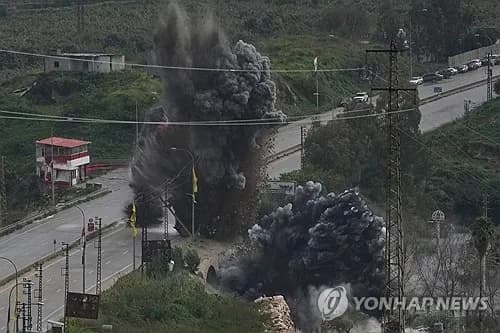
이스라엘, 헤즈볼라 무기 통로 레바논 다리 공습
이스라엘군, 헤즈볼라 무기 통로 레바논 다리 공습

중동행 전세기 전쟁보험료 최고 7천500만원
중동행 전세기 전쟁보험료가 최고 5만달러(7천500만원)로 상승

이란 탄도미사일, 이스라엘 방어망 뚫고 160명 부상
이란 탄도미사일이 이스라엘 방공망을 통과해 160명 부상

Southeast Asia Growth Forecasts Cut Amid Oil Price Surge, Threatening Korean Exports
Maybank Research has downgraded ASEAN-6's 2026 growth forecast from 4.8% to 4.5%.

Reddit Considers Face ID to Block Bots While Maintaining Anonymity
Reddit is considering implementing biometric authentication systems such as Face ID and Touch ID to block AI bots while maintaining anonymity.

BTS Tops March Artist Brand Reputation Rankings with First Full Group Comeback in 4 Years
BTS ranked first in the Korean Corporate Reputation Research Institute's March Artist Brand Reputation Rankings based on 99 million data points.

Santo Domingo's Malecón Sports Park Construction Progressing Smoothly
Construction of a soccer field and skate park is progressing smoothly in the Malecón area of Santo Domingo, Dominican Republic.

Pogačar Overcomes Crash to Win Milano-Sanremo, Achieves Four Monument Victories
Tadej Pogačar defeated Tom Pidcock to win Milano-Sanremo, achieving his fourth Monument victory.