Romania's 2026 University Entrance Exam Schedule Confirmed, Starting First Week of June
Digital Competency Assessment Introduced, Main Exams Begin on 29th—Different Required Subjects for Humanities and Science Tracks

- •Romania's 2026 university entrance exam begins registration on June 2, with main written exams starting June 29.
- •Practical evaluations assess oral language skills and digital competency, graded on a pass/fail basis only.
- •Humanities students must take History while science students must take Mathematics, with the same curriculum maintained for 10 consecutive years.
Romania University Entrance Exam Registration Starts June 2
Romania's Ministry of Education has announced the schedule for the 2026 Baccalaureate (university entrance qualification exam). Students graduating from 12th grade this year will register for the exam from June 2-4, with written exams officially beginning on June 29.
The exam schedule is divided into two main stages: practical evaluations and written exams. Practical evaluations run from June 8-17, assessing language proficiency and digital competency. While this stage is mandatory, it does not affect final scores—students only need to participate to pass.
Four-Component Practical Evaluation, Pass/Fail Only
The practical evaluation consists of:
- June 8-10: Romanian language oral assessment
- June 10-11: Native language oral assessment
- June 11-12: International foreign language assessment
- June 15-17: Digital competency assessment
Students receive one of four proficiency levels instead of numerical scores: 'Începător' (Beginner), 'Mediu' (Intermediate), 'Avansat' (Advanced), or 'Experimentat' (Expert). While these don't affect final scores, failure to take these exams disqualifies students from the written portion.
Main Exams Begin June 29, Romanian Literature First
Written exams begin June 29 with Romanian Language and Literature. The subsequent schedule is:
- June 29: Romanian Language and Literature (required)
- June 30: Track-specific required subjects
- July 2: Major-specific elective subjects
- July 3: Native Language and Literature (applicable students only)
A distinctive feature of Romania's university entrance exam is that required subjects vary by academic track.
Humanities Track (Social Sciences & Languages)
- Required: History
- Elective: Choose one from Geography, Logic, Psychology, Sociology, Economics, or Philosophy
Science Track (Mathematics & IT, Natural Sciences)
- Required: Mathematics
- Elective: Choose one from Physics, Chemistry, Biology, or Computer Science
Technical Track
- Required: Mathematics
- Elective: Services majors choose from Geography/Logic/Psychology/Economics; Natural Resources & Technology majors choose from Physics/Chemistry/Biology
Arts & Physical Education Track
- Required: History
- Elective: Choose one from Geography, Logic, Psychology, Economics, or Philosophy
Same Curriculum for 10 Consecutive Years
While the 2026 exam scope hasn't been officially announced, it's expected to remain unchanged as the same curriculum has been maintained for the past decade.
For Romanian Language and Literature, the exam covers works by 14 key Romanian literary figures including Mihai Eminescu, Ion Creangă, Lucian Blaga, and Nichita Stănescu.
The science track's required subject, Mathematics, will maintain the same scope as previous years, while the humanities required subject, History, focuses on Romanian modern and contemporary history.
How Does It Differ from Korea's CSAT?
Romania's university entrance exam differs from Korea's College Scholastic Ability Test (CSAT) in several ways.
First, practical evaluations are mandatory. While Korea's system determines admission solely through written exams, Romania requires students to pass practical assessments of language and digital competency.
Second, required subjects are clearly distinguished by track. In Korea, Korean, English, and Mathematics are common requirements for all students, but in Romania, humanities students must take History while science students must take Mathematics.
Third, the exam period is extended. Korea's CSAT is completed in one day, while Romania's system spans over two weeks with 10 days of practical evaluations and 5 days of written exams.
Digital Competency Assessment Reflects Educational Trends
A notable feature of this exam is the inclusion of digital competency assessment (proba D). This reflects the educational trend where digital literacy has become essential following the expansion of online education after COVID-19.
While assessment content hasn't been disclosed, it typically includes document creation, spreadsheet usage, online information search, and verification of information authenticity. The European Union has recommended strengthening digital education among member states through the 'DigComp 2.0' framework since 2020, and Romania's exam system reform appears to follow these guidelines.
The Romanian Ministry of Education will release detailed exam guidelines for 2026 later, and prospective test-takers can check subject-specific exam scopes on the ministry's official website.
댓글 (4)
흥미로운 주제입니다. 주변에도 공유해야겠어요.
2026 관련 기사 잘 읽었습니다. 유익한 정보네요.
공감합니다. 참고하겠습니다.
University에 대해 더 알고 싶어졌습니다. 후속 기사 부탁드립니다.
More in Global



Latest News

Middle East Conflict Drives Manufacturing Outlook to 10-Month Low
The Korea Institute for Industrial Economics & Trade survey shows April manufacturing outlook PSI plummeted to 88, falling below baseline for the first time in 10 months.

Lee Jae-myung Administration Excludes Multi-Home Officials from Real Estate Policymaking
President Lee Jae-myung has ordered the exclusion of multi-home owning public officials from all real estate policy processes.

Volkswagen CEO Says Germany Should Learn from China's Industrial Strategy
Volkswagen CEO stated that Germany should learn from China's systematic industrial planning approach.

Reddit Considers Face ID to Block Bots While Maintaining Anonymity
Reddit is considering implementing biometric authentication systems such as Face ID and Touch ID to block AI bots while maintaining anonymity.
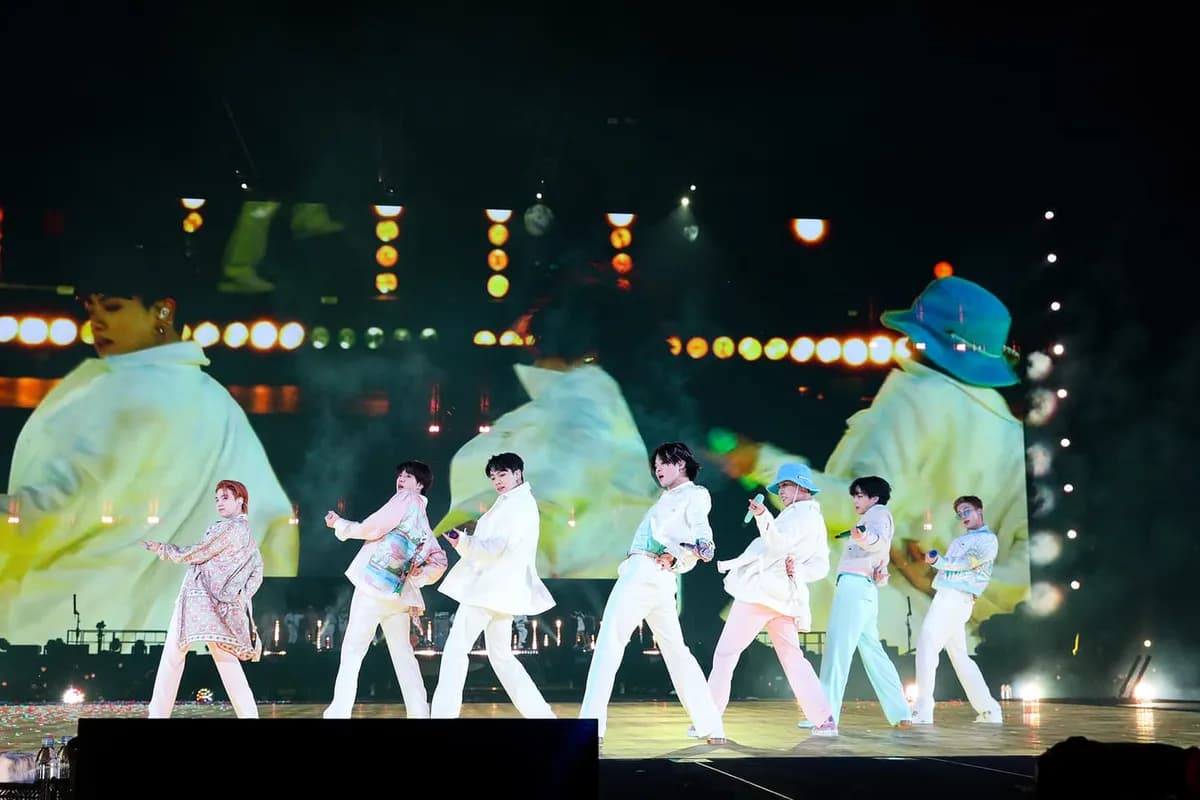
BTS Tops March Artist Brand Reputation Rankings with First Full Group Comeback in 4 Years
BTS ranked first in the Korean Corporate Reputation Research Institute's March Artist Brand Reputation Rankings based on 99 million data points.

Santo Domingo's Malecón Sports Park Construction Progressing Smoothly
Construction of a soccer field and skate park is progressing smoothly in the Malecón area of Santo Domingo, Dominican Republic.

Pogačar Overcomes Crash to Win Milano-Sanremo, Achieves Four Monument Victories
Tadej Pogačar defeated Tom Pidcock to win Milano-Sanremo, achieving his fourth Monument victory.
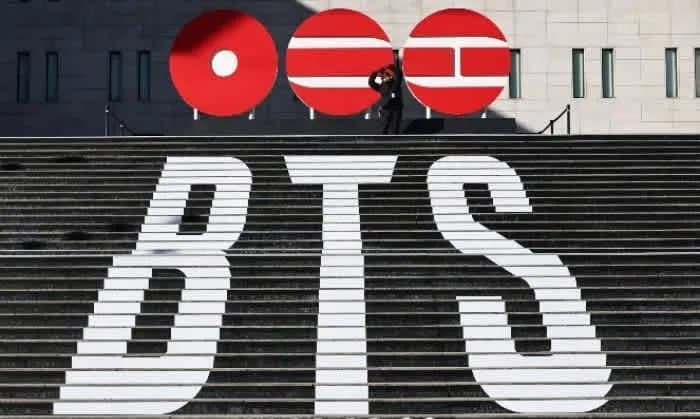
BTS's New Album 'ARIRANG' Sweeps Spotify Global Chart Positions 1-14
BTS's new album 'ARIRANG' monopolized Spotify Global Chart positions 1-14 on its first day, establishing the largest album debut record in K-POP history.