The Reality of the Chinese Communist Party's Infiltration Network in America
United Front Work Department Orchestrates Over 200 Overseas Organizations, Conducting Comprehensive Infiltration of U.S. Politics, Academia, and Diaspora Communities
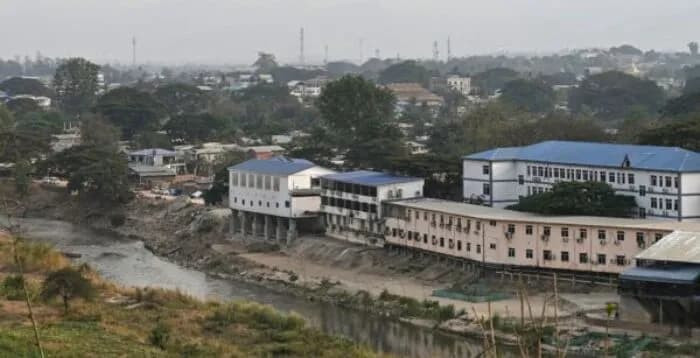
- •The CCP's United Front Work Department conducts comprehensive infiltration operations targeting U.S. politics, academia, and diaspora communities through over 200 organizations operating in America.
- •Confucius Institutes, CSSA, and CCPPNR chapters disguise themselves as educational and cultural institutions while conducting surveillance, intelligence collection, and public opinion manipulation activities.
- •South Korea is also a target of United Front infiltration, necessitating institutional safeguards that protect academic freedom while blocking foreign government influence.
The Core Tool of Unrestricted Warfare: The Overseas United Front System
In the Chinese Communist Party's overseas infiltration strategy, the United Front (统战) system operates deeply intertwined with the propaganda apparatus. While propaganda media focuses on public opinion warfare and cognitive warfare, the United Front system executes espionage, infiltration, subversion, diplomatic warfare, political warfare, and legal warfare.
Within the CCP's internal division of labor, the overseas United Front system holds a higher mission hierarchy than the propaganda apparatus. It possesses the authority to mobilize resources from other departments, including propaganda media, as needed.
Dramatically Expanded United Front Work Department Authority Under Xi Jinping
The CCP's United Front Work Department serves as the central hub of overseas infiltration operations. During Xi Jinping's early tenure, the department expanded its workforce by approximately 40,000 personnel, with a sharp increase in United Front personnel deployed to senior Party and state positions.
Xi established the "United Front Work Leading Small Group," headed by the CPPCC Chairman—a member of the Politburo Standing Committee—to oversee work across multiple domains including diplomacy, education, religion, industry and commerce, and Hong Kong, Macau, and Taiwan affairs. This move elevated the United Front Work Department to the "general planning headquarters" for overseas influence operations.
Xi has designated United Front work as a "magic weapon" (法宝) for the CCP to achieve global hegemony. The goal of the overseas United Front system is to establish an integrated unrestricted warfare mobilization network, lead transformations in global governance, and reshape the world order according to communist ideology.
In the CCP's pursuit of world hegemony, the United States is the primary target. Consequently, this integrated unrestricted warfare mobilization network is strategically focused on America.
Layer 2 — The Structure of the Network Targeting America
A Segmented Infiltration System: 4 Offices and 12 Specialized Bureaus
The United Front Work Department operates four offices and 12 specialized bureaus, each responsible for specific target groups. These include religious communities, non-Party intellectuals, non-communist political parties, ethnic minorities, and overseas Chinese communities.
The department oversees approximately 20 directly affiliated organizations, including the China Council for the Promotion of Peaceful National Reunification (CCPPNR), three universities (Jinan University, Huaqiao University, and Beijing Chinese Language and Culture College), and five media organizations including China News Service. The fact that China News Service is directly under the United Front Work Department demonstrates how deeply the United Front and propaganda systems are integrated in overseas operations.
An Overseas Organizational Network Exceeding Domestic Party-State Institutional Authority
The United Front Work Department has established collaborative mechanisms overseas with the CCP's Ministry of Foreign Affairs, Chinese embassies and consulates in host countries, the Ministry of State Security (particularly the 7th and 10th Bureaus responsible for overseas infiltration), the Propaganda Department, the Ministry of Education, local governments, and military forces. This forms a massive integrated wartime resource system targeting key nodes across hundreds of countries and cities on five continents in overseas Chinese communities, political institutions, media, education, think tanks, and business sectors.
Layer 3 — Major Proxy Organizations Within the United States
China Council for the Promotion of Peaceful National Reunification: 200 Chapters Across 90 Countries
The China Council for the Promotion of Peaceful National Reunification (CCPPNR) is a core organization directly under the United Front Work Department, advancing the CCP's Taiwan unification agenda. It maintains at least 200 chapters across 90 countries and regions, with 33 chapters registered under the "China Council for the Promotion of Peaceful National Reunification" name in the United States alone.
Chinese Association for International Friendly Contact (CAIFC): A Military-Controlled Intelligence Collection Organization
The Chinese Association for International Friendly Contact (CAIFC) is a front organization controlled by the CCP military's General Political Department. It performs a dual role of intelligence collection and propaganda/cognitive management activities. Through the "Sanya Initiative," it functions as one of the Track 2 dialogue platforms between retired senior military officers from China and the United States.
Chinese Students and Scholars Association (CSSA): Student Surveillance and Free Speech Suppression
Following the 1989 Tiananmen massacre, the CCP established the Chinese Students and Scholars Association (CSSA) to control overseas student populations. Since its inception, CSSA has received core support from Chinese embassies and has rapidly expanded in America, currently operating at least 142 U.S. chapters.
CSSA cooperates with the Chinese government to suppress free speech, harass, threaten, and monitor activist Chinese students. Multiple incidents have reported CSSA members working directly with public security personnel inside China.
In a 2017 promotional video, the president of George Washington University's CSSA explicitly stated that CSSA "receives guidance from the Chinese embassy" and "cooperates with the embassy." In 2005, France's Le Monde reported that CSSA in Louvain, Belgium was a cover organization for a "Belgian economic espionage network" composed of hundreds of Chinese spies operating across various European industries.
Confucius Institutes: Propaganda Bases Disguised as Educational Institutions
Confucius Institutes are educational institutions funded by the CCP, teaching Chinese language, culture, and history in primary, secondary, and higher education institutions worldwide. The Confucius Institute project has maintained long-standing official ties with the United Front Work Department since its inception. Liu Yandong, former Vice Premier and then-head of the United Front Work Department, initiated the project in 2004.
According to 2014 data from China's National Office for Teaching Chinese as a Foreign Language (Hanban), at least 110 Confucius Institutes operated in the United States alone. Based on Wikipedia data as of May 2020, China had established 561 Confucius Institutes and 1,170 Confucius Classrooms across 162 countries and regions worldwide.
A U.S. Congressional report revealed that Confucius Institutes were established with funding from the CCP's Propaganda Department, managed by the United Front Work Department, and supervised by staff from Chinese embassies and consulates in host countries. Confucius Institutes disseminate CCP-defined ideological narratives overseas while undermining crucial academic principles of institutional autonomy and academic freedom.
China-United States Exchange Foundation (CUSEF): Infiltration of American Think Tanks
The China-United States Exchange Foundation (CUSEF) is a nonprofit organization headquartered in Hong Kong, established in 2008 by former Chief Executive Tung Chee-hwa. This foundation is an entity under the United Front Work Department that influences U.S. foreign policy by funding American academic institutions and think tanks.
According to Foreign Policy reporting, CUSEF collaborates with think tanks and academic institutions wielding deep influence in U.S. foreign policy circles, including Johns Hopkins School of Advanced International Studies (SAIS), the Brookings Institution, the Center for Strategic and International Studies (CSIS), the Atlantic Council, the Center for American Progress, the East-West Institute, the Carter Center, and the Carnegie Endowment for International Peace.
Matthew Schrader of the Victims of Communism Memorial Foundation analyzed that the goal of such investments is to co-opt enough people in the right places to begin changing the narrative without the CCP having to speak directly. Washington Post columnist Josh Rogin noted that by influencing these influential individuals, the CCP gets Americans to deliver messages to other Americans.
China General Chamber of Commerce-USA (CGCC-USA): A Beachhead for Chinese Capital in America
The China General Chamber of Commerce-USA (CGCC-USA) is a chamber headquartered in the United States and one of the most influential Chinese capital chamber organizations in America. The majority of its members are Chinese capital enterprises and Chinese business elites. Established in 2005, this chamber regularly exchanges with political and business leaders from both the U.S. and China, and is one of the major pro-China chambers in the U.S., maintaining close relationships with Chinese consulates.
Diaspora Organizations: The Frontline of the Surveillance Network
Chinese American hometown and business associations are the most grassroots community organizations and a critical domain for CCP United Front system infiltration. Newsweek identified at least 83 Chinese hometown associations established by immigrants from the same regions in China that are linked to the United Front Work Department.
According to a 2023 U.S. Department of Justice indictment, the CCP's Fuzhou Public Security Bureau secretly established an "overseas police station" in New York's Chinatown. This clandestine police station was located within the office building of the "America Chang Le Association," a Chinese diaspora organization. While ostensibly a mutual aid organization for Chinese immigrants from Fujian Province, it covertly conducted CCP overseas repression operations including surveillance and tracking of dissidents.
Impact on South Korea
South Korea's Place in the Asia-Pacific United Front Network
The CCP's overseas United Front system targets not only the United States but the entire Asia-Pacific region. South Korea, geographically adjacent to China, home to Chinese and ethnic Chinese communities, and strategically important as a U.S. ally, is a major target of United Front infiltration.
Confucius Institutes, Chinese Students and Scholars Associations (CSSA), and hometown/business associations also operate in South Korea. Information collection through Chinese international students and diaspora communities, formation of pro-China public opinion, and attempts to suppress anti-China voices are all potential activities.
Impact on North Korea Relations and the Korean Peninsula Situation
The CCP's United Front strategy also affects relations with North Korea and the broader Korean Peninsula situation. China may pursue a long-term strategy to weaken the ROK-U.S. alliance by maintaining influence over North Korea while cultivating pro-China, anti-American sentiment within South Korea.
The South Korean government, academia, and civil society must accurately recognize the reality of the CCP's United Front infiltration strategy and establish institutional mechanisms to protect academic and press freedom while blocking improper foreign government influence.
Future Outlook [AI Analysis]
Potential Strengthening of United Front Strategy Amid U.S.-China Confrontation
As U.S.-China strategic competition intensifies, the CCP is likely to further strengthen its United Front system. As the United States and its allies heighten vigilance against Chinese infiltration activities, the CCP will likely conduct overseas influence operations in even more covert and sophisticated ways.
Need for Strengthened Response Capacity Among Democratic Nations
Democratic nations, including the United States, are expected to refine relevant laws and strengthen capabilities to monitor and block foreign government influence in education, academia, media, and diaspora communities in response to CCP United Front infiltration. South Korea must also establish response systems in line with these international trends.
Growing Civil Society Awareness and Demands for Transparency
As the CCP's infiltration strategies become known, civil society will increasingly demand transparency regarding funding and influence that educational institutions, think tanks, diaspora organizations, and media receive from foreign governments. This can serve as an opportunity to strengthen the self-correcting capacity of democratic societies.
댓글 (2)
기사 잘 봤습니다. 다른 시각의 분석도 읽어보고 싶네요.
흥미로운 주제입니다. 주변에도 공유해야겠어요.
More in Global


Latest News
Middle East Conflict Drives Manufacturing Outlook to 10-Month Low
The Korea Institute for Industrial Economics & Trade survey shows April manufacturing outlook PSI plummeted to 88, falling below baseline for the first time in 10 months.
Lee Jae-myung Administration Excludes Multi-Home Officials from Real Estate Policymaking
President Lee Jae-myung has ordered the exclusion of multi-home owning public officials from all real estate policy processes.

Volkswagen CEO Says Germany Should Learn from China's Industrial Strategy
Volkswagen CEO stated that Germany should learn from China's systematic industrial planning approach.

Reddit Considers Face ID to Block Bots While Maintaining Anonymity
Reddit is considering implementing biometric authentication systems such as Face ID and Touch ID to block AI bots while maintaining anonymity.
BTS Tops March Artist Brand Reputation Rankings with First Full Group Comeback in 4 Years
BTS ranked first in the Korean Corporate Reputation Research Institute's March Artist Brand Reputation Rankings based on 99 million data points.

Santo Domingo's Malecón Sports Park Construction Progressing Smoothly
Construction of a soccer field and skate park is progressing smoothly in the Malecón area of Santo Domingo, Dominican Republic.

Pogačar Overcomes Crash to Win Milano-Sanremo, Achieves Four Monument Victories
Tadej Pogačar defeated Tom Pidcock to win Milano-Sanremo, achieving his fourth Monument victory.
BTS's New Album 'ARIRANG' Sweeps Spotify Global Chart Positions 1-14
BTS's new album 'ARIRANG' monopolized Spotify Global Chart positions 1-14 on its first day, establishing the largest album debut record in K-POP history.