A Poet Denied Redemption for 105 Years: The Tragedy of an Albanian Hero
Father Fishta, Who Saved His Nation at the Paris Peace Conference, Still Treated as 'Enemy of the State'
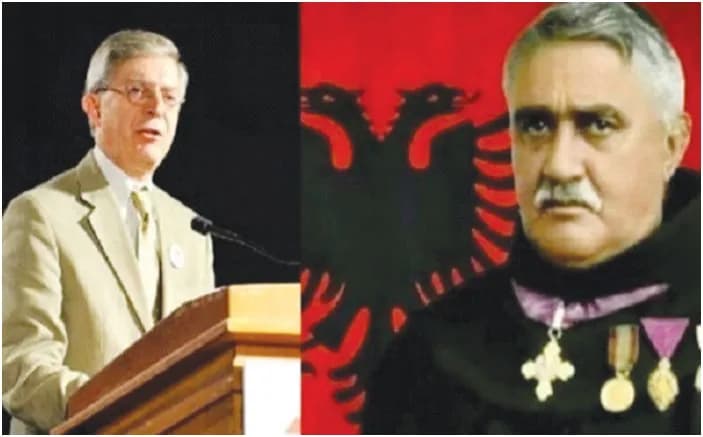
- •Father Gjergj Fishta, who defended Albanian independence at the 1919 Paris Peace Conference, remains unrecognized in his own country 105 years later.
- •Branded an 'enemy of the state' during the communist regime, he remains excluded from official history even after democratization in 1991.
- •This symbolizes the scars left on a society by Balkan historical conflicts and incomplete reckoning with the past.
The Voice of a Forgotten Hero
Paris, January 1919. At the peace conference redrawing Europe's map after World War I, an Albanian Catholic priest took the podium. With his nation's very existence threatened by territorial ambitions of neighboring Balkan states, Father Gjergj Fishta delivered a speech on "the historical rights of Albanians."
Frank Shkreli, former Director of VOA's Europe-Asia division, recently wrote in the Albanian newspaper Telegraaf that "Fishta's Paris speech ranks among the most classical speeches in Albanian history," yet pointed out that his contributions remain unrecognized even 105 years later.
Fishta was a poet, writer, and politician who contributed to standardizing the Albanian language at the 1908 Manastir Congress and represented Albania at international conferences including the 1919 Paris Peace Conference and meetings in Athens and Istanbul during the 1930s. He dedicated his life to defending Albania's national identity and territorial integrity.
Communist Stigma: 35 Years Later
The problem is that Fishta's achievements were deliberately erased during Albania's communist regime. Enver Hoxha's dictatorship branded the Catholic priest as an "enemy of the state" and a "traitor," and for nearly half a century, his name was deleted from official history.
Even after communism's collapse in 1991, the situation barely improved. Shkreli criticized that "despite 35 years of transition, the official silence from Tirana and Pristina (Kosovo's capital) authorities amounts to permanent punishment of Fishta."
"How can official historians steeped in communist nostalgia defend Fishta's role when the communist state defined him as an enemy?" he asked, pointing to remnants of old ideology still present in Albania's academic and political circles.
Survival Diplomacy Proclaimed in Paris
At the 1919 Paris Peace Conference, Albania had no army, no economic power, and no reliable allies. Surrounding Greece, Serbia, and Italy sought to partition Albanian territory, while great powers aimed to reorganize the Balkans according to their interests.
In this situation, all the Albanian delegation including Fishta could do was "raise their voice." Shkreli recalled, "Albania had no military or economic power, but it had a voice. One of the most powerful voices was Fishta's."
Fishta's speech was not mere emotional appeal. He argued for Albania's independence and territorial integrity based on historical evidence and national legitimacy, forming a logical defense against the arbitrary border demarcations imposed by great powers.
Architect of Early US-Albania Relations
Fishta's diplomatic footprint extended beyond Paris. Shkreli emphasized that Fishta was one of the key figures in establishing early Albania-US relations.
In the 1920s, the US maintained an isolationist stance against expanding influence in Europe while showing interest in minority issues in the Balkans. Fishta leveraged this opening to inform American political circles and media about Albania's situation, ensuring the country wasn't completely forgotten on the international stage.
2024 marked the 100th anniversary of Albania-US diplomatic relations, yet Fishta's name was barely mentioned at official events. Shkreli expressed regret: "In the context of the centennial, Fishta remains an unwelcome figure in his own country."
A Small Nation's Dilemma in Balkan History
The Fishta case symbolically illustrates the complex history and ideological conflicts of the Balkans. After the Ottoman Empire's collapse in the early 20th century, newly independent states proliferated, and each nation selectively remembered or forgot certain figures and events while establishing their national narratives.
Albania was particularly Europe's most isolated communist state from 1944 to 1991, during which monarchy, religion, and intellectual classes were systematically purged. Fishta, both a Catholic priest and intellectual, inevitably became a double target.
The problem is that post-communist reckoning remained incomplete. Many former communist cadres maintained influence in politics, economy, and academia after democratization, delaying historical reassessment.
Lessons for Korea
Fishta's case demonstrates how long ideological conflicts and historical distortion scar a society. Korea also experienced starkly divided assessments of certain figures and events along ideological lines through Japanese occupation, the Korean War, and military regimes—aftereffects that persist today.
While Albania's and Korea's situations aren't identical, they share commonalities in what happens when political power monopolizes and dictates history. When history is written according to political needs rather than objective facts, what truly suffers is future generations' proper historical understanding.
Shkreli concluded: "Facts are stubborn and still speaking." Even when power tries to erase history, records and testimonies remain to tell the truth.
Future Outlook [AI Analysis]
The Fishta rehabilitation issue will likely resurface as Albania pursues EU membership. The EU demands democratic consolidation, historical reckoning, and freedom of expression guarantees from candidate countries, and reassessment of historical figures is considered part of this process.
However, it remains politically sensitive domestically. Fishta sits at the intersection of fault lines between religion (Catholic vs. Muslim vs. secularism), region (south vs. north), and ideology (former communist forces vs. pro-democracy forces).
Long-term, more objective historical assessment should emerge with generational change. As younger generations who didn't directly experience communist rule become mainstream society, movements to reexamine Fishta's achievements without ideological preconceptions may appear.
댓글 (4)
Poet 관련 기사 잘 읽었습니다. 유익한 정보네요.
공감합니다. 참고하겠습니다.
간결하면서도 핵심을 잘 정리한 기사네요.
흥미로운 주제입니다. 주변에도 공유해야겠어요.
More in Global


Latest News

Middle East Conflict Drives Manufacturing Outlook to 10-Month Low
The Korea Institute for Industrial Economics & Trade survey shows April manufacturing outlook PSI plummeted to 88, falling below baseline for the first time in 10 months.
Lee Jae-myung Administration Excludes Multi-Home Officials from Real Estate Policymaking
President Lee Jae-myung has ordered the exclusion of multi-home owning public officials from all real estate policy processes.

Volkswagen CEO Says Germany Should Learn from China's Industrial Strategy
Volkswagen CEO stated that Germany should learn from China's systematic industrial planning approach.

Reddit Considers Face ID to Block Bots While Maintaining Anonymity
Reddit is considering implementing biometric authentication systems such as Face ID and Touch ID to block AI bots while maintaining anonymity.
BTS Tops March Artist Brand Reputation Rankings with First Full Group Comeback in 4 Years
BTS ranked first in the Korean Corporate Reputation Research Institute's March Artist Brand Reputation Rankings based on 99 million data points.

Santo Domingo's Malecón Sports Park Construction Progressing Smoothly
Construction of a soccer field and skate park is progressing smoothly in the Malecón area of Santo Domingo, Dominican Republic.
Pogačar Overcomes Crash to Win Milano-Sanremo, Achieves Four Monument Victories
Tadej Pogačar defeated Tom Pidcock to win Milano-Sanremo, achieving his fourth Monument victory.
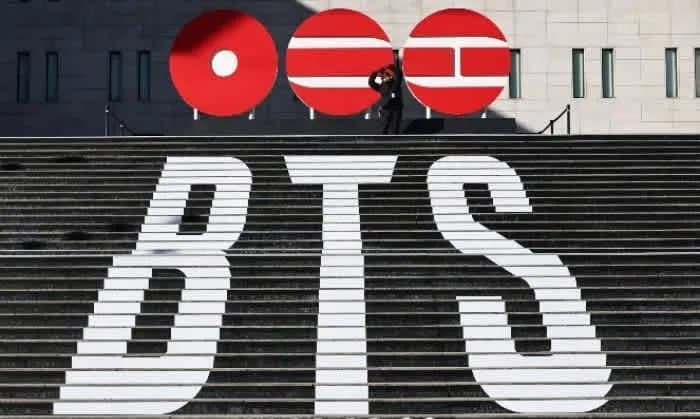
BTS's New Album 'ARIRANG' Sweeps Spotify Global Chart Positions 1-14
BTS's new album 'ARIRANG' monopolized Spotify Global Chart positions 1-14 on its first day, establishing the largest album debut record in K-POP history.