A 16th-Century European Basin That Became a Sacred Relic in West Africa
Looted by British troops in 1896, the Aya Kese remains unreturned 130 years later
- •A 16th-century European brass basin became a sacred Asante royal object over centuries.
- •British troops looted it in 1896; a 1930 restitution request was formally refused.
- •Now on display at the British Museum, it remains at the centre of the restitution debate.
A Sacred Object Under London's Museum Lights
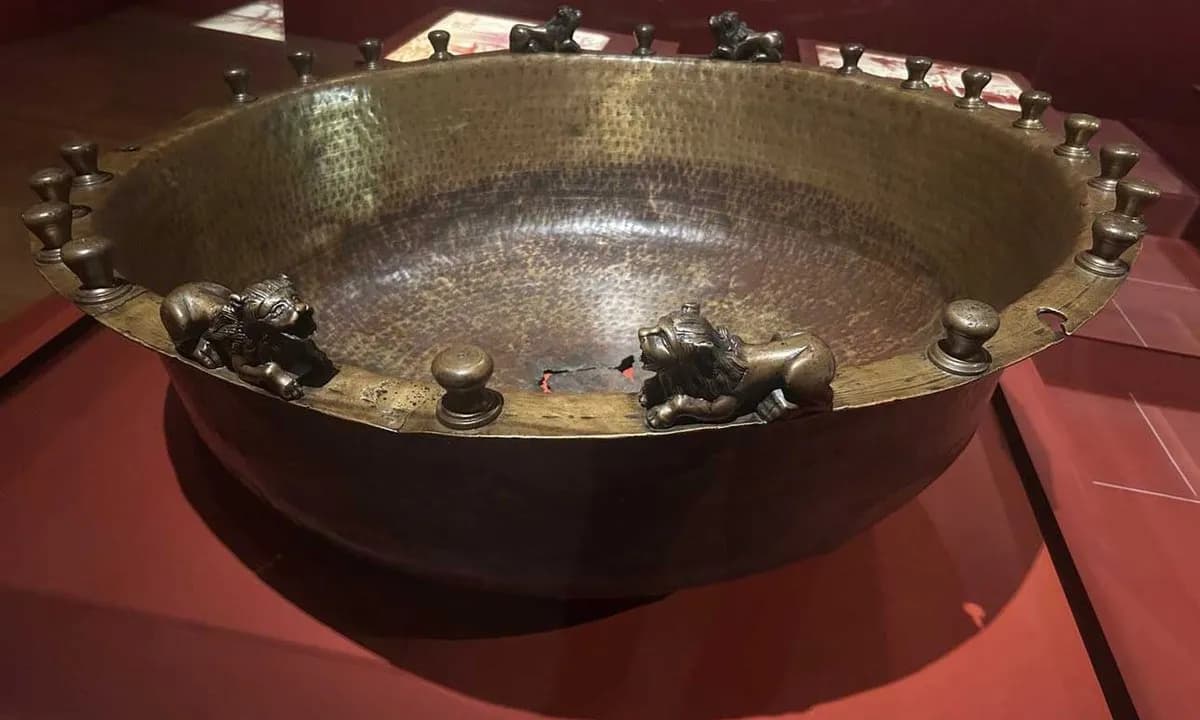
A massive brass basin, just over a metre in diameter, is currently on display at the British Museum in London. Known as the Aya Kese — the "great brass basin" — it is believed to have been crafted in 16th-century northern Europe, yet spent centuries as a sacred object at the heart of the Asante kingdom in West Africa. Looted by British troops in 1896, it has never returned home.
Why It Matters
The Aya Kese is far more than a metalwork curiosity. In 1930, Asante King Prempeh I wrote that "all souls of Ashantis are within it." The basin served as a central ritual object in the royal mausoleum complex and is deeply tied to Asante identity.
The case has become emblematic of the global debate over colonial restitution. As major Western institutions — from the British Museum to the Louvre — face mounting pressure to return objects acquired under colonial rule, the Aya Kese stands at the forefront of that reckoning.
From a European Workshop to an African Royal Mausoleum
British Museum curators believe the basin was made in England, Germany, or the Netherlands, most likely in the 16th century. Its most distinctive feature is a group of four small sculpted lions along the rim. Because lions were a common motif in European decorative art across centuries, the sculptures have so far offered no firm clue as to origin or date.
How the basin reached Africa remains uncertain. Asante tradition holds that it descended from heaven on a golden chain during a great thunderstorm. Historians consider it more likely that it arrived aboard a northern European or Portuguese trading vessel sailing along the West African coast — and that by the early 18th century, if not earlier, it had been incorporated into the Asante royal mausoleum at Bantama, near the capital Kumasi.
In 1817, British traveller Thomas Bowditch visited the mausoleum and described "the largest brass pan I ever saw, being about five feet in diameter, with four small lions on the edge." European observers claimed it was used to collect the blood of human sacrifices — a characterisation now widely understood as colonial distortion. Prempeh I explicitly denied it, and the National Army Museum now acknowledges that such use "seems unlikely."
Looted, Refused, Forgotten — and Displayed [Expert Analysis]
In 1896, British troops invaded the Asante kingdom. The Aya Kese was seized by Robert Baden-Powell — later founder of the Boy Scouts — who also oversaw the burning of the Bantama mausoleum, later recalling: "We set the whole of the fetish village in flames, and a splendid blaze it made."
In 1930, a gravely ill Prempeh I formally requested restitution, submitting a five-page history of the basin and its meaning. The British government refused. The object passed from Baden-Powell's private collection to the Royal United Services Institute in 1913, then to the National Army Museum in 1963, where it remains today.
Tom McCaskie, Professor of African Studies at the University of Birmingham, argues in a recent academic paper that the Aya Kese is "an integral part of the Asante past… with vibrant meaning for Asante people today," and calls for its return to Kumasi.
The dispute over the Aya Kese is not simply about ownership. It is about what justice looks like when the objects of one people's heritage sit in another people's institutions — and whether that arrangement can be allowed to continue indefinitely.
댓글 (23)
16th-Century 관련 배경 설명이 이해하기 쉬웠습니다.
European의 전문가 코멘트가 설득력 있었습니다.
기자님 수고하셨습니다.
아산테 왕국이 앞으로 어떻게 전개될지 주목해야겠습니다.
유익한 기사네요. 식민지 약탈에 대해 더 알고 싶어졌습니다.
16th-Century에 대해 더 알고 싶어졌습니다. 생각이 바뀌었습니다.
European에 대해 처음 접하는 정보가 있었습니다.
Basin의 전문가 코멘트가 설득력 있었습니다.
아산테 왕국이 일상에 어떤 영향을 줄지 생각해보게 됩니다.
아침에 읽기 딱 좋은 분량이에요.
몰랐던 사실을 알게 됐습니다. 16th-Century에 대해 처음 접하는 정보가 있었습니다.
European 관련 배경 설명이 이해하기 쉬웠습니다. 다른 시각의 분석도 읽어보고 싶습니다.
좋은 정리입니다. Basin 관련 배경 설명이 이해하기 쉬웠습니다.
깔끔한 기사입니다. 아산테 왕국 관련 용어 설명이 친절해서 좋았습니다. 해외 동향도 함께 다뤄주시면 좋겠습니다.
다른 기사도 기대하겠습니다.
잘 읽었습니다. 16th-Century 관련 배경 설명이 이해하기 쉬웠습니다. 다른 시각의 분석도 읽어보고 싶습니다.
European에 대해 더 알고 싶어졌습니다.
Basin 관련 배경 설명이 이해하기 쉬웠습니다. 잘 정리된 기사네요.
몰랐던 사실을 알게 됐습니다. 아산테 왕국에 대해 주변 사람들과 이야기 나눠볼 만합니다. 해외 동향도 함께 다뤄주시면 좋겠습니다.
깔끔한 기사입니다. 식민지 약탈에 대한 다른 매체 보도와 비교해봐도 잘 정리되어 있습니다. 생각이 바뀌었습니다.
핵심만 잘 정리해주시네요.
European 관련 데이터가 인상적이었습니다.
기사 퀄리티가 좋습니다.
More in Culture & Art
London's Southbank Centre Receives £10m Government Grant for Urgent Repairs
The Readymade's Question Remains Unanswered: Duchamp Returns to New York

Roca's Avant Toilet Merges Tank and Bowl to Reinvent Bathroom Space
When the Jungle Swallowed Concrete: The Paradox of London's Barbican Conservatory
Madrid's Blue Pool Reborn as a Green Pond
BIG Unveils Nashville Performing Arts Center Design Along the Cumberland River
Latest News
Iran Declares Strait of Hormuz 'Fully Open,' Oil Prices Plunge 11%
Iran declared the Strait of Hormuz fully open to commercial shipping during the Israel-Lebanon ceasefire.
IEA 경고: 데이터센터 전력 소비, 2030년까지 두 배…AI가 에너지 위기 촉발
IEA 보고서에 따르면 2025년 전 세계 데이터센터 전력 소비가 17% 급증했으며 2030년 945TWh에 달할 전망이다.

트럼프, 이란 해상봉쇄 '합의 때까지 완전 유지' 선언
트럼프 대통령이 이란 핵합의 전까지 해상봉쇄를 완전히 유지하겠다고 밝혔다.
호르무즈 봉쇄에 AD 포츠, UAE 사상 최대 물류 재배치
AD 포츠 그룹이 5만 4,000TEU를 4개 운송 수단으로 우회 수송했다.
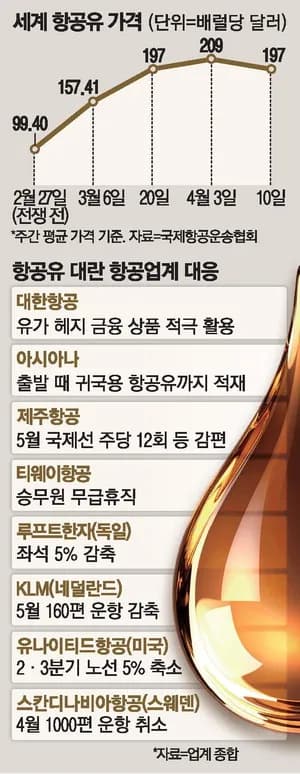
유럽 항공유 6주치 남았다…루프트한자 항공기 27대 운항 중단
IEA 총장이 유럽 항공유 잔여량이 약 6주치라고 공식 경고했다.

헤지펀드, 5거래일 만에 주식 860억 달러 순매수…10년 만의 최강 반등
시스템 헤지펀드들이 5거래일 만에 주식 860억 달러를 순매수했다.
TSMC 사상 최대 실적에 신흥국 증시 전쟁 충격 만회
TSMC 1분기 순이익이 58% 급증해 182억 달러로 사상 최대치를 기록했다.
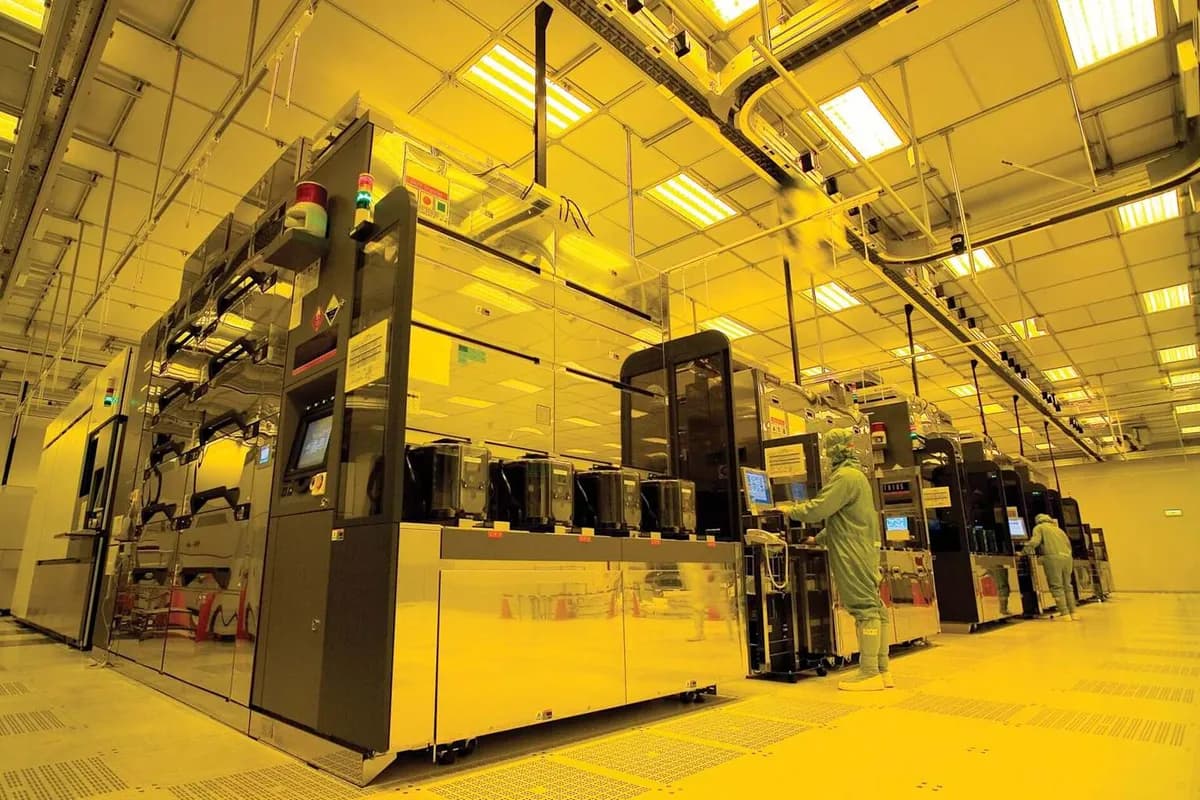
TSMC, 1nm 벽을 넘는다… 2030년 '앙스트롬 시대' 개막
TSMC는 2029년 A10(1nm 이하) 공정 시험 생산, 2030년 양산을 목표로 앙스트롬 시대를 선언했다.