Bittensor ecosystem market capitalization exceeds $1.5 billion, TAO surges 90% in one month
Subnet tokens rise up to 440%, NVIDIA CEO Jensen Huang also supports decentralized AI training model

- •Bittensor TAO token soared 90% in the month of March, and the subnet token market capitalization approached $1.5 billion
- •Covenant-72B, a distributedly trained AI model, demonstrated its technological prowess by achieving performance comparable to Meta's Rama 2
- •Institutional investor interest is increasing due to support from NVIDIA CEO Jensen Huang and the possibility of conversion to ETF.
Bittensor ecosystem, explosive growth in the month of March
TAO, the native token of the decentralized artificial intelligence (AI) network Bittensor, soared 90% in the month of March, rising from $180 to more than $332. What is more noteworthy is the movement of subnet tokens within the ecosystem. According to related industry data, the total market capitalization of the BitTensor subnet token category reached $1.47 billion, with 24-hour trading volume reaching $118 million.
The rise of individual subnet tokens is even steeper. Subnet 3's token Templar rose 444% in 30 days, OMEGA Labs rose 440%, Level 114 rose 280%, and BitQuant rose 230%. Relatively large subnet tokens also recorded meaningful returns, such as Chutes at 54% and Targon at 166%.
Why this is important
The surge in bittensor is not simply a cryptocurrency speculation craze, but reflects the market's re-evaluation of decentralized AI infrastructure. Instead of a centralized approach where one company builds and controls AI models, BitTensor adopts a decentralized marketplace structure where participants around the world contribute computing power, data, and machine learning models and receive TAO tokens in return.
There are currently 128 active subnets in operation, each specialized for a variety of AI tasks, from language model training to computing infrastructure operations to cybersecurity analysis. Each subnet holds its own token, and the token value is directly linked to the amount of TAO staked in that subnet.
Rising trend supported by technical achievements
One of the key catalysts for this surge is 'Covenant-72B', a large-scale language model created in Subnet 3 (Templar). This model was trained in a permissionless manner using common Internet hardware by more than 70 contributors through Bittensor's distributed network.
Covenant-72B was trained with 1.1 trillion tokens and recorded a massive multi-task language understanding (MMLU) score of 67.1 in an archived (arXiv) paper published in March 2026. This is a level that can compete with the Llama 2 70B model developed by Meta, one of the world's largest AI research institutes.
In the Templar subnet, miners compete to provide GPU computing power and generate useful training gradients for large-scale language models. Validators evaluate the quality of contributions and distribute TAO rewards accordingly. This is a structure in which distributed participants around the world contribute hardware and are rewarded for useful work, similar to the way Bitcoin mines blocks.
Big Tech’s attention is focused
On the All-In Podcast on March 20, NVIDIA CEO Jensen Huang and investor Chamas Palihapitiya supported Bittensor's approach. The two figures assessed that distributed AI training can complement proprietary models. In particular, Jensen Huang temporarily reversed the sell-off in technology stocks with his blog post earlier this month, and this supportive statement had an impact on the broader market beyond the cryptocurrency community.
Leverage effect of subnet tokens
The reason why subnet tokens show a greater increase than TAO itself is due to their structural characteristics. After BitTensor launched Dynamic TAO in February 2025, each subnet operates its own automated market maker (AMM), and the token value is determined by TAO staked in the corresponding subnet's reserves.
As the TAO price rises, the reserve value of all subnets increases, which inflates the token price and attracts more stakers. This relationship is recursive, amplifying movement in both directions. While TAO has a market capitalization of approximately $3 billion, individual Subnet tokens are distributed between $1 million and $137 million, making Subnet tokens effectively a leveraged bet on the parent protocol.
Future outlook [AI analysis]
The BitTensor Network plans to expand the number of active subnets from 128 to 256 later this year. This is likely to lead to a wave of new token launches.
A potential regulatory decision to convert the Grayscale TAO trust into an in-kind ETF could provide institutional investor access by late 2026. Digital Currency Group subsidiary Yuma already contributes to 14 different subnets, suggesting that smart money is treating it as infrastructure rather than speculation.
However, whether the subnet rally will continue depends on whether BitTensor can continue to produce competitive AI models. The challenge remains to prove that decentralized AI training can continue to compete with large, centralized companies. It is highly likely that upward momentum will be maintained for the time being due to the combination of technical performance and institutional interest, but investors should be mindful of the fact that an amplification effect may occur even in the event of a decline due to the nature of the leverage structure.
댓글 (5)
Bittensor 관련 기사 잘 읽었습니다. 유익한 정보네요.
그 부분은 저도 궁금했습니다.
ecosystem에 대해 더 알고 싶어졌습니다. 후속 기사 부탁드립니다.
기사 잘 봤습니다. 다른 시각의 분석도 읽어보고 싶네요.
공감합니다. 참고하겠습니다.
More in Economy

Strategy, has Bitcoin buying streak stopped for 13 consecutive weeks?

Both cryptocurrency and banking industries are dissatisfied with the U.S. stablecoin profit regulation plan.
Is Bitcoin’s ‘buy signal’ actually a sign of decline? Bitfinex long positions reach highest since 2023
US CLARITY Act could shake up the DeFi ecosystem by banning stablecoin profits
The possibility of a Federal Reserve interest rate hike soars to 30%... Bitcoin market impact

Ethereum launches ‘special economic zone’ project to solve fragmentation problem
Latest News

Oh Se-hoon: "I Would Choose 5th Term as Seoul Mayor Over Presidency"
Seoul Mayor Oh Se-hoon states he would choose 5th mayoral term over presidency

BTS' 'Arirang' Tops Billboard 200 Chart—Seventh No. 1 Album
BTS's new song 'Arirang' achieves No. 1 on U.S. Billboard 200 chart

Three Arrested in Paris After Attempted Bomb Attack Near Bank of America
Three suspects arrested after attempted bomb attack near Bank of America branch in Paris

Three Journalists Killed in Israeli Strike on Southern Lebanon, Hundreds Mourn in Beirut
Three journalists killed in Israeli targeted attack on southern Lebanon
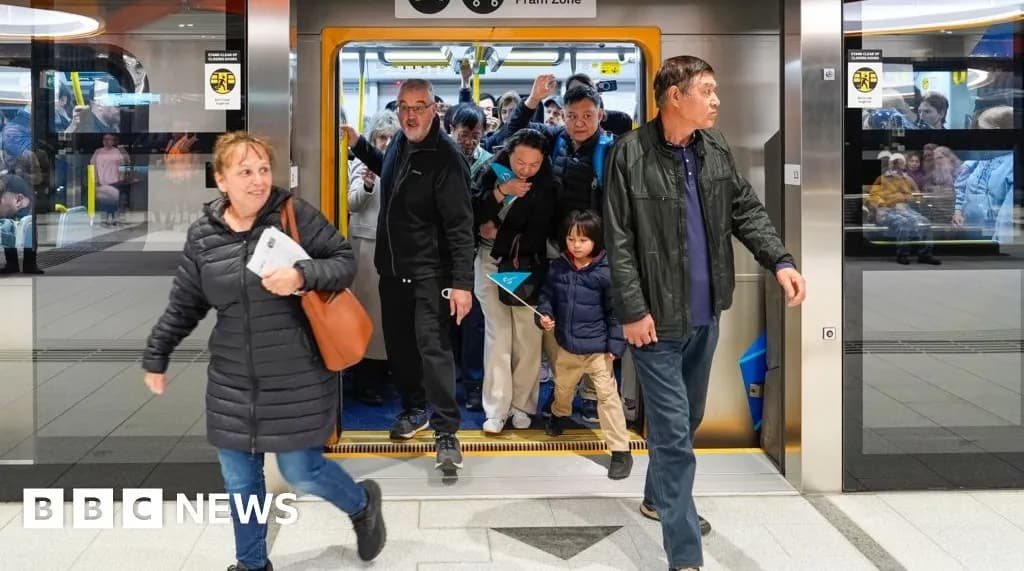
Two Australian States Offer Free Public Transport as Iran War Drives Up Fuel Prices
Victoria and Tasmania implement free public transport in response to fuel price surge from Iran war fallout

Iranian Missile Strikes Israeli Industrial Zone—Major Fire and Hazardous Material Leak
Iranian ballistic missile directly hits southern Israeli industrial zone, causing major fire
Trump Shares Pastor's Letter Amid Month-Long Iran War: "Blessed Are the Peacemakers"
President Trump shares pastor's letter on one-month anniversary of Iran war
African Football Chief Resigns Amid Morocco-Senegal Final Controversy
CAF Secretary General Veron Mosengo-Omba resigns amid Morocco-Senegal final controversy