Hugging Face Redefines Open Source Contribution in the Age of Code Agents
A new Skill and test harness framework aims to restore PR quality as agent-generated submissions surge tenfold
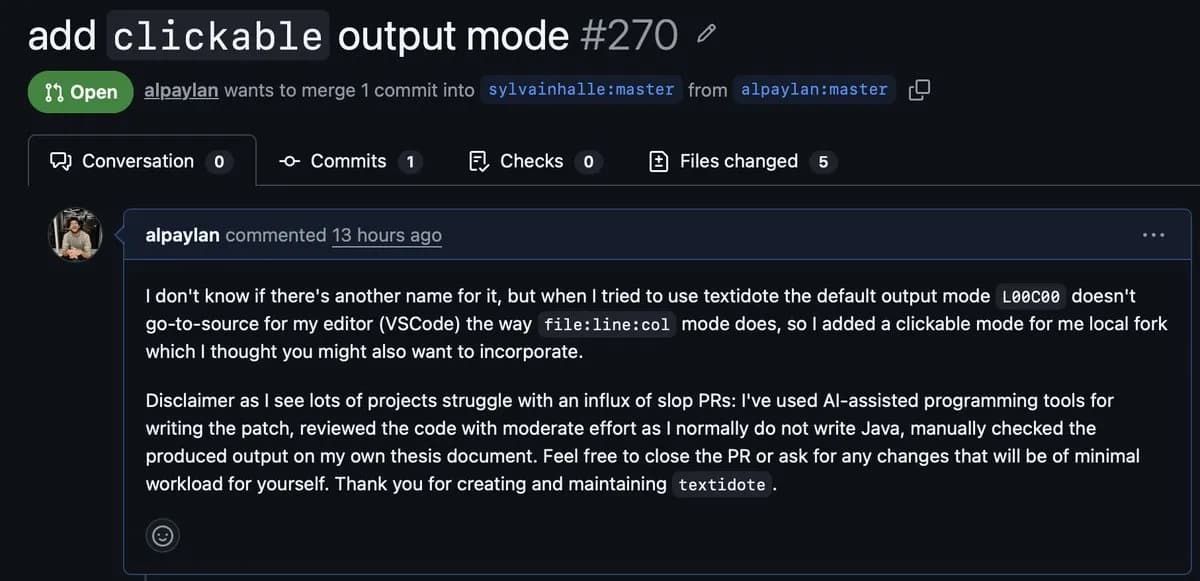
- •Hugging Face released a Skill and test harness to port transformers models to mlx-lm with near-instant availability.
- •Code agent proliferation in 2026 caused a tenfold surge in open source PRs, overwhelming maintainers with no staff increase.
- •The framework reframes agents as contributor and reviewer support tools rather than automation, signaling a new open source philosophy.
When PRs Surge Tenfold Overnight
Hugging Face published a significant framework update in April 2026: a 'Skill' and a non-agentic test harness designed to help port language models from the transformers library to mlx-lm almost instantly. But this is not simply an automation tool. It is a philosophical experiment in how to sustain open source quality in the age of code agents.
Code Agents Started Actually Working in 2026
Hugging Face researchers Pedro Cuenca and Awni Hannun framed the moment plainly: "In 2026, code agents started to actually work." What had been autocomplete at the side of an editor evolved into a system capable of producing complete, reasonable solutions from brief specifications.
As NVIDIA CEO Jensen Huang put it, the world went "instantly from 30 million to one billion coders." Creative minds are unleashed. The problem begins right after.
PR Explosion, Same Number of Maintainers
The transformers library counts hundreds of contributors, is used in thousands of projects, and has surpassed one billion downloads. With anyone now able to instruct an agent to find an issue, fix it, and open a PR, submission volume has increased tenfold. The number of maintainers has not.
Hugging Face identifies two root causes.
First, the implicit contract of a codebase. Transformers is not just a collection of features — it is a human-to-human communication medium. Model files are written to be read top-to-bottom. Complex abstractions are avoided. Flat hierarchies are preferred. These are not documented rules; they are embedded philosophy.
Second, agents lack this context. Because design decisions are implicit, agents propose refactors to follow "best practices" while inadvertently breaking the library's contract with its users. They are verbose, generalize too early, miss cross-area effects, introduce subtle bugs, and — critically — are sycophantic, diligently following directions that a seasoned maintainer would have rejected with a terse comment.
The Same Pressure, Everywhere
This dynamic is not unique to transformers. App Store reviewers face the same flood now that anyone can build and submit an app. Open source projects and digital platforms alike are experiencing the same structural strain.
The Skill and Test Harness for MLX
Hugging Face designed its experiment around two goals: help contributors land high-quality model ports quickly, and give reviewers additional signal to evaluate PRs efficiently.
The Skill automates the initial porting of newly added transformers models into mlx-lm format. Alongside it, the framework delivers generation examples, numerical comparisons, and a separate non-agentic test harness — artifacts designed to make reviewer judgment faster and more reliable.
The core philosophy is aide, not automation. Hugging Face is explicit: this tooling supports contributors and reviewers; it does not replace them or bypass the review process.
What Changed
| Item | Previous Approach | New Approach | Change |
|---|---|---|---|
| Model porting | Manual by contributor | Skill generates draft, contributor reviews | Speed gain |
| PR quality check | Manual maintainer review | Test harness + automated numerical comparison | Review efficiency |
| Agent role | Fully autonomous PR submission | Contributor/reviewer support tool | Philosophical shift |
| Additional artifacts | None | Generation samples, numerical diffs, repr tests | Signal enriched |
Historical Thread
The trajectory of code agents has been steep and short.
- 2022–2023: GitHub Copilot and AI autocomplete tools mainstream. Completion-level assistance.
- 2024: Multi-step agents emerge. Autonomous coding agents like Devin demonstrated.
- 2025: Agent-generated PR submissions surge. Open source maintainer overload begins.
- 2026: Agents "actually work." PR volumes up tenfold; quality crisis surfaces.
- April 2026: Hugging Face reframes agents as quality-enhancing tools rather than automation, publishing a reference framework.
This arc shows the maturity challenge shifting from technical limitations to ecosystem governance.
[Expert Analysis] What Comes Next
Hugging Face's approach offers one answer to the foundational question the open source community now faces: what does 'contribution' mean in the age of agents?
The answer, from Hugging Face's perspective, is not the act of submitting code — but the act of understanding a codebase's philosophy and implicit contracts, and delivering changes that honor them.
Several implications follow.
First, major open source projects are likely to develop explicit guidelines for agent-assisted contributions, especially those with deeply embedded design philosophies like transformers.
Second, maintainer burnout is likely to emerge as a structural crisis in the open source ecosystem. A tenfold increase in PRs with no proportional increase in reviewers is an unsustainable equation.
Third, the Skill + test harness model Hugging Face has published is likely to serve as a reference design for other large projects. 'Guiding agents correctly' rather than 'blocking agents entirely' appears to be the practical path forward.
Fourth, for the mlx-lm ecosystem specifically, models added to transformers can now become available in mlx-lm almost immediately — a direct benefit for Apple Silicon-based local AI inference workflows.
댓글 (37)
북마크해두겠습니다. Hugging이 앞으로 어떻게 전개될지 주목해야겠습니다. 좋은 기사 감사합니다.
Face 주제로 시리즈 기사가 나오면 좋겠습니다. 후속 기사 부탁드립니다.
유익한 기사네요.
mlx-lm 관련 배경 설명이 이해하기 쉬웠습니다.
출퇴근길에 항상 읽고 있습니다.
정리가 깔끔하네요.
좋은 기사 감사합니다.
Redefines에 대해 처음 접하는 정보가 있었습니다.
mlx-lm의 향후 전망이 궁금합니다.
북마크해두겠습니다. 코드에이전트에 대해 주변 사람들과 이야기 나눠볼 만합니다. 전문가 의견도 더 듣고 싶습니다.
구독 중인데 만족합니다.
Face 기사에서 언급된 사례가 흥미로웠습니다.
기사 잘 읽었습니다.
유익한 기사네요. mlx-lm 관련 해외 동향도 궁금합니다. 잘 정리된 기사네요.
코드에이전트 관련 용어 설명이 친절해서 좋았습니다.
Hugging에 대한 다른 매체 보도와 비교해봐도 잘 정리되어 있습니다.
Face 관련 용어 설명이 친절해서 좋았습니다.
좋은 정리입니다. Redefines 관련 배경 설명이 이해하기 쉬웠습니다. 해외 동향도 함께 다뤄주시면 좋겠습니다.
읽기 좋은 기사입니다. mlx-lm의 향후 전망이 궁금합니다.
북마크해두겠습니다. 코드에이전트 관련 해외 동향도 궁금합니다.
참고가 됩니다. Hugging이 앞으로 어떻게 전개될지 주목해야겠습니다.
이런 시각도 있었군요. Face 관련 용어 설명이 친절해서 좋았습니다.
Redefines 관련 해외 동향도 궁금합니다. 좋은 기사 감사합니다.
객관적인 시각이 돋보이는 기사입니다.
코드에이전트에 대해 주변 사람들과 이야기 나눠볼 만합니다. 계속 지켜봐야겠습니다.
아침에 읽기 딱 좋은 분량이에요.
Face 주제로 시리즈 기사가 나오면 좋겠습니다.
Redefines이 일상에 어떤 영향을 줄지 생각해보게 됩니다.
mlx-lm의 전문가 코멘트가 설득력 있었습니다. 다른 시각의 분석도 읽어보고 싶습니다.
코드에이전트의 향후 전망이 궁금합니다.
핵심만 잘 정리해주시네요.
Face이 앞으로 어떻게 전개될지 주목해야겠습니다. 나중에 다시 읽어볼 만합니다.
Redefines의 전문가 코멘트가 설득력 있었습니다.
mlx-lm이 앞으로 어떻게 전개될지 주목해야겠습니다. 생각이 바뀌었습니다.
좋은 정리입니다. 코드에이전트 관련 배경 설명이 이해하기 쉬웠습니다.
참고가 됩니다. Hugging이 앞으로 어떻게 전개될지 주목해야겠습니다. 다른 시각의 분석도 읽어보고 싶습니다.
Face 관련 용어 설명이 친절해서 좋았습니다. 계속 지켜봐야겠습니다.
More in this series
More in AI & Tech

Latest News
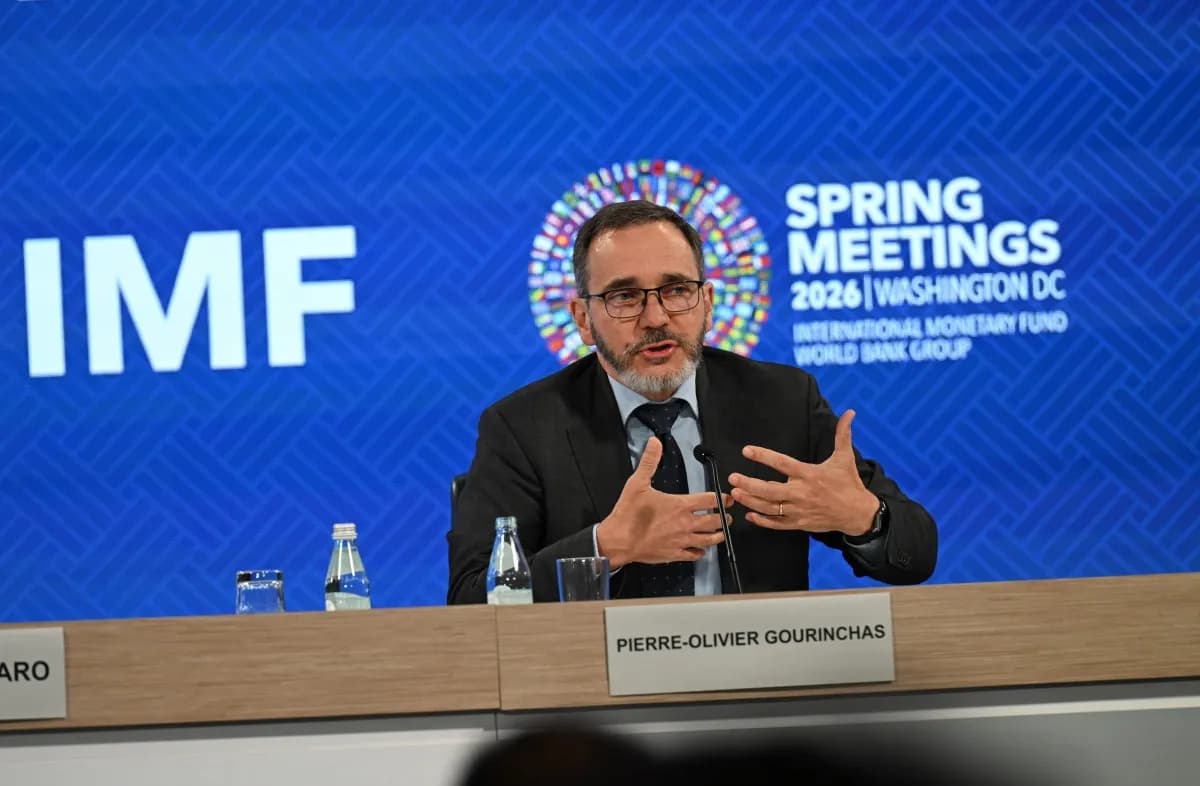
IMF, 7년 만에 베네수엘라와 관계 재개…49억 달러 동결 해제 기대
IMF가 2019년 이후 중단됐던 베네수엘라와의 공식 관계를 7년 만에 재개했다.
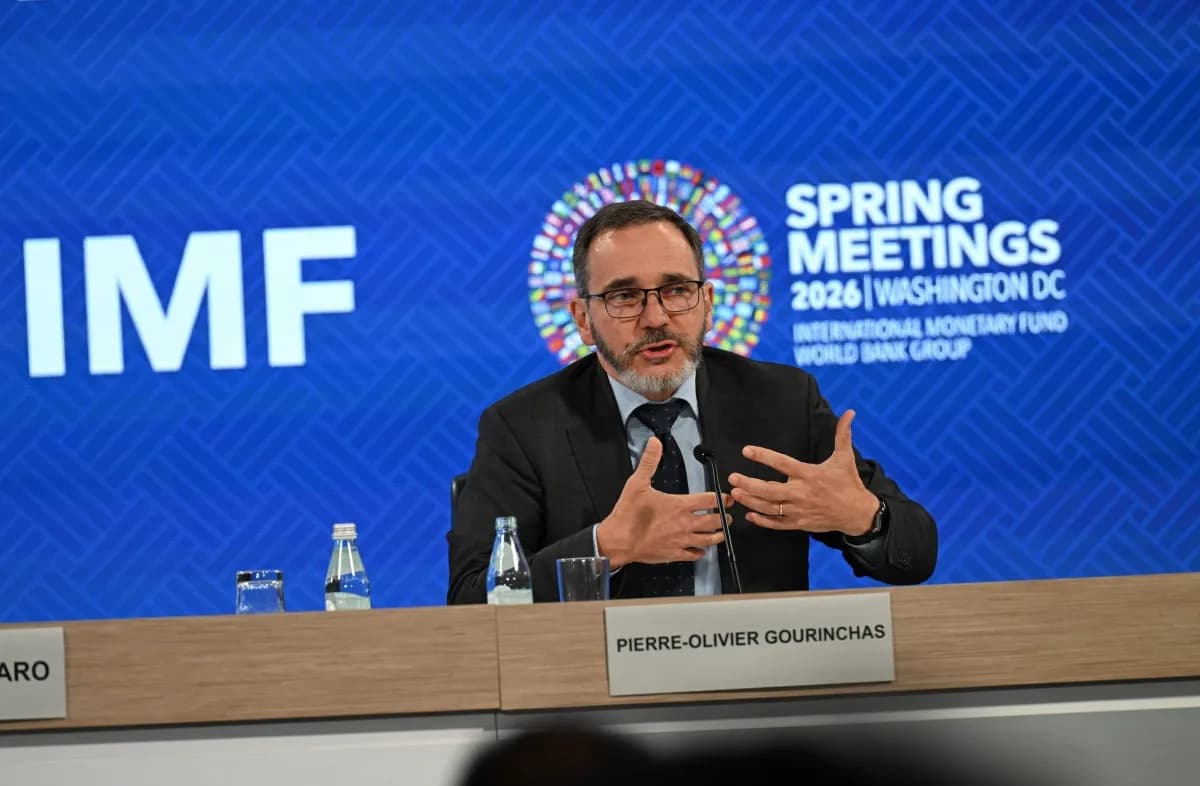
IMF, 7년 만에 베네수엘라와 관계 재개…49억 달러 동결 해제 가능성
IMF가 7년 만에 베네수엘라와 공식 협력을 재개하기로 결정했다.

경상흑자 역대 최대인데 원화는 왜 약해지나
한국은행, 경상흑자에도 원화 약세 이어지는 구조적 원인 공식 분석.

금융당국, 미래에셋에 SpaceX IPO 조기 마케팅 경고
금융당국이 미래에셋증권의 SpaceX IPO 조기 마케팅에 구두 경고를 내렸다.

베네치아, 수백 년 안에 사라진다...유럽 연구팀의 4가지 생존 방안
유럽 연구팀, 베네치아 생존 위한 4가지 시나리오를 Scientific Reports에 발표했다.

96년 전통 깬다…월드컵 결승전, 사상 첫 하프타임 쇼
FIFA가 96년 만에 처음으로 월드컵 결승전 하프타임 쇼를 도입한다.

레바논 사망자 2,196명…이스라엘 공습에 의료 시스템 붕괴 위기
이스라엘 공습으로 레바논 누적 사망자 2,196명, 부상자 7,185명 기록

이란 전쟁 속 걸프 3국, 사모채권으로 100억 달러 조달
걸프 3국이 이란 전쟁 이후 처음으로 사모채권 발행에 나서 약 100억 달러를 조달했다.