New standard for voice AI agent evaluation, EVA framework released
The first integrated evaluation system to simultaneously measure accuracy and user experience emerges
- •Hugging Face has unveiled an EVA framework that simultaneously evaluates voice AI accuracy and conversation experience.
- •Benchmarking 20 models revealed a consistent trade-off between task completion rate and user experience.
- •It is provided free of charge on GitHub and HF Hub along with 50 airline scenario datasets.
Key takeaway: EVA is changing the voice AI evaluation paradigm
Hugging Face has unveiled 'EVA (Evaluation of Voice Agents)', a new framework that comprehensively evaluates conversational voice agents. EVA is the first in the industry to simultaneously measure Accuracy and Conversation Experience and adopts a bot-to-bot architecture that simulates a real voice conversation environment.
The framework produces two key scores: 'EVA-A' evaluates the accuracy of user task completion, and 'EVA-X' evaluates the quality of a natural and concise conversation experience. An airline domain containing 50 scenarios, including flight ticket rebooking, cancellation processing, and voucher issuance, is provided as the initial dataset, and additional domain expansion is planned.
Why this is important: Addressing the chronic evaluation gap in voice AI
The existing voice agent evaluation system had serious limitations. Existing benchmarks such as AudioBench, VoiceBench, and VoxDialogue only measure speech recognition (STT) accuracy or single-turn response quality. On the other hand, tools such as FD-Bench and Full-Duplex-Bench analyze conversation dynamics (interrupting, turn-taking) but do not examine their correlation with actual task performance.
This segmented evaluation method does not capture the complex problems that occur in actual service environments. For example:
- If the confirmation code is misrecognized, even the most sophisticated LLM reasoning becomes meaningless.
- Listing a long list of options by voice causes overload as the user cannot skim the content.
- Response delay makes practical use impossible even if all accuracy tests are passed.
To solve these problems, EVA simulates and evaluates an entire multi-turn voice conversation in real time. It is the first framework to validate the complete conversational workflow, from the user's initial request to multi-step tool coordination and final task resolution.
What’s different from before: Comparison with existing benchmarks
| Item | Existing benchmarks (AudioBench, VoiceBench, etc.) | EVA |
|---|---|---|
| Evaluation scope | Single turn, individual components | Multi-turn, full conversation workflow |
| Accuracy Measurement | STT Transcription Accuracy Focused | Job Completion Success Rate (EVA-A) |
| Experience Measurement | Subjective sound quality evaluation such as MOS | Conversation naturalness and simplicity (EVA-X) |
| Integrated Assessment | Accuracy/Experience Separation Assessment | Simultaneous analysis of accuracy-experience tradeoff |
| test environment | Non-interactive, static test set | Real-time bot-to-bot simulation |
| Agent Features | Speech recognition/synthesis capabilities only | Includes calling tools, performing multi-step operations |
| number of public models | Diverse | 20 cascade/audio native systems |
Key finding: Trade-off between accuracy and experience
Hugging Face researchers benchmarked 20 cascade systems and audio native systems (including speech-to-speech models and large-scale audio language models (LALM)) with EVA. The most notable finding is that the Accuracy-Experience tradeoff consistently exists.
Agents that were good at completing tasks tended to have low user experience scores, and conversely, agents that provided natural conversations had poor accuracy. This suggests that voice AI developers must find a balance between the two goals.
Technical features: implications for end-to-end evaluation
EVA's end-to-end evaluation approach captures interaction dynamics that are not apparent at the component level:
- Interruption detection: Whether the agent interrupts the user's natural speech during a pause.
- Error Recovery: Whether the agent responds smoothly when users correct transcription errors.
- Latency Impact: Does high latency disrupt the flow of conversation, causing users to repeat or give up on tasks?
These factors are key factors that determine the practicality of voice agents in actual deployment environments.
[AI Analysis] Future prospects and implications
The emergence of the EVA framework is likely to bring several changes to the voice AI industry.
1. Change in development direction It is expected that the development method, which previously focused on improving STT/TTS accuracy, will move to integrated conversation quality optimization. Architecture research that simultaneously increases EVA-A and EVA-X scores is expected to become more active.
2. Promotes benchmark standardization Starting with the airline domain, if various domain datasets such as customer service, medical reservation, and financial consultation are added, EVA has the potential to become an industry standard benchmark.
3. Intensifying competition in quality of commercial voice agents Competition in quality may accelerate as major voice agents such as OpenAI's voice mode, Google's Gemini Live, and Amazon Alexa use EVA scores for marketing.
4. Addressing the accuracy-experience trade-off becomes a key challenge The trade-offs discovered by the researchers reveal the fundamental limitations of current voice AI technology. The company or research team that solves this problem is likely to gain an upper hand in the voice agent market.
EVA can be accessed for free on the Hugging Face official website, GitHub, and Hugging Face Dataset Hub.
댓글 (2)
New 관련 기사 잘 읽었습니다. 유익한 정보네요.
standard에 대해 더 알고 싶어졌습니다. 후속 기사 부탁드립니다.
More in AI & Tech
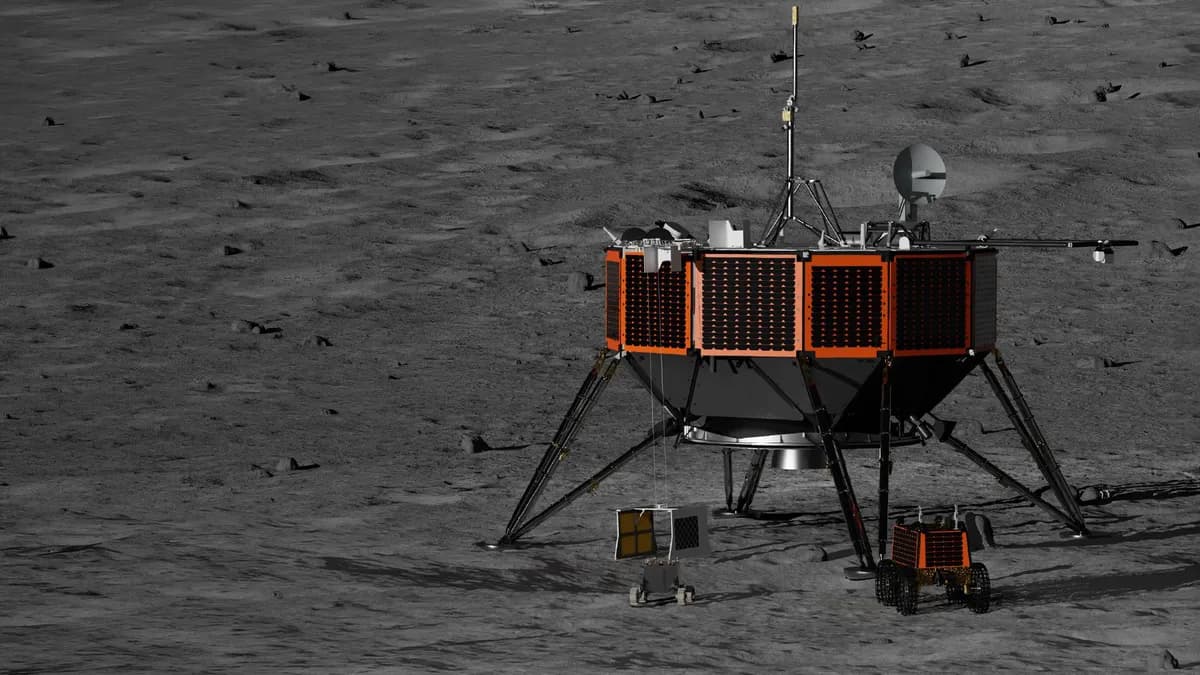
NASA awards $180 million contract to Intuitive Machines to explore lunar south pole

NASA-ISRO joint satellite NISAR captures first radar image of Mount Rainier

NASA-ISRO joint satellite NISAR captures St. Helens volcano through clouds

NASA plans to launch low-orbit experimental mission equipped with 7 small satellites

NASA Selects 10 Scientists to Support Artemis Lunar South Pole Exploration
NASA pursues private procurement of 'Nexus' Ka band relay service to replace aging satellites
Latest News

Man in His 30s Arrested After Crashing into Streetlight While Driving Under Propofol
Man in his 30s crashes into streetlight while driving after illegally taking propofol

Goyang Sono's 10-Game Winning Streak Ends as DB's Ellenson Explodes for 38 Points
Wonju DB ends Goyang Sono's 10-game winning streak with Henry Ellenson's 38-point explosion

Yemen's Houthis Launch Missiles at Israel, Enter War as Red Sea Security Crisis Deepens
Yemen's Houthi rebels launched missiles at Israel on the 28th, directly entering the US-Iran war

Nepal's Ex-PM Oli Arrested Over Deadly Protest Crackdown
Nepal's former PM KP Sharma Oli arrested over deadly protest crackdown

Iranian Missiles Breach Israeli Air Defense, Strike Southern Cities Dimona and Arad
Iranian ballistic missiles penetrated Israeli multi-layered air defense, striking southern cities Dimona and Arad

Mastermind of 'Revenge-for-Hire' Ring Faces Arrest Warrant Over Feces Terror Attacks
Mastermind of revenge-for-hire ring faces arrest hearing over orchestrating excrement attacks and graffiti

BBC Investigation Uncovers Error in Dopamine Agonist Drug Warnings... UK Authorities Launch Review
BBC investigation discovers critical error in patient leaflets for dopamine agonist drugs

Israel Activates Air Defense as Houthi Rebels Launch Missile from Yemen
Israeli military detects Houthi rebel missile launch from Yemen on the 28th and activates air defense