Tencent Achieves Record Revenue, Shifts from Buybacks to AI Investment
2025 Annual Revenue Hits 751.8 Billion Yuan, Plans to Double AI Investment in 2026

- •Tencent reports Q4 2025 revenue of 194.4 billion yuan (+13%), exceeding expectations, with annual revenue reaching record 751.8 billion yuan
- •Plans to reduce share buybacks and at least double AI investment in 2026, with Tencent Cloud achieving first large-scale profitability
- •Overseas gaming revenue surges 32%, WeChat MAU hits record 1.418 billion, AI-powered advertising business shows strong growth
Q4 Results Exceed Market Expectations
Tencent Holdings, China's largest tech company, announced Q4 2025 revenue of 194.4 billion yuan (approximately 38.6 trillion won), representing 13% year-over-year growth. This figure slightly exceeded the analyst consensus estimate of 193.5 billion yuan based on LSEG data. Net profit attributable to shareholders reached 58.3 billion yuan, up 14% year-over-year, while annual revenue hit a record 751.8 billion yuan.
Overseas gaming revenue surged 32%, serving as a key driver of performance. AI-powered advertising business also showed strong growth, supporting the overall expansion of China's big tech sector. WeChat, Tencent's flagship messaging platform, set a new record with 1.418 billion monthly active users (MAU).
Reducing Share Buybacks, Reallocating Capital to AI
Alongside the earnings announcement, Tencent revealed plans to scale back its share buyback program and reallocate capital toward AI. This signals the company's strategic pivot to at least double AI investment in 2026.
For several years, Tencent has pursued aggressive share buybacks as part of its shareholder return policy. However, as global AI competition intensifies, the company has decided to prioritize long-term technological competitiveness over short-term shareholder returns. This aligns with the Chinese government's AI self-sufficiency policies and indicates that Tencent will pour substantial capital into AI infrastructure and large language model (LLM) development.
An industry insider noted, "Tencent's decision is a clear signal that Chinese big tech companies view AI as their next growth engine. Competition with Alibaba and Baidu in the cloud and enterprise AI markets will become even fiercer."
Tencent Cloud Achieves First Large-Scale Profitability
Tencent Cloud announced it achieved large-scale profitability for the first time this quarter. While specific figures were not disclosed, this indicates the cloud business has moved beyond operating losses into a genuine profit-generating phase.
Tencent Cloud had previously ranked third in the Chinese market behind Alibaba Cloud and Huawei Cloud. However, it has rebounded successfully by rapidly acquiring enterprise customers through surging AI infrastructure demand and integration with the WeChat ecosystem. Demand for GPU clusters for AI model training and AI agent development platforms has particularly contributed to improved profitability.
Gaming, Advertising, and AI Emerge as Three Growth Engines
Tencent's revenue growth stems from balanced expansion across three core business segments.
First, the gaming division recorded explosive growth in overseas markets. Q4 overseas gaming revenue surged 32%, with "Honor of Kings" and "PUBG Mobile" showing particular strength in Southeast Asia and Middle East markets. The domestic Chinese market maintained steady growth through regulatory easing and new releases.
Second, the advertising division saw significant efficiency improvements through AI-powered targeting technology. WeChat Moments ads and video platform advertising led growth, with AI recommendation algorithms increasing average revenue per advertiser (ARPU).
Third, the AI and cloud division achieved its first profitability through enterprise customer acquisition and AI service diversification. Tencent is expanding B2B services including AI agents, code generation, and customer support based on its self-developed LLM "Hunyuan."
| Business Segment | Q4 Growth Rate | Key Drivers |
|---|---|---|
| Gaming (Overseas) | +32% | Honor of Kings, PUBG Mobile global expansion |
| Advertising | Estimated double-digit growth | AI targeting, WeChat Moments ads |
| Cloud | First large-scale profitability | AI infrastructure, enterprise AI services |
| WeChat MAU | 1.418 billion | New record, slight sequential increase |
Background of AI Investment Expansion: China Big Tech's AI Arms Race
Tencent's decision to expand AI investment comes amid fierce AI competition among Chinese big tech companies. Alibaba triggered a price war in early 2025 by slashing API prices for its LLM "Tongyi Qianwen" by 90%, while Baidu is concentrating investment on autonomous driving and AI search.
The Chinese government has strongly supported domestic companies' AI technology independence through its "AI Self-Sufficiency Three-Year Plan" announced in 2025. As US AI chip export restrictions tighten, Chinese companies are staking their futures on developing proprietary AI infrastructure and models.
Tencent has been advancing its Hunyuan model since 2024, targeting GPT-4-level performance. The plan to double AI investment in 2026 is expected to focus on expanding GPU clusters for model training, recruiting AI research talent, and building an AI agent ecosystem.
[AI Analysis] Future Outlook and Implications
Tencent's strategic shift provides important implications for China's big tech industry overall.
First, the capital reallocation from share buybacks to AI investment is likely to become a new standard for Chinese tech companies. The trend of prioritizing long-term technological competitiveness over short-term shareholder returns is expected to strengthen. Alibaba and Baidu may adopt similar strategies.
Second, Tencent Cloud's profitability achievement signals the Chinese cloud market's entry into a mature phase. Chinese cloud providers that previously focused on market share competition while accepting losses are now shifting to profitability-centered strategies. Surging AI infrastructure demand is accelerating this transition.
Third, integration of the WeChat ecosystem with AI is expected to become Tencent's core competitive advantage. Combining AI agents and generative AI services with a user base exceeding 1.4 billion could create a unique AI platform spanning both enterprise and consumer segments.
Fourth, overseas gaming market growth demonstrates Chinese content companies' global competitiveness. As domestic Chinese market growth slows, Tencent is strengthening its position in emerging markets including Southeast Asia, the Middle East, and Latin America. This is likely to lead to accelerated global expansion of China's gaming industry.
However, risk factors exist. AI chip supply constraints due to intensifying US-China tech tensions, regulatory uncertainty from the Chinese government, and potential advertising market contraction from global economic slowdown could serve as key variables. How effectively Tencent can achieve its AI investment targets amid these external uncertainties will likely determine future stock performance and market valuation.
댓글 (3)
관계자분들의 노력에 박수를 보냅니다.
저도 정말 기쁜 소식이라고 생각합니다!
Achieves 소식 반갑습니다. 앞으로가 더 기대됩니다.
More in this series
More in AI & Tech

영국 정치지도자들, 아동 성착취 혐의에 대한 긴급 조사 촉구

A humanoid robot performing in China has a child's face on it.

U.S. jury finds Meta and Google responsible for ‘social media addiction’… 3.7 billion won compensation ruling

Japanese X-ray Observatory makes first direct measurement of ultrafast 'cosmic wind' in galaxy M82

NASA selects 24 people for 2026 Astrophysics Postdoctoral Fellowships

Ethereum is at a crossroads to ‘redefine its identity’ ahead of the quantum computing and AI era
Latest News
"간부 잘 아는데 교통비 좀" 휴가 군인들 돈 뜯은 50대 구속
50대 A씨가 휴가 중인 군인들에게 부대 간부를 아는 척 접근해 돈을 사취

英 옥토퍼스, 이란 전쟁 이후 태양광 판매 50% 증가
이란 전쟁 이후 영국 옥토퍼스의 태양광 판매량 50% 증가
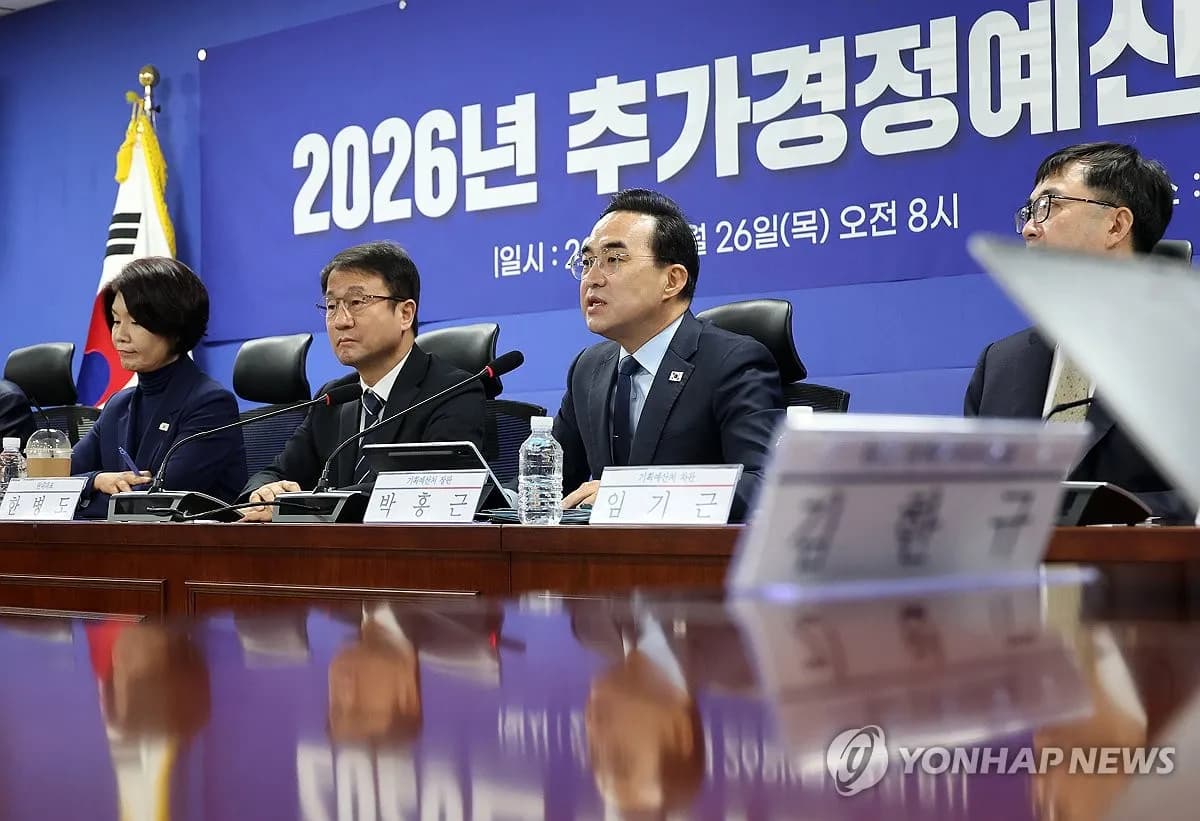
당정 "추경, 지방·취약계층에 더 지원되는 방식으로"
당정이 지방자치단체와 취약계층 중심의 추경 편성 방침 재확인
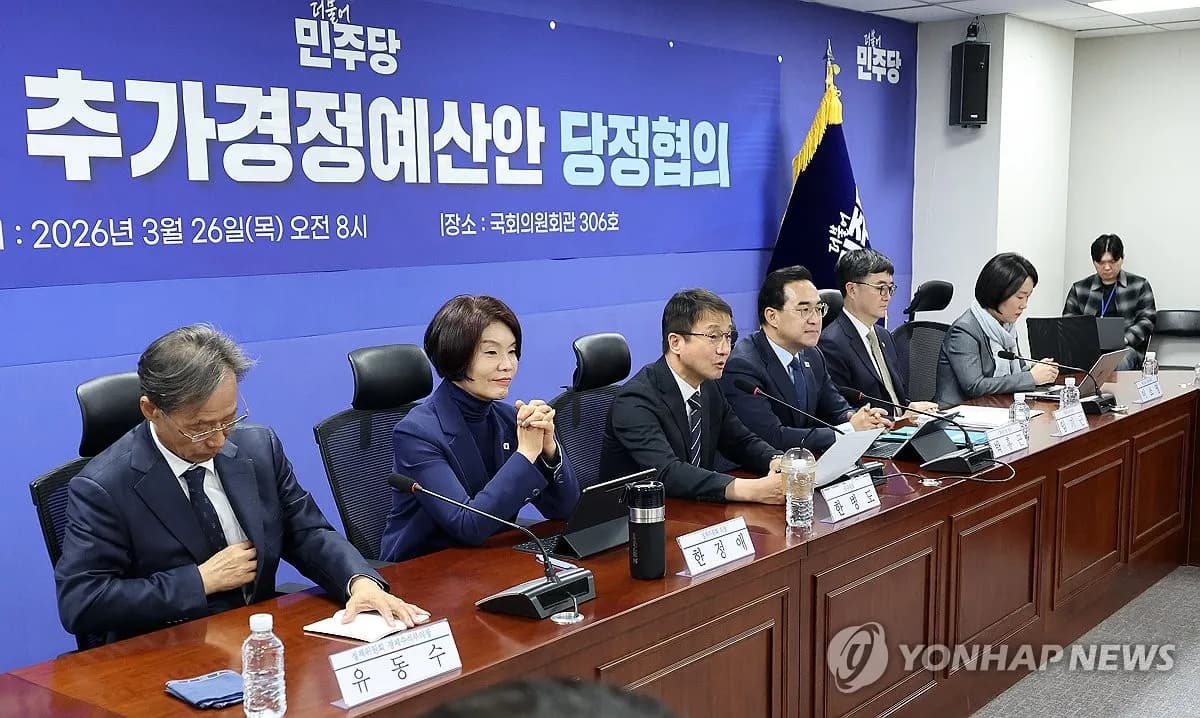
당정, 석유 최고가격제 손실 보전을 추경에 반영키로
당정이 석유 최고가격제 손실을 추경에 반영하기로 결정
어머니 폭행하고 금팔찌 빼앗은 30대 아들 경찰에 붙잡혀
어머니 폭행 후 금팔찌 빼앗은 30대 남성 체포

아이티 갱단 폭력사태로 10개월간 5천명 이상 사망
아이티에서 지난 10개월간 갱단 폭력으로 5천명 이상 사망
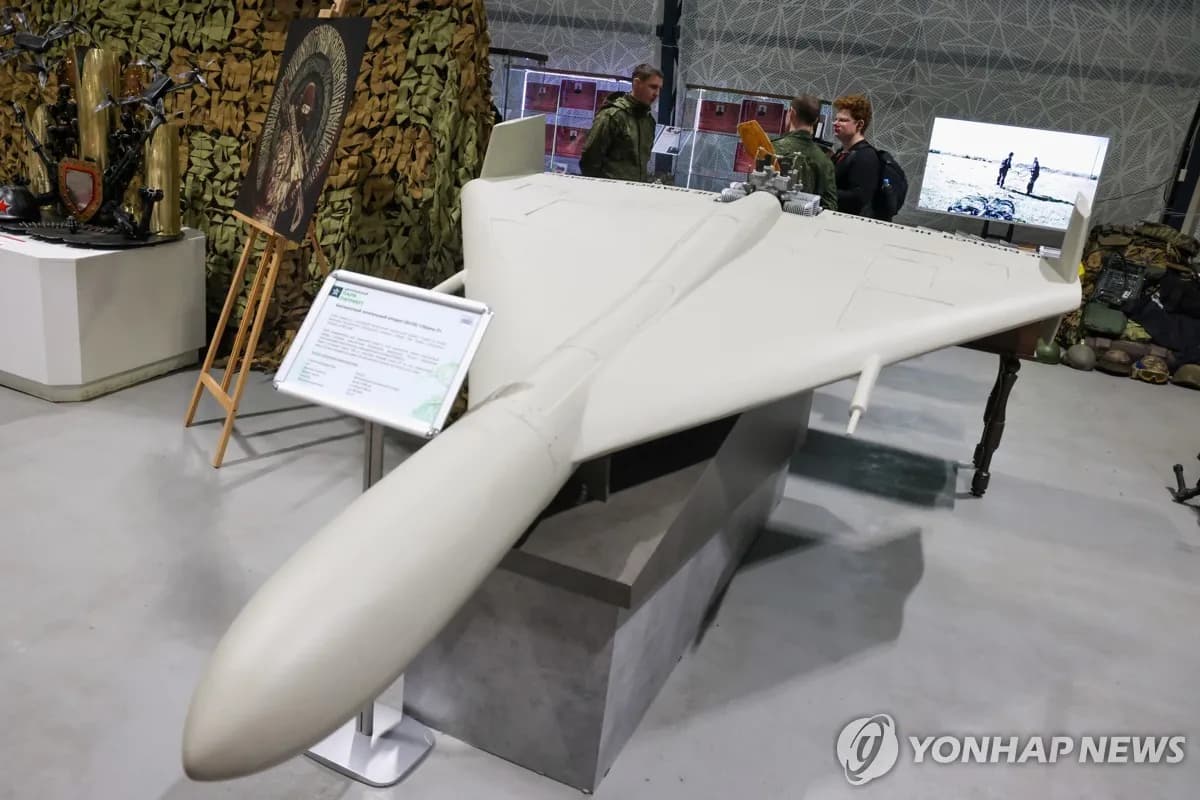
서방 정보당국 "러시아, 우크라이나 전쟁 후 이란에 드론·식량 공급"
서방 정보당국, 러시아의 이란 드론·식량 공급 작업 거의 완료 파악

6년 전 세 살 딸 살해한 30대 친모 구속송치
경찰, 6년 전 세 살 딸 살해 혐의 30대 친모를 구속송치