NVIDIA CEO Jensen Huang: 'OpenClaw is the Next-Generation ChatGPT'
Chinese Big Tech Competition Accelerates… Alibaba, Tencent, and Baidu Launch Services Simultaneously as Government Raises Security Concerns
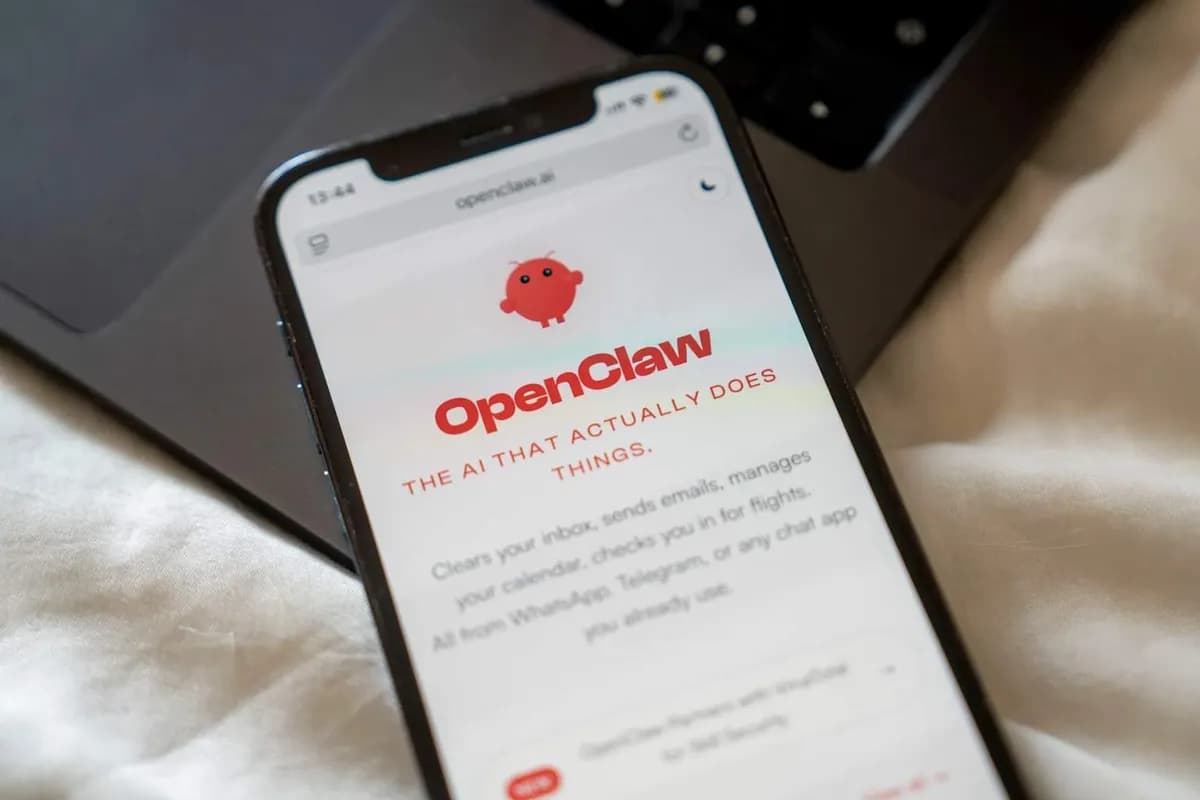
- •NVIDIA CEO Jensen Huang praised OpenClaw as 'the next-generation ChatGPT' at GTC, triggering a surge in Chinese AI company stocks
- •Tech giants Tencent, Alibaba, and Baidu simultaneously launched OpenClaw-based services, with Chinese usage surpassing the United States
- •Chinese government warned against installing OpenClaw on work devices at government agencies and state-owned enterprises due to data security concerns, heightening tension between innovation and regulation
'Lobster Special Forces' Craze Sweeps Chinese Tech Market
NVIDIA CEO Jensen Huang praised the open-source AI agent OpenClaw as "absolutely the next-generation ChatGPT" at the GPU Technology Conference (GTC) on March 17, urging that "every company must develop an OpenClaw strategy." Following this statement, shares of Hong Kong-listed Chinese AI companies surged, and major Chinese tech giants including Alibaba, Tencent, Baidu, and JD.com simultaneously launched a competitive race to release OpenClaw-based services.
Created by Austrian developer Peter Steinberger, OpenClaw is an AI agent framework that handles tasks like sending emails, managing schedules, and making restaurant reservations with minimal human intervention. Unlike simple chatbots that answer questions, agents can proactively perform tasks and thus require broader data access, which also raises greater privacy and security concerns.
Chinese Big Tech in Rapid Market Capture Race
Tencent launched its "Lobster Special Forces" product line based on OpenClaw on March 18, emphasizing compatibility with the WeChat super app. On the same day, Chinese AI startup Zhipu AI unveiled its own version enabling one-click installation of over 50 popular features.
On a Friday afternoon in mid-March, approximately 1,000 citizens lined up in front of Tencent's Shenzhen headquarters to install OpenClaw on their laptops. Students, retirees, and office workers received assistance from Tencent Cloud team engineers to install the open-source framework. In China, a new term "raising lobsters" has emerged, referencing OpenClaw's red lobster logo.
According to U.S. cybersecurity firm SecurityScorecard, OpenClaw usage in China has already surpassed that in the United States. Jaylene He, CEO of Shenzhen-based startup Violoop, explained, "China has a massive community eager to try new technology immediately. There's a culture of not wanting to fall behind. Even friends outside the tech industry are installing and using OpenClaw."
A Breakthrough Amid Economic Slowdown, Boon for LLM Ecosystem
As China's economy experiences slower growth, OpenClaw presents an opportunity for Chinese tech companies thirsty for paid users. Winston Ma, adjunct professor at NYU School of Law, analyzed that "the OpenClaw craze is boosting the popularity of Chinese-made large language models (LLMs)."
Autonomous AI agents like OpenClaw are model-agnostic and can integrate with various LLMs. Chinese companies have launched services combining their proprietary models with OpenClaw to secure leadership in the ecosystem. According to Fortune, Chinese AI models surpassed U.S. models in token processing (data unit) market share for the first time in early February.
Local governments are actively fostering the ecosystem by offering subsidies to startups developing OpenClaw apps, and Chinese AI startups are anticipating a surge in usage.
Tension Between Government Security Warnings and Corporate Expansion
However, according to Bloomberg, the Chinese government has warned government agencies and state-owned enterprises not to install OpenClaw on work devices due to data security risks. The core concern is that AI agents can access extensive systems and data.
Violoop's CEO He stated that the company is developing "devices similar to OpenClaw but with lower security risks." The balance between security and convenience is expected to emerge as a key challenge in China's AI agent market going forward.
[AI Analysis] Dawn of the Agent Wars, Potential for Global Expansion
The OpenClaw craze is not merely a trend but a signal marking the full-scale opening of the AI agent era. Jensen Huang's "next-generation ChatGPT" comment suggests that the next phase of generative AI is shifting from conversational chatbots to autonomous task-performing agents.
China's rapid adoption offers several implications. First, open-source frameworks are likely to accelerate technological democratization and regional ecosystem fragmentation. Second, tension between government security regulations and private innovation will emerge as a new issue in AI governance. Third, the spread of model-agnostic agent frameworks could reshape the LLM market structure—the ability to build agent ecosystems may become more competitive than the dominance of a single model.
Global tech giants are likely to join similar agent framework competition within the coming months. However, regulatory issues such as data security, privacy protection, and accountability will likely determine the pace of expansion.
댓글 (3)
기사 잘 봤습니다. 다른 시각의 분석도 읽어보고 싶네요.
그 부분은 저도 궁금했습니다.
CEO 관련 기사 잘 읽었습니다. 유익한 정보네요.
More in this series
More in AI & Tech

영국 정치지도자들, 아동 성착취 혐의에 대한 긴급 조사 촉구

A humanoid robot performing in China has a child's face on it.

U.S. jury finds Meta and Google responsible for ‘social media addiction’… 3.7 billion won compensation ruling

Japanese X-ray Observatory makes first direct measurement of ultrafast 'cosmic wind' in galaxy M82

NASA selects 24 people for 2026 Astrophysics Postdoctoral Fellowships

Ethereum is at a crossroads to ‘redefine its identity’ ahead of the quantum computing and AI era
Latest News

"간부 잘 아는데 교통비 좀" 휴가 군인들 돈 뜯은 50대 구속
50대 A씨가 휴가 중인 군인들에게 부대 간부를 아는 척 접근해 돈을 사취

英 옥토퍼스, 이란 전쟁 이후 태양광 판매 50% 증가
이란 전쟁 이후 영국 옥토퍼스의 태양광 판매량 50% 증가
당정 "추경, 지방·취약계층에 더 지원되는 방식으로"
당정이 지방자치단체와 취약계층 중심의 추경 편성 방침 재확인
당정, 석유 최고가격제 손실 보전을 추경에 반영키로
당정이 석유 최고가격제 손실을 추경에 반영하기로 결정

어머니 폭행하고 금팔찌 빼앗은 30대 아들 경찰에 붙잡혀
어머니 폭행 후 금팔찌 빼앗은 30대 남성 체포

아이티 갱단 폭력사태로 10개월간 5천명 이상 사망
아이티에서 지난 10개월간 갱단 폭력으로 5천명 이상 사망

서방 정보당국 "러시아, 우크라이나 전쟁 후 이란에 드론·식량 공급"
서방 정보당국, 러시아의 이란 드론·식량 공급 작업 거의 완료 파악

6년 전 세 살 딸 살해한 30대 친모 구속송치
경찰, 6년 전 세 살 딸 살해 혐의 30대 친모를 구속송치