Could the U.S. Venezuela Operation Be Replicated in the Middle East?
London University Expert: 'Individual-targeted approach without regime change could be applicable to Middle East'

- •The U.S. arrested the Venezuelan president through criminal prosecution, demonstrating a new intervention method to Middle Eastern countries.
- •Anti-U.S. forces in the Middle East showed strong wariness, while U.S. allies responded with cautious silence, showing divided reactions.
- •Experts analyze that the possibility of similar operations being replicated in the Middle East in limited form cannot be ruled out.
A New Mode of U.S. Intervention
The United States sent a new warning message to Middle Eastern countries by suddenly arresting Venezuelan President Maduro. In the early hours of January 3 local time, the U.S. conducted a large-scale operation to forcibly remove Maduro and his wife from Venezuela. On the same day, President Trump declared that the U.S. would "manage" Venezuela, and that American oil companies would invest billions of dollars to "repair" oil infrastructure and generate profits.
What makes this action distinctive is that it arrested a sitting president through criminal prosecution without full-scale war or an overt regime change attempt. Xue Zijing, a researcher at SOAS University of London, analyzed that "this demonstrates that U.S. methods of intervening in international affairs are becoming more flexible."
The Middle East's Dual Response
Reactions from Middle Eastern countries were clearly divided. Anti-U.S. forces centered on Iran made their position clear on sovereignty principles and opposition to extraterritorial enforcement. They warned that this incident could set a dangerous precedent that would harm regional stability.
Meanwhile, U.S. allies such as Saudi Arabia and the United Arab Emirates (UAE) maintained silence without explicit condemnation. Researcher Xue explained that "this is not public support, but a cautious attitude to avoid taking sides on sensitive issues."
What Middle Eastern countries are most concerned about is the U.S.'s new means of intervention. It has been proven that direct pressure can be applied to foreign leadership through legal prosecution, intelligence cooperation, and limited military force without full-scale military conflict. This weakens traditional sovereignty boundaries while raising deeper questions about America's international role.
A New Variable in Oil Geopolitics
Middle Eastern countries, major oil producers like Venezuela, perceive this situation as a highly integrated issue of political risk and energy development. Oil-producing Middle Eastern nations are expected to strengthen their position and prevent being pushed to the periphery through production adjustments, long-term supply contracts, and market diversification.
Importing countries are also likely to pursue supply source diversification and expanded strategic reserves. Researcher Xue predicted that "while these changes won't immediately reshape the global oil price structure, they will further deepen the political nature of energy markets."
Impact on South Korea
Given South Korea's high dependence on Middle Eastern oil, it must carefully observe the ripple effects of this incident. If the U.S. takes similar action in the Middle East, it could lead to Middle East destabilization and increased oil price volatility.
In particular, the South Korean government needs to strengthen its supply source diversification strategy while maintaining relations with traditional oil suppliers like Saudi Arabia and the UAE. This is because energy security has emerged as a core task of geopolitical risk management, not just an economic issue.
Possibility of Middle East Replication? [AI Analysis]
Under current conditions, it would be difficult for the U.S. to fully replicate the Venezuela operation in the Middle East, but the possibility of limited application cannot be ruled out. The Middle East is a region of high-intensity geopolitical confrontation, where military risks, alliance entanglement, and energy corridor security issues are complexly intertwined, making operational costs much higher than in Latin America.
However, the operational logic demonstrated by the U.S. this time—specifically limiting targets to individual-level criminal and security issues rather than regime change and emphasizing controllability of actions—has some potential for replication. If the target individual is included in U.S. law enforcement or security systems, and regional circumstances allow U.S. risk control, similar operations in the Middle East are not entirely impossible.
Researcher Xue projected that "Middle Eastern countries will focus on crisis management going forward, but will try to avoid confrontational positions," adding that "the Middle East is likely to enter a state of maintaining high vigilance while intentionally lowering conflict intensity."
댓글 (3)
기사 잘 봤습니다. 다른 시각의 분석도 읽어보고 싶네요.
공감합니다. 참고하겠습니다.
간결하면서도 핵심을 잘 정리한 기사네요.
More in Global


Latest News

Middle East Conflict Drives Manufacturing Outlook to 10-Month Low
The Korea Institute for Industrial Economics & Trade survey shows April manufacturing outlook PSI plummeted to 88, falling below baseline for the first time in 10 months.
Lee Jae-myung Administration Excludes Multi-Home Officials from Real Estate Policymaking
President Lee Jae-myung has ordered the exclusion of multi-home owning public officials from all real estate policy processes.

Volkswagen CEO Says Germany Should Learn from China's Industrial Strategy
Volkswagen CEO stated that Germany should learn from China's systematic industrial planning approach.

Reddit Considers Face ID to Block Bots While Maintaining Anonymity
Reddit is considering implementing biometric authentication systems such as Face ID and Touch ID to block AI bots while maintaining anonymity.
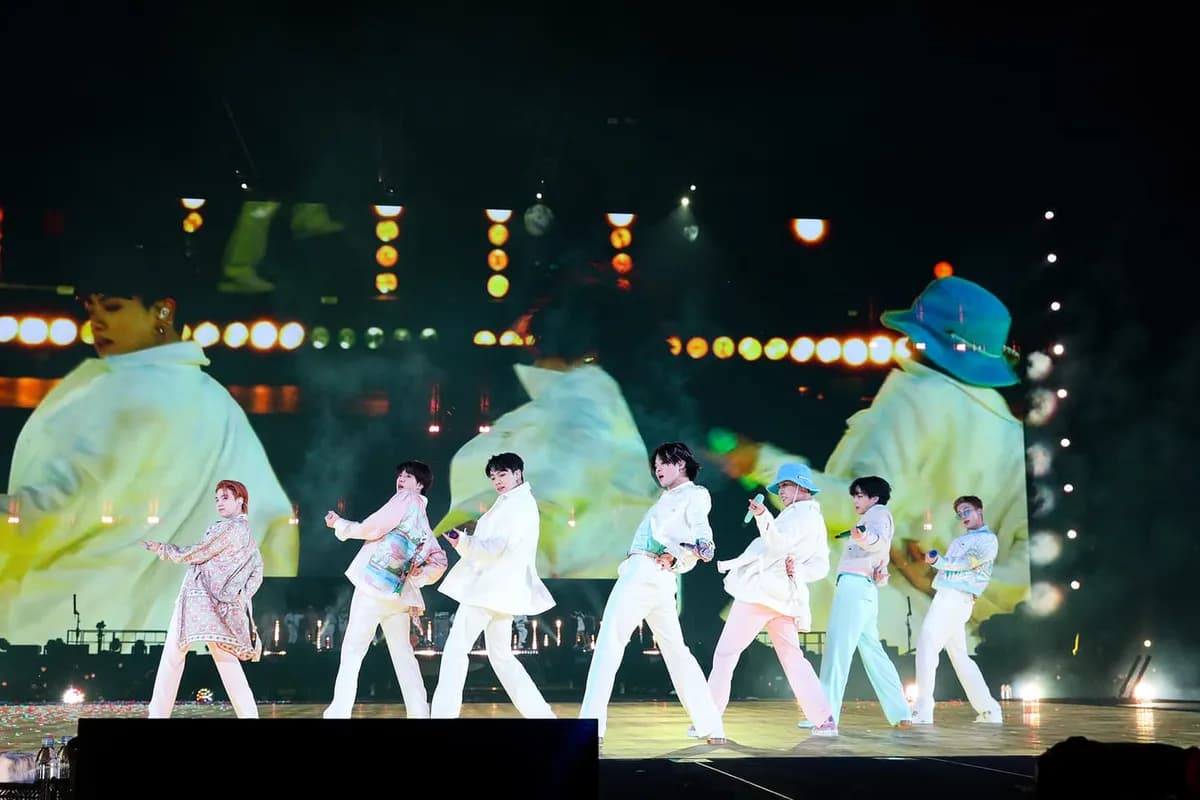
BTS Tops March Artist Brand Reputation Rankings with First Full Group Comeback in 4 Years
BTS ranked first in the Korean Corporate Reputation Research Institute's March Artist Brand Reputation Rankings based on 99 million data points.

Santo Domingo's Malecón Sports Park Construction Progressing Smoothly
Construction of a soccer field and skate park is progressing smoothly in the Malecón area of Santo Domingo, Dominican Republic.

Pogačar Overcomes Crash to Win Milano-Sanremo, Achieves Four Monument Victories
Tadej Pogačar defeated Tom Pidcock to win Milano-Sanremo, achieving his fourth Monument victory.
BTS's New Album 'ARIRANG' Sweeps Spotify Global Chart Positions 1-14
BTS's new album 'ARIRANG' monopolized Spotify Global Chart positions 1-14 on its first day, establishing the largest album debut record in K-POP history.