The Fracture of U.S.-Centered World Order: The Collapse of 20th Century Geopolitical Formulas
The True Face of Western Order Revealed Through NATO Alliance Weakening and Economic Hegemony Pursuit
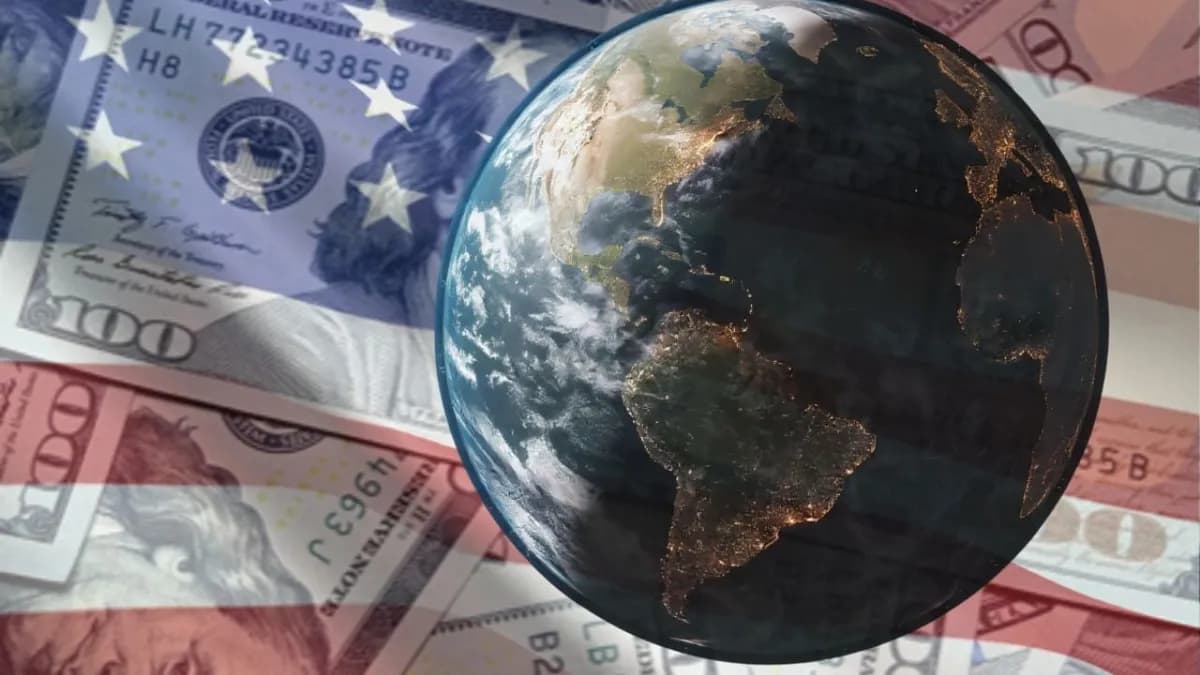
- •NATO allies are being shaken by internal conflicts without external pressure, revealing fractures in the 20th-century Western order.
- •Recent U.S. diplomatic moves have focused not on spreading democracy but on securing geopolitical strategic points for economic hegemony.
- •As traditional alliance systems are reorganized around economic pragmatism rather than ideology, the importance of middle-power diplomacy is growing.
A New Shadow of Threat Over Europe
In early 2026, experts analyzing international affairs have commonly noted a significant phenomenon. Europe has begun to seriously consider, for the first time in decades, the possibility of military conflict on its own territory. What adds to the shock is that the source of this threat is not a Cold War-era adversary, but rather the United States, a long-standing ally.
Cristopher Ballinas Valdés, a columnist for the Mexican daily La Silla Rota, pointed to the collapse of 20th-century geopolitical formulas, stating that "the situation unfolding is the exact opposite of what has been written in international relations textbooks for the past 75 years."
The Fracture of the NATO Alliance: Collapse Beginning from Within
The North Atlantic Treaty Organization (NATO) was a central pillar of the Western order in the latter half of the 20th century. However, recently this organization has shown signs of being shaken by internal conflicts without external pressure.
Ballinas analyzed that "the phenomenon of NATO member states opposing each other is paradoxical," noting that "the Western order is weakening even though hostile forces have not fired a single tank or missile." This demonstrates that the foundation of the alliance has relied more on ideological narratives than substantial mutual interests.
The Real Objective: Economic Hegemony
For decades, Western diplomacy has championed the spread of democratic values, sustainable development, and human rights protection. However, recent cases tell a different story.
Notable Movements:
- Intervention in Venezuelan affairs
- Controversial remarks referring to Canada as the "51st state"
- Renewed discussion of Panama Canal control
- Strategic interest expressed in Greenland
Ballinas pointed out that these movements aim not at "defending democracy but at securing geopolitical strategic points for global economic dominance." It is essentially the revival of 19th-century American expansionist ideology—Manifest Destiny and the Monroe Doctrine—in 21st-century economic form.
Message for South Korea
These changes also offer implications for South Korean diplomatic strategy. At a time when traditional alliance relationships are being reorganized around economic pragmatism rather than ideological alignment, South Korea must design its balanced diplomacy among the United States, China, and Japan with even greater sophistication.
Particularly, NATO's internal fractures offer lessons for the ROK-U.S. alliance. The sustainability of an alliance depends on clear definition of mutual interests and transparent communication.
Future Outlook [AI Analysis]
The future international order is likely to develop in the following directions.
Short-term (1-2 years):
- Conflicts within NATO will surface, strengthening independent approaches among member states
- U.S. economic pragmatism in diplomacy will become more overt
- European nations' movements to strengthen independent defense capabilities will accelerate
Medium to long-term (3-5 years):
- Traditional alliance systems will be reorganized into project-based coalitions
- Formation of a new order centered on economic blocs
- Increased importance of middle-power diplomacy
As Ballinas's analysis suggests, we are witnessing an era in which the 20th-century formula that "defending Western values equals defending democracy" no longer functions. Amid this change, each nation is entering an era of cold calculation that prioritizes pragmatism over ideology and national interests over alliances.
댓글 (4)
마음이 무겁습니다. 삼가 고인의 명복을 빕니다.
다시는 이런 일이 없어야 합니다.
이런 일이 다시는 반복되지 않았으면 합니다. Fracture 관련 대책이 시급합니다.
of 소식 정말 안타깝습니다. 유가족분들께 깊은 위로를 전합니다.
More in Global



Latest News

Middle East Conflict Drives Manufacturing Outlook to 10-Month Low
The Korea Institute for Industrial Economics & Trade survey shows April manufacturing outlook PSI plummeted to 88, falling below baseline for the first time in 10 months.
Lee Jae-myung Administration Excludes Multi-Home Officials from Real Estate Policymaking
President Lee Jae-myung has ordered the exclusion of multi-home owning public officials from all real estate policy processes.

Volkswagen CEO Says Germany Should Learn from China's Industrial Strategy
Volkswagen CEO stated that Germany should learn from China's systematic industrial planning approach.

Reddit Considers Face ID to Block Bots While Maintaining Anonymity
Reddit is considering implementing biometric authentication systems such as Face ID and Touch ID to block AI bots while maintaining anonymity.
BTS Tops March Artist Brand Reputation Rankings with First Full Group Comeback in 4 Years
BTS ranked first in the Korean Corporate Reputation Research Institute's March Artist Brand Reputation Rankings based on 99 million data points.

Santo Domingo's Malecón Sports Park Construction Progressing Smoothly
Construction of a soccer field and skate park is progressing smoothly in the Malecón area of Santo Domingo, Dominican Republic.

Pogačar Overcomes Crash to Win Milano-Sanremo, Achieves Four Monument Victories
Tadej Pogačar defeated Tom Pidcock to win Milano-Sanremo, achieving his fourth Monument victory.
BTS's New Album 'ARIRANG' Sweeps Spotify Global Chart Positions 1-14
BTS's new album 'ARIRANG' monopolized Spotify Global Chart positions 1-14 on its first day, establishing the largest album debut record in K-POP history.