Why Did the U.S. Publicly Raise the 'Taiwan's Undetermined Status' Argument?
Behind the 50-year policy shift lies China's historical distortion and international law interpretation disputes
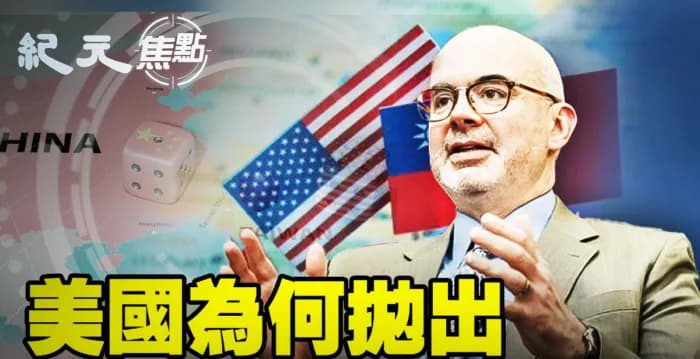
- •The U.S. publicly declared the 'undetermined status of Taiwan' theory for the first time in 50 years, refuting China's historical distortions.
- •While WWII-related documents specified Taiwan's return to the ROC, a legal vacuum emerged after the Chinese Communist Party took power in 1949.
- •The U.S. faces a logical contradiction by recognizing the CCP as the sole legitimate government while denying its sovereignty over Taiwan.
U.S. Reveals Position After Half a Century
The United States has publicly clarified its position on Taiwan's legal status for the first time in 50 years. On September 15, the American Institute in Taiwan (AIT) stated in a statement to Reuters that "China is distorting World War II-related documents including the Cairo Declaration, Potsdam Declaration, and San Francisco Treaty," adding that "none of these documents determined Taiwan's final political status."
AIT effectively serves as the U.S. embassy in Taipei. This statement is interpreted as the U.S. officially abandoning the 'strategic ambiguity' maintained since the 1970s and declaring the 'undetermined status of Taiwan' as its official position.
Three Perspectives on Taiwan's Sovereignty
The international community's stance on Taiwan's sovereignty is broadly divided into three camps.
The Republic of China (ROC) perspective holds that Taiwan has belonged to the ROC under international law since October 25, 1945. They cite as evidence that Taiwanese representatives participated in drafting the ROC constitution in 1946.
Taiwan's pro-independence camp argues that Taiwan's sovereignty was never formally transferred through proper international legal procedures after World War II, claiming Taiwan's status remains undetermined and should be decided by Taiwanese people themselves.
The Chinese Communist Party maintains that Taiwan's sovereignty was transferred from Japan to China after World War II, and when the People's Republic of China became China's sole legitimate government, Taiwan naturally became part of China.
Legal Basis for Taiwan's Attribution After WWII
The 1943 Cairo Declaration was issued by the leaders of the ROC, United States, and United Kingdom, explicitly stating that "Manchuria, Taiwan, and the Penghu Islands shall be returned to the Republic of China."
The 1945 Potsdam Declaration reaffirmed the Cairo Declaration's provisions, with the Soviet Union also signing. Japan accepted the Potsdam Declaration by signing the surrender documents on September 2 of the same year.
International law scholars recognize official declarations and proclamations by states as part of international law. Provisions related to territory, treaty implementation, and war termination are particularly binding. Therefore, Japan's signing of the Potsdam Declaration and surrender documents is interpreted as a legal commitment to return Taiwan to the ROC.
On October 25, 1945, the ROC declared sovereignty over Taiwan based on the Cairo Declaration, Potsdam Declaration, and Japan's surrender documents. Under international law, Taiwan could be considered to have belonged to the ROC from this point. What remained was the 'official confirmation' through a final treaty.
Legal Vacuum Left by the San Francisco Treaty
However, the situation became complicated when the Chinese Communist Party took control of mainland China in 1949. The ROC retreated to Taiwan, and the international community became divided over the question of "who represents China."
When concluding the 1951 San Francisco Treaty, the Allied powers failed to reach consensus on Chinese representation. The United States supported the ROC, while Britain supported the PRC. In the treaty signed by 49 nations, Japan only stated it would "renounce" sovereignty over Taiwan and the Penghu Islands, without specifying to whom it would be transferred.
The following year, in the 1952 Treaty of Peace between the ROC and Japan, the ROC and Japan declared all treaties prior to 1941 null and void. This meant the abolition of the Treaty of Shimonoseki (Treaty of Maguan), which had ceded Taiwan to Japan. Legally, when a treaty is abolished, sovereignty should revert to the original owner, China.
Although Japan did not explicitly specify Taiwan's attribution in the treaty text, the fact that the ROC was the signatory representing China can be interpreted as implicit recognition of ROC sovereignty over Taiwan.
International Order Transformation in the 1970s
Before the 1970s, most Western countries recognized the ROC as China's legitimate government. Taiwan's sovereignty was not a controversial issue. The international community's dilemma was "whether to recognize the ROC or the PRC."
However, the landscape changed when UN Resolution 2758 in 1971 gave the PRC China's UN seat. President Nixon's 1972 visit to China and Japan's establishment of diplomatic relations with China that same year signaled the international community abandoning the ROC in favor of the Chinese Communist Party.
In 1978, Japan signed a peace and friendship treaty with China, recognizing the PRC as "the sole legitimate government of China." The United States also established diplomatic relations with China on January 1, 1979, breaking ties with the ROC.
This eliminated the pre-1970s "either-or" structure, solidifying a unilateral trend of recognizing only the Chinese Communist Party. From this point, the so-called 'Taiwan issue' emerged in earnest on the international stage.
Logical Contradiction Created by the U.S. Itself
Western countries including the United States and Japan fell into a dilemma: while recognizing the Chinese Communist Party as "China's sole legitimate government," they could not acknowledge that Taiwan belongs to the CCP.
According to the Cairo and Potsdam Declarations, Taiwan should belong to China. However, if they refuse to recognize the ROC and only recognize the CCP, logic dictates that Taiwan should belong to the CCP.
This was an unsolvable logical contradiction the U.S. created for itself. To avoid this contradiction, the U.S. adopted 'strategic ambiguity' as its diplomatic strategy. In U.S.-China joint communiqués, the U.S. only said it "acknowledges" China's position that "there is only one China in the world and Taiwan is part of China."
The U.S. never said Taiwan is "part of the People's Republic of China," but by no longer recognizing the ROC as a legitimate government, it left room for the CCP to claim sovereignty over Taiwan.
Future Prospects [AI Analysis]
This public U.S. position clarifies 50 years of ambiguous language, but strategically remains largely defensive. It is a defensive measure countering China's sovereignty claims based on historical documents.
However, the impact of this statement on U.S.-China relations and cross-strait relations warrants attention. The CCP will likely protest that the U.S. has undermined the "One China" principle. Within Taiwan, the pro-independence camp may use this as grounds for independence discussions.
Whether the U.S. will move toward re-recognizing the ROC's international status or officially supporting Taiwan's self-determination depends on the direction of U.S.-China hegemonic competition. Currently, the U.S. has merely 'clarified' its existing position, but the possibility that this could be a prelude to future policy changes cannot be ruled out.
댓글 (4)
Why 관련 기사 잘 읽었습니다. 유익한 정보네요.
공감합니다. 참고하겠습니다.
간결하면서도 핵심을 잘 정리한 기사네요.
그 부분은 저도 궁금했습니다.
More in Global



Latest News
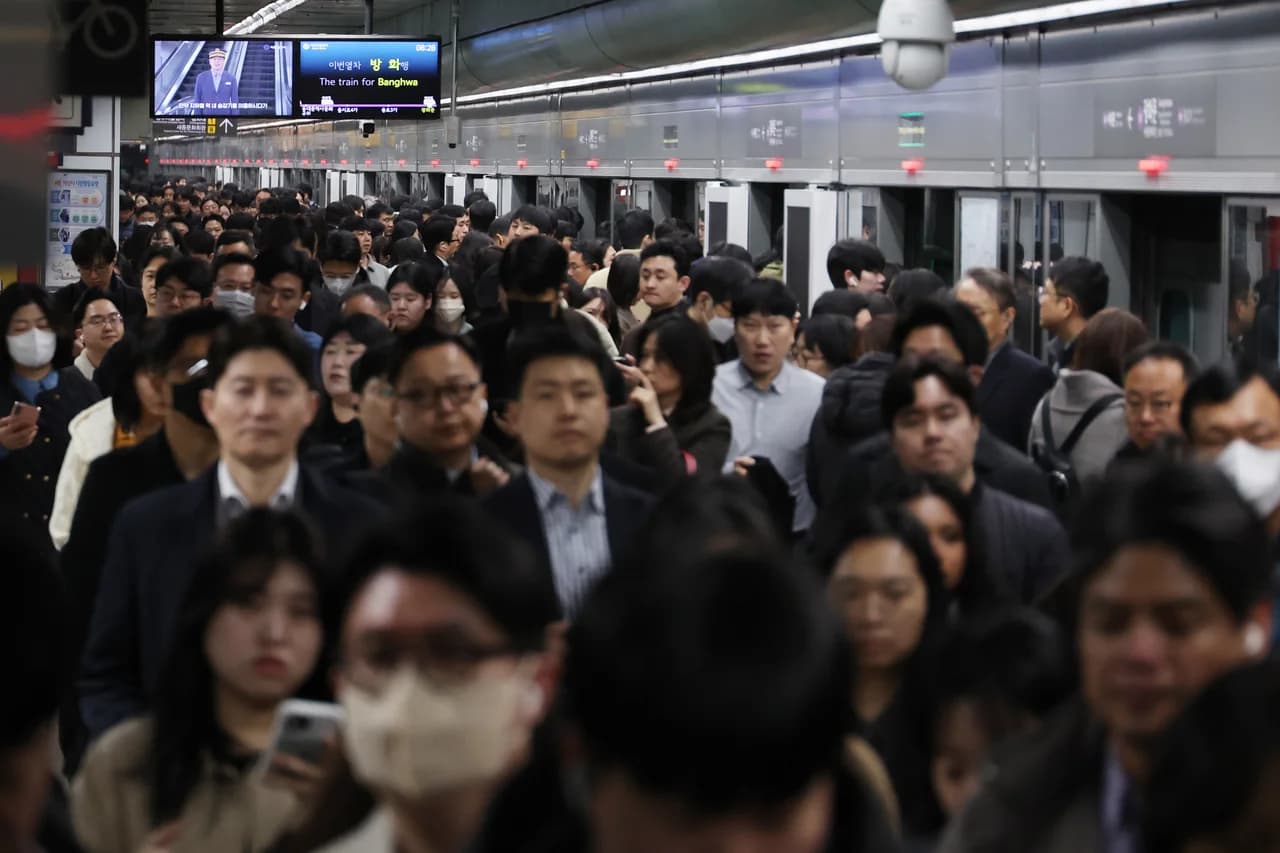
Middle East Conflict Drives Manufacturing Outlook to 10-Month Low
The Korea Institute for Industrial Economics & Trade survey shows April manufacturing outlook PSI plummeted to 88, falling below baseline for the first time in 10 months.
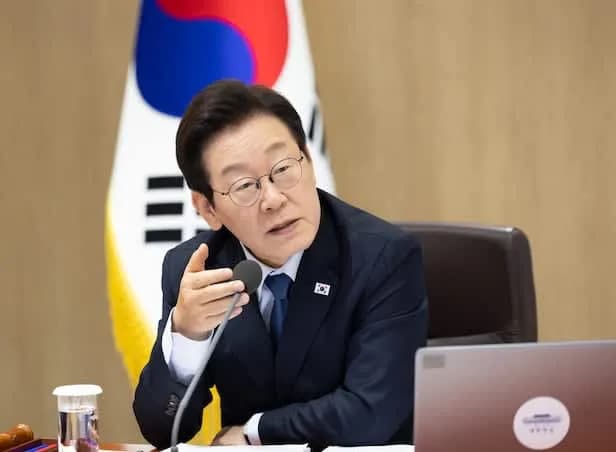
Lee Jae-myung Administration Excludes Multi-Home Officials from Real Estate Policymaking
President Lee Jae-myung has ordered the exclusion of multi-home owning public officials from all real estate policy processes.

Volkswagen CEO Says Germany Should Learn from China's Industrial Strategy
Volkswagen CEO stated that Germany should learn from China's systematic industrial planning approach.

Reddit Considers Face ID to Block Bots While Maintaining Anonymity
Reddit is considering implementing biometric authentication systems such as Face ID and Touch ID to block AI bots while maintaining anonymity.
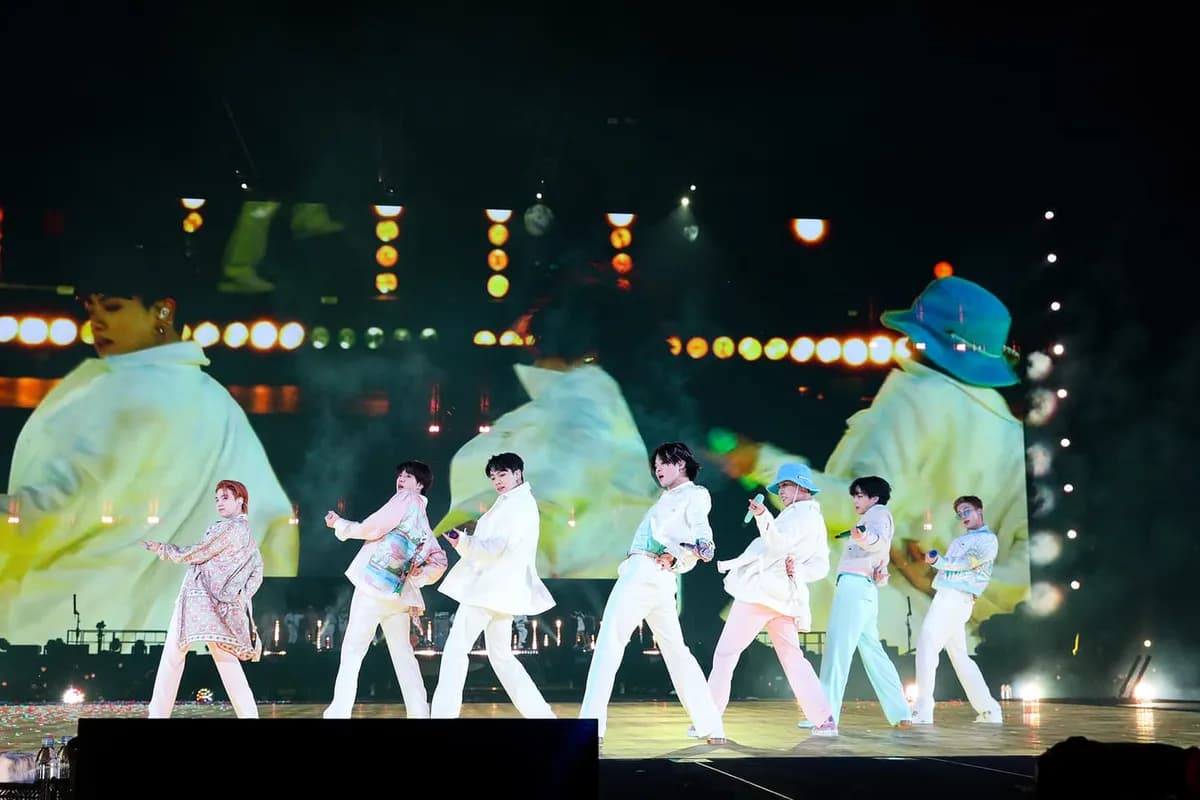
BTS Tops March Artist Brand Reputation Rankings with First Full Group Comeback in 4 Years
BTS ranked first in the Korean Corporate Reputation Research Institute's March Artist Brand Reputation Rankings based on 99 million data points.

Santo Domingo's Malecón Sports Park Construction Progressing Smoothly
Construction of a soccer field and skate park is progressing smoothly in the Malecón area of Santo Domingo, Dominican Republic.

Pogačar Overcomes Crash to Win Milano-Sanremo, Achieves Four Monument Victories
Tadej Pogačar defeated Tom Pidcock to win Milano-Sanremo, achieving his fourth Monument victory.
BTS's New Album 'ARIRANG' Sweeps Spotify Global Chart Positions 1-14
BTS's new album 'ARIRANG' monopolized Spotify Global Chart positions 1-14 on its first day, establishing the largest album debut record in K-POP history.