Beijing Explicitly Asserts Sovereignty and Jurisdiction Over Taiwan
China's Taiwan Affairs Office formally declares 'The People's Republic of China fully exercises sovereignty over Taiwan'
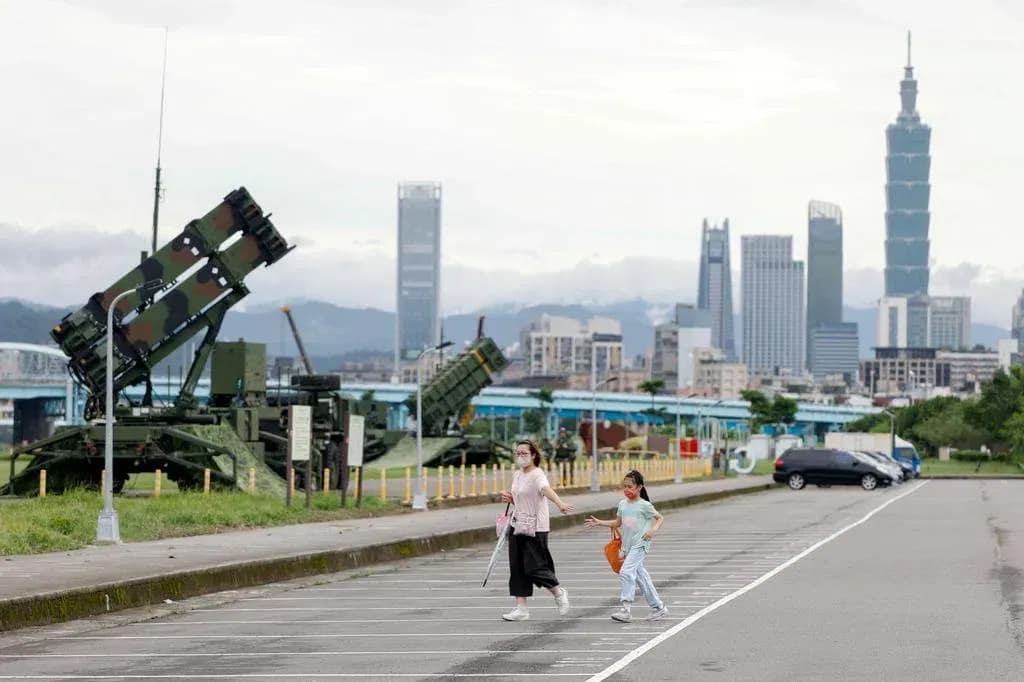
- •China's Taiwan Affairs Office officially declared that 'the People's Republic of China fully exercises sovereignty over Taiwan,' breaking through the previous 'One China Three-Stage Theory.'
- •This represents a direct rebuttal to Taiwan President Lai Ching-te's claim of 'mutual non-subordination between the Republic of China and the People's Republic of China,' signaling Beijing's designation of Taiwan as 'Taiwan Province of China.'
- •Experts analyze that Beijing's legal and political pressure is intensifying incrementally, offering implications for divided nation issues in East Asia including the Korean Peninsula.
Beijing's Shift in Taiwan Sovereignty Logic
The Taiwan Affairs Office of China's State Council officially declared on July 30 during a regular briefing that "the People's Republic of China fully enjoys and exercises sovereignty over Taiwan."
Spokespeople Chen Binhua stated that day, "Since the establishment of the People's Republic of China in 1949, it has replaced the Republic of China as the sole legitimate government representing all of China," emphasizing that "the government of the People's Republic of China naturally fully enjoys and exercises China's sovereignty, which includes sovereignty over Taiwan."
This officially supports an article contributed to the People's Daily a week earlier by Wang Yingjin, Director of the Cross-Strait Relations Research Center at Renmin University of China.
Theoretical Offensive Against Taiwan President's 'Mutual Non-Subordination' Claim
Taiwan President Lai Ching-te has repeatedly maintained since taking office that "the Republic of China and the People's Republic of China are not subordinate to each other." In his recently announced "Ten Lectures on Unity," he explicitly stated that "the People's Republic of China has never governed Taiwan for even a single day."
Wang Yingjin directly refuted this in his July 23 contribution. He argued that the People's Republic of China has substantially exercised sovereignty and jurisdiction over Taiwan through political, military, legal, and diplomatic actions since its establishment in 1949.
Specifically, he presented the following evidence:
- Representation in international organizations: Blocking Taiwan's sovereign participation in international bodies such as the United Nations
- Diplomatic relations: Controlling countries that establish diplomatic ties with China from forming official relations with Taiwan
- Law enforcement cases: Coast guard patrols in Kinmen waters, repatriation of overseas telecom fraud suspects, punitive measures against Taiwan independence figures
- Military actions: People's Liberation Army military exercises around the Taiwan Strait
Wang Yingjin emphasized that "even if the government of the People's Republic of China has not implemented comprehensive jurisdiction over the Taiwan region, this does not change the fact that the People's Republic of China holds sovereignty over the Taiwan region."
Taiwan Government's Rebuttal and Beijing's Official Support
Liang Wenjie, Deputy Director of Taiwan's Mainland Affairs Council, countered on July 24, stating "the People's Republic of China has never governed Taiwan, and Taiwan has been consistently governed by the Republic of China since 1945," adding that "the mutual non-subordination of the Republic of China and the People's Republic of China is a historical fact."
However, Beijing's position became clearer when Chen Binhua officially supported Wang Yingjin's argument a week later. Chen stated, "The establishment of the People's Republic of China in 1949 was a regime change under international law where the subject of China remained unchanged," emphasizing that "China's sovereignty and inherent territory have not changed, and the government of the People's Republic of China naturally fully enjoys and exercises China's sovereignty, which includes sovereignty over Taiwan."
Significance of Breaking Through the 'One China Three-Stage Theory'
Wang Xinxian, Director of the International Relations Research Center at Taiwan's National Chengchi University, analyzed in an interview with Lianhe Zaobao that Beijing has broken away from its past 'One China Three-Stage Theory' and 'internal-external differentiation' approach regarding Taiwan, and has begun directly asserting that 'the People's Republic of China holds complete sovereignty over Taiwan'.
The 'One China Three-Stage Theory' refers to the formula: "There is only one China in the world, the People's Republic of China is the sole legitimate government of China, and Taiwan is an inseparable part of the People's Republic of China." 'Internal-external differentiation' refers to the practice of using expressions like 'Mainland-Taiwan' in cross-strait discussions while rarely using the name People's Republic of China.
Notably, Wang Yi, China's Foreign Minister and Secretary of the CPC Leading Group for Taiwan Affairs, mentioned during a March foreign minister's press conference at the National People's Congress that when discussing UN General Assembly Resolution 2758 and Taiwan's sovereignty attribution, "the only name for the Taiwan region within the United Nations is 'Taiwan Province of China'".
Wang Xinxian interpreted this as "such a shift in policy language means Beijing's Taiwan policy has entered a 'direct confrontation' stage, no longer leaving ambiguous space for Taiwan's status after reunification." He added, "Beijing has clearly chosen the most unfavorable option for Taiwan, namely 'Taiwan Province of China'."
Implications for the Korean Peninsula
Beijing's shift in Taiwan sovereignty logic offers important implications for the Korean Peninsula situation.
First, China has begun defining its sovereignty logic in divided situations more aggressively. Previously, cross-strait relations were left ambiguous as a "special relationship" until unification, but now the logic has shifted to "the People's Republic of China is already exercising sovereignty over Taiwan regardless of unification status."
Second, South Korea must recognize that China's position on the Taiwan issue is becoming increasingly rigid amid intensifying US-China competition. Beijing's designation of Taiwan as "Taiwan Province of China" means South Korea's position on Taiwan-related issues on the international stage may become more sensitive going forward.
Third, China's logical shift could potentially set a precedent for Korean Peninsula unification discussions. How sovereignty issues between divided nations are defined and explained to the international community is an important variable that could affect the Korean Peninsula situation.
Future Outlook [AI Analysis]
Wang Xinxian expressed concern, stating "Beijing is applying pressure step by step in terms of legal principles and political status, while Taiwan remains mired in internal conflicts."
Experts believe Beijing's strengthening sovereignty logic is likely to further reduce Taiwan's international space. Particularly as China continues accumulating evidence of "substantial sovereignty exercise" in diplomatic, legal, and military domains, gaining recognition for Taiwan's independent status in the international community is expected to become increasingly difficult.
Meanwhile, a paradox exists where such pressure could actually strengthen independence sentiment within Taiwan. As the Lai Ching-te government gains justification to further emphasize "the Republic of China's sovereign independence," cross-strait tensions are unlikely to ease in the short term.
The international community, particularly neighboring countries including South Korea, has reached a point where they must closely observe Beijing's Taiwan policy changes and reassess their response strategies.
댓글 (6)
Beijing 관련 기사 잘 읽었습니다. 유익한 정보네요.
좋은 의견이십니다.
기사 잘 봤습니다. 다른 시각의 분석도 읽어보고 싶네요.
그 부분은 저도 궁금했습니다.
Asserts에 대해 더 알고 싶어졌습니다. 후속 기사 부탁드립니다.
그 부분은 저도 궁금했습니다.
More in Global



Latest News
Middle East Conflict Drives Manufacturing Outlook to 10-Month Low
The Korea Institute for Industrial Economics & Trade survey shows April manufacturing outlook PSI plummeted to 88, falling below baseline for the first time in 10 months.
Lee Jae-myung Administration Excludes Multi-Home Officials from Real Estate Policymaking
President Lee Jae-myung has ordered the exclusion of multi-home owning public officials from all real estate policy processes.

Volkswagen CEO Says Germany Should Learn from China's Industrial Strategy
Volkswagen CEO stated that Germany should learn from China's systematic industrial planning approach.

Reddit Considers Face ID to Block Bots While Maintaining Anonymity
Reddit is considering implementing biometric authentication systems such as Face ID and Touch ID to block AI bots while maintaining anonymity.
BTS Tops March Artist Brand Reputation Rankings with First Full Group Comeback in 4 Years
BTS ranked first in the Korean Corporate Reputation Research Institute's March Artist Brand Reputation Rankings based on 99 million data points.

Santo Domingo's Malecón Sports Park Construction Progressing Smoothly
Construction of a soccer field and skate park is progressing smoothly in the Malecón area of Santo Domingo, Dominican Republic.

Pogačar Overcomes Crash to Win Milano-Sanremo, Achieves Four Monument Victories
Tadej Pogačar defeated Tom Pidcock to win Milano-Sanremo, achieving his fourth Monument victory.
BTS's New Album 'ARIRANG' Sweeps Spotify Global Chart Positions 1-14
BTS's new album 'ARIRANG' monopolized Spotify Global Chart positions 1-14 on its first day, establishing the largest album debut record in K-POP history.