Syria's Second Civil War: Turkey and Israel's Power Struggle
New hegemonic competition among Islamist forces and regional powers following Assad regime collapse
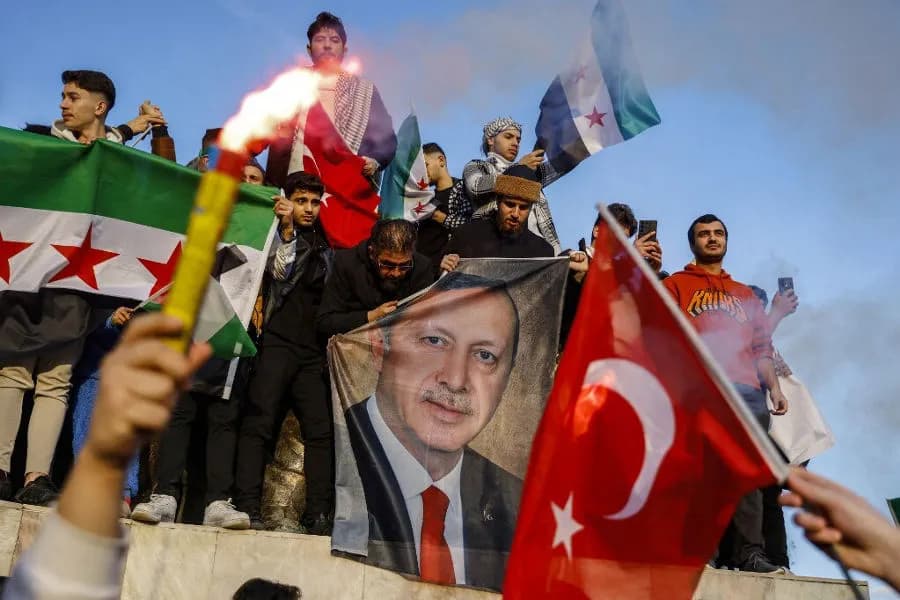
- •Turkey is pursuing a territorial expansion policy aimed at effectively annexing northern Syria while supporting Islamist forces.
- •Israel is taking a strategy of protecting historical minority groups in Syria and supporting the establishment of a tribal canton federal state.
- •Syria remains trapped in recurring conflicts due to colonial legacy after World War I and regional power intervention, with continued mass exodus of minority groups.
Syria Enters a New Era of Chaos
Following the collapse of the Assad regime in 2025, Syria has once again fallen into a power vacuum. This time, two regional powers—Turkey and Israel—are engaged in fierce competition to advance their respective strategic interests.
Turkey is supporting Islamist forces while expanding direct control over northern Syria. Meanwhile, Israel is pursuing a policy of protecting and supporting minority religious and ethnic groups with historical roots in Syria.
Turkey's Strategy: Territorial Expansion and Islamization
The Erdoğan government in Turkey has conducted large-scale military intervention in northern Syria since March 2025. This is interpreted not as a simple security operation, but as an actual attempt at territorial annexation.
Turkey's policy is detrimental to the majority of Syrian citizens. Analysts note that it benefits neither minority groups such as Kurds, Yazidis, Druze, Alawites, and Armenians, nor ordinary Sunni Muslims. This is because Turkey is pursuing a predatory policy aimed at converting Syrian territory into Turkish land.
The threat is particularly severe for Armenians and Christians. One expert warned that "Armenians remaining in an Islamist Syria dominated by Turkey should evacuate immediately," adding that "there is no future for non-Sunni Muslim, non-Arab minorities in a country where Islamists and their backer Erdoğan hold real power."
Israel's Approach: Federalization-Based Stabilization
In contrast, Israel is pursuing a policy of supporting and protecting tribal and religious groups that have historically inhabited Syria. Israel's ultimate goal is to establish a tribal canton federal Syria where each group has autonomy.
This federal structure has potential to actually function. It would reduce resources wasted on warfare, while the central government would focus on minimizing conflicts between cantons through political and fiscal means. Because this aligns with Israel's interests, Israel is expected to provide not only military support but substantial assistance through all practical means.
Recurrence of the Syrian Refugee Crisis
Since the Syrian civil war began in 2011, the majority of Armenians and Christians have already left Syria and are unlikely to return. This resembles what happened in Iraq after Saddam Hussein. At that time, most Armenians, Christians, and Yazidis left Iraq amid sectarian violence and civil war conditions.
Currently, Alawite Muslims (the Assad family's sect) and Druze are also suffering attacks and persecution from Islamists, and may soon join them in exodus.
Historical Context: The Middle East's Recurring Divisions
The current Syrian situation is a legacy of British-French colonial policy after World War I. The Syrian state created at that time never represented the interests of all Syrian citizens, at best reflecting only the interests of specific groups like the Alawites.
These artificial borders and power structures have become seeds of recurring conflict throughout the Middle East. Libya also saw renewed civil war after Gaddafi, and is currently divided into two hostile camps—with Erdoğan's intervention there as well.
A Region Where Pessimism Becomes Reality
A cynical assessment states that "in this region, optimism is foolishness and optimists are fools." This is especially true when Islamists are involved and regional powers like Turkey and major powers fuel conflicts.
History proves this. Pessimists who fled survived, while optimists who stayed were killed, whether intentionally or as 'collateral damage.'
Future Outlook [AI Analysis]
Syria's future will likely unfold in one of three scenarios.
First, Turkey's permanent annexation of northern Syria. This could intensify conflicts with Kurds and lead to the complete elimination of minority religious and ethnic groups.
Second, success of the federal model supported by Israel. This resembles a Swiss-style model that guarantees autonomy for each group while the central government plays a minimal coordinating role. However, this requires consensus among all groups and cessation of external intervention.
Third, prolonged second civil war. The possibility of remaining a divided state with multiple competing forces, like Libya, cannot be ruled out.
The impact on South Korea also deserves attention. If the Syrian crisis becomes prolonged, Middle Eastern energy market instability will increase, which could affect South Korea's crude oil import prices. It will also present new challenges for international peacekeeping activities in which South Korea participates.
댓글 (2)
불안한 시기에 정확한 보도가 중요합니다. 좋은 기사 감사합니다.
경제 상황이 좋지 않은데, 정부의 대응이 아쉽습니다.
More in Global


Latest News

Middle East Conflict Drives Manufacturing Outlook to 10-Month Low
The Korea Institute for Industrial Economics & Trade survey shows April manufacturing outlook PSI plummeted to 88, falling below baseline for the first time in 10 months.

Lee Jae-myung Administration Excludes Multi-Home Officials from Real Estate Policymaking
President Lee Jae-myung has ordered the exclusion of multi-home owning public officials from all real estate policy processes.

Volkswagen CEO Says Germany Should Learn from China's Industrial Strategy
Volkswagen CEO stated that Germany should learn from China's systematic industrial planning approach.

Reddit Considers Face ID to Block Bots While Maintaining Anonymity
Reddit is considering implementing biometric authentication systems such as Face ID and Touch ID to block AI bots while maintaining anonymity.
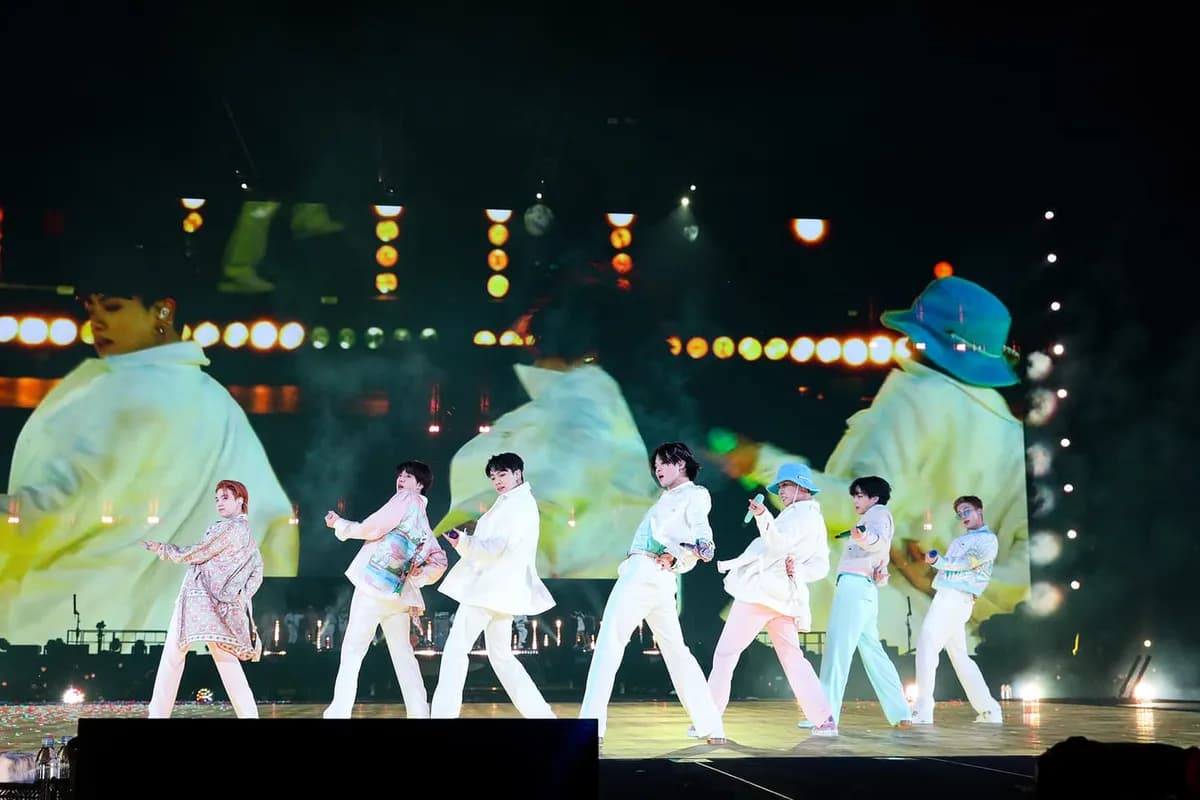
BTS Tops March Artist Brand Reputation Rankings with First Full Group Comeback in 4 Years
BTS ranked first in the Korean Corporate Reputation Research Institute's March Artist Brand Reputation Rankings based on 99 million data points.

Santo Domingo's Malecón Sports Park Construction Progressing Smoothly
Construction of a soccer field and skate park is progressing smoothly in the Malecón area of Santo Domingo, Dominican Republic.

Pogačar Overcomes Crash to Win Milano-Sanremo, Achieves Four Monument Victories
Tadej Pogačar defeated Tom Pidcock to win Milano-Sanremo, achieving his fourth Monument victory.
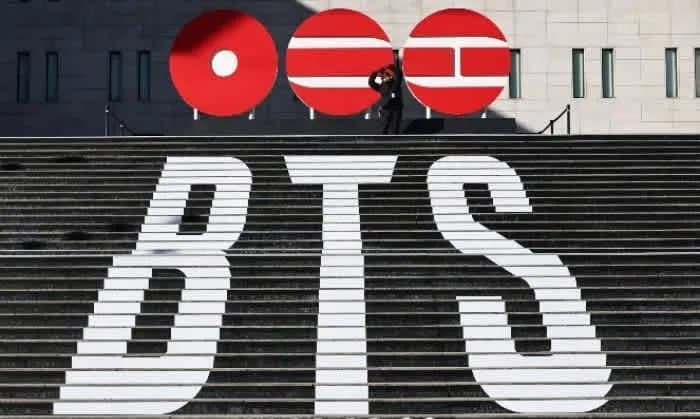
BTS's New Album 'ARIRANG' Sweeps Spotify Global Chart Positions 1-14
BTS's new album 'ARIRANG' monopolized Spotify Global Chart positions 1-14 on its first day, establishing the largest album debut record in K-POP history.