Europe's Recognition of Palestinian State Raises Concerns Over Middle East Stability
France and UK Announce Recognition Amid Questions About Effectiveness, as Israel Reinforces Security Control
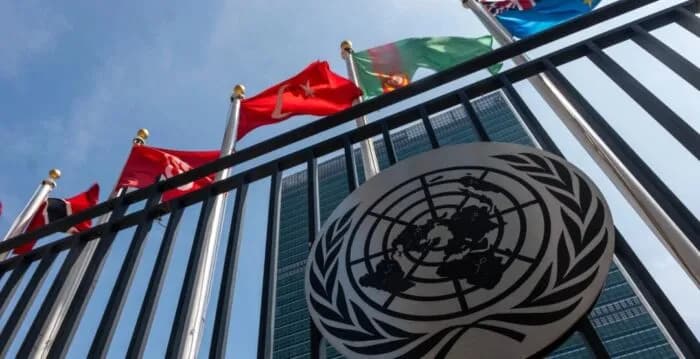
- •European countries including France and the UK have announced recognition of Palestinian statehood, but critics argue this is merely a diplomatic gesture given the absence of an effective governance structure.
- •Hamas maintains its position of considering relinquishing official power while refusing to surrender weapons, with U.S.-mediated ceasefire negotiations collapsing and prospects for demilitarization remaining unclear.
- •Turkey's intervention in Libya demonstrates how relinquishing territorial control without security guarantees can lead to regional instability, suggesting Israel's long-term security control is likely to continue.
European Countries' Wave of Palestinian Recognition
On July 24, 2025, French President Emmanuel Macron announced he would declare recognition of a Palestinian state at the September UN General Assembly. This marked the first such move among the Group of Seven (G7) nations. The United Kingdom followed on July 29 with a conditional recognition statement, while Ireland and Spain had already recognized Palestinian statehood in May 2024.
These decisions have drawn criticism for overlooking the actual situation on the ground. The fundamental question of what Palestinian government Europe is recognizing remains unanswered. It is unclear whether this refers to the Hamas-controlled parliament, which has not convened since 2007, or Mahmoud Abbas's Palestinian Authority (PA), which only governs parts of the West Bank.
The Paradox of Recognition Detached from Reality
Europe's recent actions resemble the international community's recognition of a non-existent governmental structure during Somalia's state collapse in 1991. Recognizing a governance structure that does not exist is not a normal state action but merely a diplomatic gesture.
Instead, such moves are strengthening Israel's justification for maintaining military control. In the absence of effective Palestinian governance, Israel faces a binary choice: maintain security control or accept security vulnerabilities.
Israel currently controls approximately 80% of the Gaza Strip. The Israel Defense Forces are stationed in Gaza City, Jabaliya, Rafah, and the Netzarim Corridor, among other locations—a long-term deployment based on strategic necessity.
Hamas's Refusal to Disarm
On July 25, 2025, the United States suspended Qatar-mediated ceasefire negotiations, citing Hamas's lack of good faith. After Hamas refused to commit to releasing all hostages and sought to maintain military capabilities, U.S. special envoy Steve Witkoff led the negotiating team back home.
Hamas has indicated it would consider relinquishing official power but will not surrender its weapons. This demonstrates its continued commitment to armed resistance over political governance.
Israel allocated 1.6 billion shekels (approximately $473 million) for humanitarian aid to Gaza in August 2025. Finance Minister Bezalel Smotrich announced an additional allocation of 3 billion shekels (approximately $897 million), though the final budget was set at the lower amount. Israeli checkpoints at Kerem Shalom and Zikim remain operational for transporting food, water, goods, and fuel.
Historical Context: Failed Autonomy Attempts
From June 10 to 15, 2007, Hamas violently seized control of the Gaza Strip, killing 161 Palestinians and injuring more than 700. This event was a prelude to the larger catastrophe of October 7, 2023, when Hamas militants killed 1,139 people and kidnapped approximately 250 hostages. Palestinian autonomy attempts ultimately resulted in massacres.
Israel's experience from 2005 to 2023 offers the lesson that territorial withdrawal without security guarantees leads not to sustainable peace but to civilian deaths.
Regional Instability Precedent: Turkey and Libya
Turkey's regional actions demonstrate why relinquishing territorial control leads to exploitation. Turkey has deployed Syrian armed personnel to Libya since December 2019. A UN report published on December 13, 2024 (S/2024/914) confirmed that 16,500-18,000 Syrian mercenaries under Turkish command remain stationed in Libya.
On June 12, 2025, Turkey submitted its "Blue Homeland" maritime sovereignty claims to the UNESCO Intergovernmental Oceanographic Commission. These actions show that Turkey is systematically undermining alliances with Greece, Cyprus, Israel, and the United States in the Eastern Mediterranean region.
Demilitarizing the Gaza Strip without security guarantees would create another platform for regional powers to exert influence through proxy forces. The Libyan case demonstrates how quickly anarchic territories become hubs for mercenary deployment and regional instability.
Future Outlook [AI Analysis]
The international community faces a choice: pressure Hamas into complete demilitarization to enable conditional Palestinian autonomy, or accept Israeli security control as a safeguard against repeat attacks similar to October 7.
Those demanding Israel's immediate withdrawal before Hamas's military defeat are essentially advocating for predictable catastrophe. Israel is likely to continue individual control over Palestinian communities while providing humanitarian aid until Palestinian leadership chooses demilitarization over terrorism.
Currently, this solution satisfies no political position, but it is a realistic approach to preventing massacres. Unless Palestinian leadership prioritizes political governance over armed resistance, the timeline for military operations is expected to extend indefinitely.
Implications for South Korea
This situation offers important lessons for Korean diplomacy. Hasty recognition of political entities without effective governance capacity can actually harm regional stability. South Korea needs a cautious, reality-based approach to the Middle East peace process, considering the balance between security and humanitarian values.
In particular, South Korea depends on the Middle East region for a significant portion of its oil imports, making regional stability directly impact energy security. The European example demonstrates that building substantive stability mechanisms should take priority over diplomatic symbolism.
댓글 (2)
기사 잘 봤습니다. 다른 시각의 분석도 읽어보고 싶네요.
Recognition에 대해 더 알고 싶어졌습니다. 후속 기사 부탁드립니다.
More in Global


Latest News

Middle East Conflict Drives Manufacturing Outlook to 10-Month Low
The Korea Institute for Industrial Economics & Trade survey shows April manufacturing outlook PSI plummeted to 88, falling below baseline for the first time in 10 months.

Lee Jae-myung Administration Excludes Multi-Home Officials from Real Estate Policymaking
President Lee Jae-myung has ordered the exclusion of multi-home owning public officials from all real estate policy processes.

Volkswagen CEO Says Germany Should Learn from China's Industrial Strategy
Volkswagen CEO stated that Germany should learn from China's systematic industrial planning approach.

Reddit Considers Face ID to Block Bots While Maintaining Anonymity
Reddit is considering implementing biometric authentication systems such as Face ID and Touch ID to block AI bots while maintaining anonymity.

BTS Tops March Artist Brand Reputation Rankings with First Full Group Comeback in 4 Years
BTS ranked first in the Korean Corporate Reputation Research Institute's March Artist Brand Reputation Rankings based on 99 million data points.

Santo Domingo's Malecón Sports Park Construction Progressing Smoothly
Construction of a soccer field and skate park is progressing smoothly in the Malecón area of Santo Domingo, Dominican Republic.

Pogačar Overcomes Crash to Win Milano-Sanremo, Achieves Four Monument Victories
Tadej Pogačar defeated Tom Pidcock to win Milano-Sanremo, achieving his fourth Monument victory.
BTS's New Album 'ARIRANG' Sweeps Spotify Global Chart Positions 1-14
BTS's new album 'ARIRANG' monopolized Spotify Global Chart positions 1-14 on its first day, establishing the largest album debut record in K-POP history.