Iran's 'Axis of Resistance' Crumbles, Reshaping Middle East Geopolitics
With Hamas and Hezbollah Severely Weakened, Revolutionary Guards Face Unprecedented Pressure—Nuclear Development vs. Negotiation Crossroads
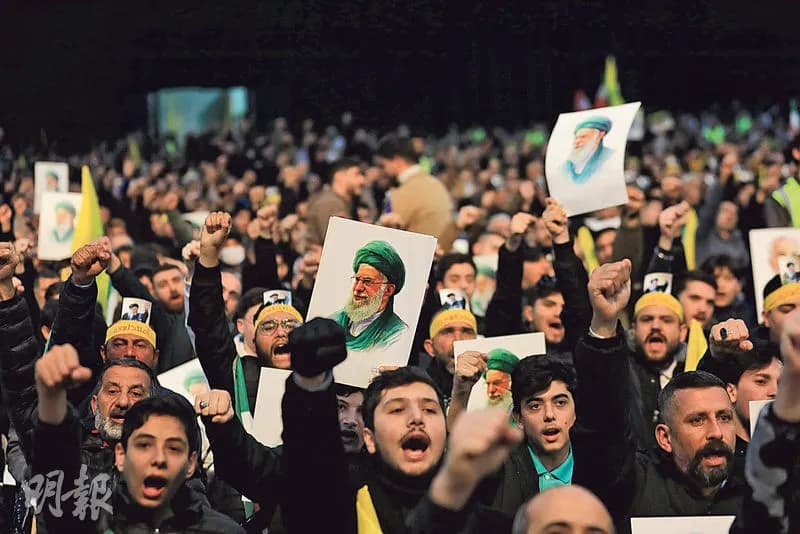
- •Since the Israel-Hamas war in October 2023, Iran's 'Axis of Resistance' network has effectively collapsed, placing the Revolutionary Guards under unprecedented pressure.
- •With Hamas and Hezbollah weakened and Syrian supply routes cut, Iran stands at a crossroads between accelerating nuclear weapons development and pursuing U.S. negotiations.
- •Changes in Iran's situation lead to Strait of Hormuz instability and oil price spikes, directly impacting South Korea's energy security given its 70% dependence on Middle Eastern crude oil.
Dramatic Shift in Middle East Power Balance
Approximately two and a half years after the outbreak of the Israel-Hamas war in October 2023, Iran's 'Axis of Resistance' network built across the Middle East faces virtual collapse. As Hamas, Hezbollah, and other Iranian proxy militant groups suffer consecutive blows, the Tehran regime confronts diplomatic and military isolation.
Hong Kong's Ming Pao reports that "the successive defeats of Axis of Resistance members have placed Iran's Revolutionary Guards under unprecedented pressure," analyzing that "Iran faces a critical choice between accelerating nuclear weapons development and pursuing negotiations with the United States."
What is the Axis of Resistance?
The Axis of Resistance is an informal military and political network Iran has built across the Middle East over approximately 40 years since the 1979 Islamic Revolution. Core members include:
- Lebanon's Hezbollah: Checking Israel's northern border
- Palestinian Hamas: Pressuring Israel from Gaza Strip stronghold
- Yemen's Houthi rebels: Threatening Red Sea maritime routes
- Iraqi and Syrian Shiite militias: Checking U.S. military presence
Iran has provided these groups with weapons, funding, and training, using them as indirect pressure tools against Israel and the United States. This strategy allowed Tehran to maintain regional influence while avoiding direct warfare.
Domino Collapse Since 2023
However, the situation changed dramatically after Hamas's surprise attack on Israel in October 2023. As Israel launched a powerful retaliatory offensive:
- Gaza Hamas Devastated: Lost over 70% of military capacity, with significant leadership casualties
- Hezbollah Weakened: September 2024 pager explosion attacks paralyzed command structure; Israeli airstrikes on southern Lebanon caused major force depletion
- Syrian Assad Regime Collapsed: December 2024 rebel victory severed Iran's supply route to Lebanon
- Houthi Rebels Isolated: Diminished position in Yemen civil war negotiations with Saudi Arabia and UAE
The Syrian land route severance proved particularly devastating. Iran had been supplying weapons to Hezbollah through the Iraq→Syria→Lebanon "Shia Crescent" supply network, and this route is now effectively blocked.
Revolutionary Guards' Dilemma
The Islamic Revolutionary Guard Corps (IRGC) Quds Force, which oversees Axis of Resistance operations, now faces two choices.
Option 1: Accelerate Nuclear Weapons Development
Hardliners argue that having lost external defensive lines (the Axis of Resistance), Iran must strengthen its own deterrent capability. Intelligence suggests Iran began work in late 2024 to increase uranium enrichment levels from 60% to 90% (weapons-grade).
Option 2: Negotiate with the United States
In January 2026, U.S. President Donald Trump stated "Iran doesn't have much time left" and presented three conditions:
- Halt uranium enrichment
- Scale back ballistic missile program
- Stop supporting armed proxy organizations
Realist voices within Iran argue "we can no longer afford the cost of maintaining the Axis of Resistance." Iran is estimated to have spent approximately $7 billion annually (about 10 trillion won) supporting the Axis of Resistance during 2024-25.
Domestic Political Instability and Dual Pressure
The Iranian regime faces not only external pressure but also domestic protest pressure. Since late 2024, protests against economic hardship and political repression have erupted in major cities including Tehran and Mashhad. Some observers mention "the possibility of repeating the 2022 Mahsa Amini protests."
The Revolutionary Guards carry the dual burden of simultaneously managing external threats (Israel and the U.S.) and internal discontent (protesters). Experts warn that "the possibility of Iran descending into prolonged civil war like Syria or Venezuela cannot be ruled out."
Impact on South Korea
Changes in Iran's situation directly affect South Korea:
Energy Security: If Iran plays the Strait of Hormuz blockade card, 20% of global oil supply faces disruption. South Korea depends on the Middle East for approximately 70% of crude oil imports, exposing it to oil price spikes and logistics chaos.
Diplomatic Tightrope: South Korea must participate in U.S. sanctions against Iran while considering past economic cooperation relationships with Iran (petrochemicals, construction, etc.). If an Iranian regime change scenario materializes, the issue of $7 billion in frozen Iranian assets will also resurface.
Regional Security: If Iran becomes a nuclear weapons state, it could trigger a Middle East nuclear domino effect (Saudi Arabia, Turkey, Egypt pursuing nuclear development), which could adversely affect the NPT regime in Northeast Asia.
Future Outlook [AI Analysis]
The possibility of Iran developing nuclear weapons in the short term is technically high but politically limited. While acquiring 90% enriched uranium would take 3-6 months, choosing this path would trigger immediate Israeli airstrikes and U.S. military options.
Therefore, Iran is likely to adopt a "nuclear threshold state" strategy—acquiring nuclear weapons manufacturing capability while postponing actual assembly and using it as a negotiation card. Since Israel won't tolerate this, attempts at third JCPOA renegotiation are expected within the next 6 months to 1 year.
However, if Iran's internal political instability intensifies, the regime may shift to survival-first mode rather than negotiation and force ahead with nuclear development. Middle East experts agree that "2026 will be a decisive year determining the fate of the Iranian regime and regional order."
댓글 (3)
흥미로운 주제입니다. 주변에도 공유해야겠어요.
좋은 의견이십니다.
간결하면서도 핵심을 잘 정리한 기사네요.
More in Global


Latest News
Middle East Conflict Drives Manufacturing Outlook to 10-Month Low
The Korea Institute for Industrial Economics & Trade survey shows April manufacturing outlook PSI plummeted to 88, falling below baseline for the first time in 10 months.

Lee Jae-myung Administration Excludes Multi-Home Officials from Real Estate Policymaking
President Lee Jae-myung has ordered the exclusion of multi-home owning public officials from all real estate policy processes.

Volkswagen CEO Says Germany Should Learn from China's Industrial Strategy
Volkswagen CEO stated that Germany should learn from China's systematic industrial planning approach.

Reddit Considers Face ID to Block Bots While Maintaining Anonymity
Reddit is considering implementing biometric authentication systems such as Face ID and Touch ID to block AI bots while maintaining anonymity.
BTS Tops March Artist Brand Reputation Rankings with First Full Group Comeback in 4 Years
BTS ranked first in the Korean Corporate Reputation Research Institute's March Artist Brand Reputation Rankings based on 99 million data points.

Santo Domingo's Malecón Sports Park Construction Progressing Smoothly
Construction of a soccer field and skate park is progressing smoothly in the Malecón area of Santo Domingo, Dominican Republic.

Pogačar Overcomes Crash to Win Milano-Sanremo, Achieves Four Monument Victories
Tadej Pogačar defeated Tom Pidcock to win Milano-Sanremo, achieving his fourth Monument victory.
BTS's New Album 'ARIRANG' Sweeps Spotify Global Chart Positions 1-14
BTS's new album 'ARIRANG' monopolized Spotify Global Chart positions 1-14 on its first day, establishing the largest album debut record in K-POP history.