Japanese Singer Ayumi Hamasaki's China Concert Abruptly Canceled, Performs to Empty Venue
Cancellation due to 'force majeure' moments before show… Complete performance held for 200 staff members with no audience

- •Japanese singer Ayumi Hamasaki's Shanghai concert was abruptly canceled due to 'force majeure' immediately after stage completion, but she performed the complete show before empty seats, attracting worldwide attention.
- •This situation developed after Japanese Prime Minister Takaichi's Taiwan remarks, with multiple Japanese artists' concerts in China being canceled in succession since November.
- •Experts analyzed that China's cultural retaliation is actually a 'self-inflicting move' causing greater losses to domestic organizers and international image.
Sudden Cancellation After Stage Completion
A concert in Shanghai by Ayumi Hamasaki (濱崎步), known as the Queen of Japanese Pop, was abruptly canceled just after stage setup was completed. The organizers announced the cancellation on the afternoon of November 28, one day before the scheduled performance, citing "force majeure factors."
Hamasaki and a joint China-Japan staff of 200 people had worked day and night for five days to prepare the stage. However, key staff members were urgently summoned on the morning before the concert to receive notice of the cancellation. The scheduled venue was the Shanghai Pudong Development Bank Oriental Sports Center, and this concert was meant to be the finale of her Asian tour.
Notably, Hamasaki had voluntarily adjusted her stage production the day before the concert to mourn the victims of the Tai Po fire in Hong Kong. She removed pyrotechnic special effects, canceled red costumes, and asked audiences to refrain from wearing red clothing.
Complete Performance Before Empty Seats
Although the official concert was canceled, Hamasaki took to the stage as scheduled. In a post on social media late on the evening of November 29, she revealed that "we completed the entire performance from the opening song to the encore with no audience present."
"All performers and staff completed the performance with the same dedication as an official concert, giving their all," her words resonated widely on social media worldwide. Photos and videos released through Instagram Stories showed scenes from the performance conducted before completely empty seats.
Chinese netizens expressed support for Hamasaki on X (formerly Twitter), saying "illuminating barbaric darkness with the light of civilization." Responses included "a real 'Beauty and the Beast'" and "Shanghai has lost face. Like the Shanghai lockdown, this incident is a symbolic event marking the end of an era."
String of Japanese Performance Cancellations
Hamasaki's case is not an isolated incident. Recently, performances by Japanese artists in China have been canceled in succession.
On November 17, QQ Music canceled a fan meeting in Guangzhou for Japanese boy group JO1 due to "force majeure." On November 20, a Shanghai fan meeting for Japanese actor Yuki Furukawa was canceled for "unavoidable reasons." A Yoshimoto comedy performance at the Shanghai International Comedy Festival was also canceled for the same reason.
An even more shocking incident occurred on November 28. Japanese singer Maki Otsuki was performing an ending song from the manga One Piece at Shanghai's "Game Carnival 2025" event when the lights suddenly went out and the music stopped. Staff came onto the stage, took away the microphone, and escorted her off stage.
Performances in China by other Japanese artists including Takashio, Ryo Suzuki, KOKIA, and natori were also canceled or postponed in succession. In the film sector, releases of Japanese movies including Crayon Shin-chan: Our Dinosaur Diary and Cells at Work! were postponed indefinitely.
Cultural Retaliation Triggered After Takaichi's Remarks
This situation developed shortly after Japanese Prime Minister Sanae Takaichi stated in the National Diet on November 7 that "a Taiwan contingency could become an existential crisis for Japan." China's state-run People's Daily published a critical article listing "nine major crimes" targeting Prime Minister Takaichi.
Lai Jianping, an independent current affairs commentator and former Beijing lawyer, pointed out: "Why didn't they protest when the Abe government amended the constitution in 2015, but now, 10 years later, suddenly show such a strong reaction?"
Takaichi's remarks were based on the U.S.-Japan defense treaty since 1952 and constitutional amendments passed in 2015. According to these laws, if the United States intervenes in a Taiwan Strait conflict, Japan could inevitably become involved.
At a press conference on December 1, Chinese Foreign Ministry spokesperson Lin Jian deflected responsibility when asked by foreign media about the Japanese singer's concert cancellation, saying to "inquire with Chinese organizers" about "specific operational circumstances and reasons" of "social and commercial activities."
Chinese Organizers Suffer Greatest Losses
According to sources from Taiwan media outlet E-Info, when Japanese artists perform in China, appearance fees are typically paid mostly before departure. Sudden cancellations cause organizers to incur massive losses.
Shiwei Ge, a mainland media industry professional and film producer, pointed out that "ticket refunds, venue rental fees, artist airfare and accommodation, equipment transportation costs, and stage setup expenses have all already been paid out," adding that "the Chinese organizers actually suffered the greatest losses."
Hu Xijin, former editor-in-chief of China's state-run Global Times, also acknowledged on social media that "Chinese losses are greater than Japan's."
Expert Analysis: "Lifting a Rock Only to Drop It on One's Own Foot"
Shiwei Ge evaluated Hamasaki's response as "the magnanimity of a superstar-level figure," analyzing it as "the dignity of showing a resistant attitude without fearing the authoritarian regime." He said it was "not simply professional spirit but a very powerful protest" and that it "made the whole world angry at the authoritarian regime's practice of sacrificing politically unrelated individuals as scapegoats."
Lai Jianping stated that "cultural exchange activities and artistic activities should inherently be unrelated to politics," interpreting Chinese netizens' praise for Hamasaki as meaning "the Chinese Communist Party's measures were rejected not only by the international community but also by Chinese netizens."
Shiwei Ge assessed that Hamasaki "resisted through very civilized means, immediately revealing superiority and inferiority." He said it "showed the whole world that the authoritarian regime places everything under its rule and makes all unrelated things targets for venting."
Lai Jianping pointed out that "the Chinese Communist Party lifted a rock only to drop it on its own foot," noting that it "shows that maintaining one-party autocracy is absolutely opposed to the interests of ordinary citizens," and urged that "the international community should prepare more counter-sanction measures."
Recurring Pattern of China's Cultural Retaliation
This is not the first time China has canceled foreign artist performances for political reasons.
After South Korea agreed to deploy the U.S. THAAD system in 2016, China imposed the "Korean restriction order," and Korean companies including Lotte Group successively withdrew from China. Lotte Group announced the sale of 121 stores in 2020 due to COVID-19 impacts, effectively being ousted from the Chinese market.
In 2019, citing cross-strait relations, China suspended individual travel visa issuance for Chinese citizens to Taiwan, and even after COVID-19, Chinese group tours to Taiwan have not resumed to this day.
After Australia called for an investigation into the origins of COVID-19 in 2020, China restricted imports of Australian commodities including coal. This caused coal shortages within China, leading to "power cuts" in various regions.
Future Outlook [AI Analysis]
This incident suggests the possibility that the Chinese government's pattern of using cultural exchanges as a diplomatic pressure tool will continue. As Hamasaki's response attracted significant global attention, artists are likely to speak out more actively in similar situations in the future.
As losses accumulate for Chinese organizers, risk awareness regarding inviting Japanese artists is expected to increase. This could lead to a long-term contraction of China-Japan cultural exchanges.
In the international community, criticism of using culture as a political retaliation tool may intensify. Particularly in the modern environment where information is shared globally in real-time via social media, such measures could negatively impact China's international image.
In terms of impact on South Korea, there are concerns about a repeat of the experience during the 2016 THAAD incident. The Korean entertainment industry faces growing necessity to reduce dependence on the Chinese market and strengthen diversification strategies.
댓글 (2)
Japanese 관련 기사 잘 읽었습니다. 유익한 정보네요.
흥미로운 주제입니다. 주변에도 공유해야겠어요.
More in Global

Latest News
Middle East Conflict Drives Manufacturing Outlook to 10-Month Low
The Korea Institute for Industrial Economics & Trade survey shows April manufacturing outlook PSI plummeted to 88, falling below baseline for the first time in 10 months.
Lee Jae-myung Administration Excludes Multi-Home Officials from Real Estate Policymaking
President Lee Jae-myung has ordered the exclusion of multi-home owning public officials from all real estate policy processes.

Volkswagen CEO Says Germany Should Learn from China's Industrial Strategy
Volkswagen CEO stated that Germany should learn from China's systematic industrial planning approach.

Reddit Considers Face ID to Block Bots While Maintaining Anonymity
Reddit is considering implementing biometric authentication systems such as Face ID and Touch ID to block AI bots while maintaining anonymity.
BTS Tops March Artist Brand Reputation Rankings with First Full Group Comeback in 4 Years
BTS ranked first in the Korean Corporate Reputation Research Institute's March Artist Brand Reputation Rankings based on 99 million data points.

Santo Domingo's Malecón Sports Park Construction Progressing Smoothly
Construction of a soccer field and skate park is progressing smoothly in the Malecón area of Santo Domingo, Dominican Republic.
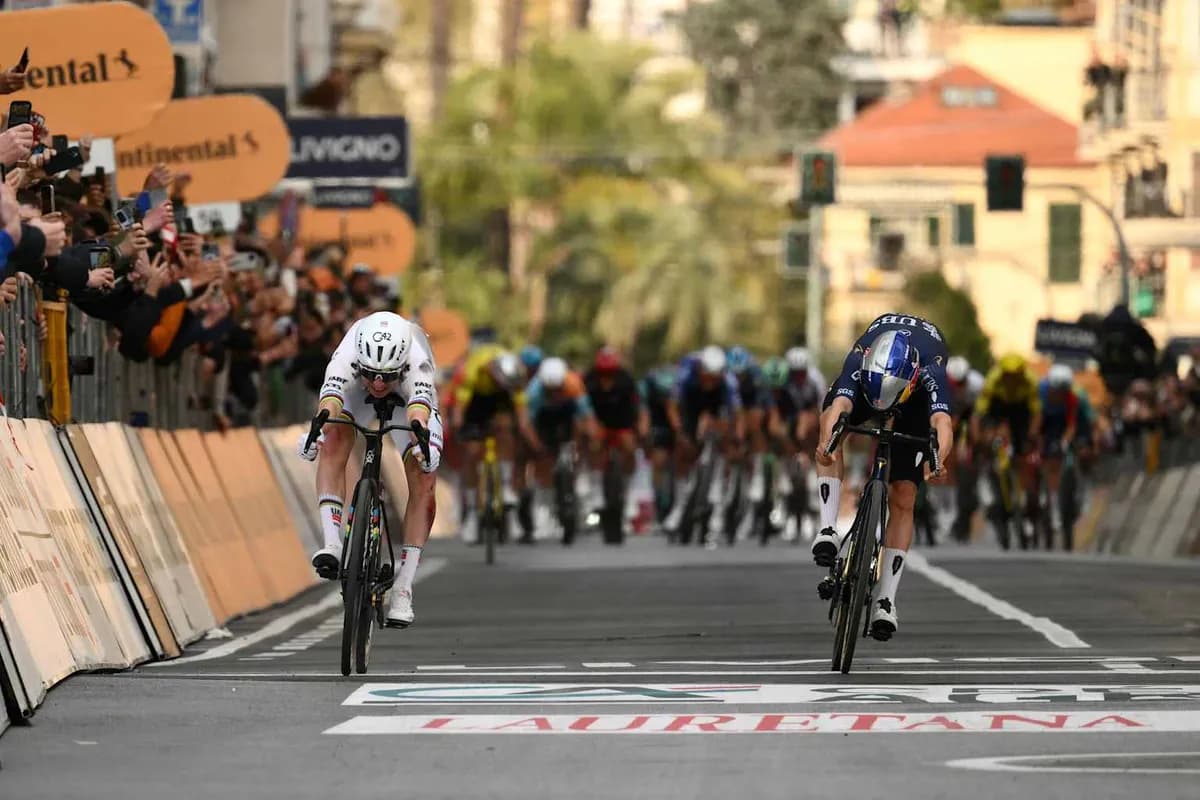
Pogačar Overcomes Crash to Win Milano-Sanremo, Achieves Four Monument Victories
Tadej Pogačar defeated Tom Pidcock to win Milano-Sanremo, achieving his fourth Monument victory.
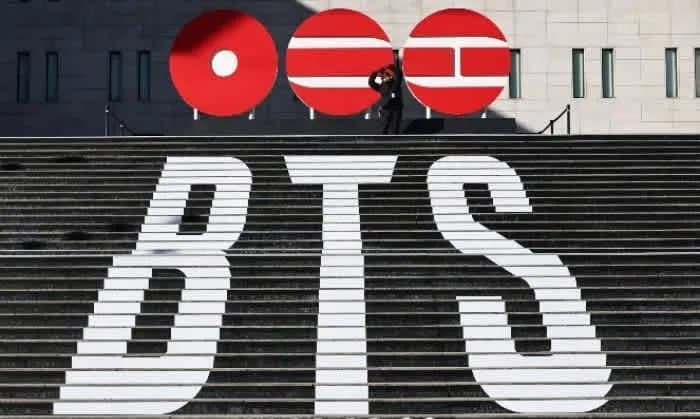
BTS's New Album 'ARIRANG' Sweeps Spotify Global Chart Positions 1-14
BTS's new album 'ARIRANG' monopolized Spotify Global Chart positions 1-14 on its first day, establishing the largest album debut record in K-POP history.