China Unveils 'Post-American World Order' Blueprint with Massive Military Parade
Putin and Kim Jong Un Stand Side by Side at Tiananmen Square, SCO Development Bank Establishment Agreement Reached
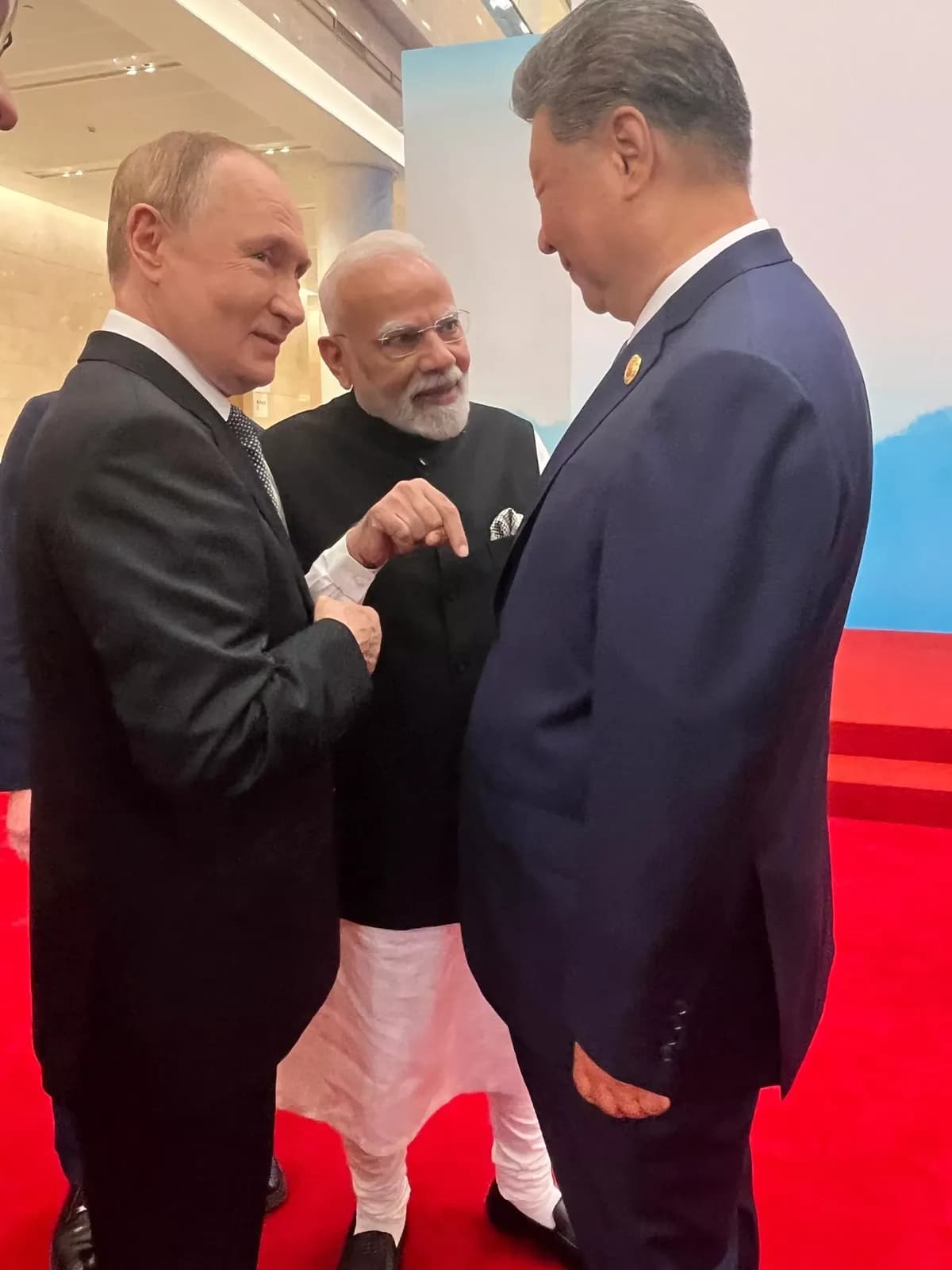
- •China held a massive military parade commemorating the 80th anniversary of World War II's end, publicly demonstrating its commitment to building a post-American world order alongside Putin and Kim Jong Un.
- •The Shanghai Cooperation Organisation agreed to establish the SCO Development Bank, launching construction of alternative infrastructure to challenge the dollar-centered financial system.
- •As the Trump administration deteriorates relations with allies, China is gaining opportunities to fill the vacuum left by America and expand regional hegemony.
A New World Order Signal Echoes in Tiananmen Square
China held a massive military parade in Beijing to commemorate the 80th anniversary of the end of World War II. The event was attended by over 25 heads of state, including Russian President Vladimir Putin and North Korean leader Kim Jong Un.
In his speech, President Xi Jinping portrayed himself as a pacifist and believer in 'win-win cooperation,' but the parade—featuring nuclear-capable vehicles and hypersonic missiles designed to sink aircraft carriers—conveyed an entirely different message. Particularly notable was the warm welcome extended to Putin, who launched the deadliest war in Europe since 1945 through his invasion of Ukraine.
The 'Axis of Agitation' Becomes Reality
Washington has already designated China, Russia, North Korea, and Iran as the 'Axis of Agitation.' A 2024 paper published in Foreign Affairs warned that these nations are undermining the existing order across the Eurasian heartland.
Indeed, North Korean troops were deployed to Russia's Kursk region late last year and have been fighting alongside Russian forces. The 'Shahed' drones striking Ukrainian cities were designed by Iran and are now being produced in Russia. Chinese trade serves as a lifeline for Russia's economy despite Western sanctions.
This marks the first time footage has been released showing Kim Jong Un, Putin, and Xi Jinping walking side by side. Iranian President Pezeshkian also attended the Beijing parade and the Shanghai Cooperation Organisation (SCO) summit. Despite their divergent interests, these three leaders share the perception that the current global power structure obstructs their national ambitions.
The Paradoxical Consequences of Trump Diplomacy
The obvious American response to the China-Russia-led anti-Western coalition should have been strengthening alliance systems and bringing non-aligned nations into the Western camp. However, the Donald Trump administration is pursuing the exact opposite course.
President Trump's first-term 'friendship diplomacy' with Kim Jong Un ended in failure, resulting in North Korea accelerating its advanced weapons development. Recent expectations for a swift Ukraine ceasefire following a summit with Putin went unrealized. Xi Jinping has shown no interest in an early summit with Trump.
Instead, Trump has sown chaos within the Western alliance. He has threatened the sovereignty of Canada and Denmark and imposed 15% tariffs on the European Union. He has also levied 15% tariffs on Japan and South Korea, both of which host U.S. military bases, and imposed 20% tariffs on Taiwan, a target of Chinese ambitions.
Losing India: The Linchpin of China Containment
The most devastating geopolitical blunder has been the hostile attitude toward India. For the past 20 years, successive U.S. administrations maintained bipartisan consensus that courting India was central to any China containment strategy.
The 2020 deadly border clash between China and India created an opportunity for the United States to draw closer to India. In January this year, the U.S. and India signed a critical and emerging technologies agreement, further strengthening defense cooperation.
However, Trump imposed 50% tariffs on India for continuing to purchase Russian oil. This appears to be retaliation for Indian Prime Minister Narendra Modi's refusal to acknowledge Trump's mediation role in the military clash with Pakistan that occurred in May. Pakistan nominated Trump for the Nobel Peace Prize.
This week, Modi visited China for the first time in seven years to attend the SCO summit, and friendly photos of him with Xi and Putin circulated worldwide. Among India's elite, the perception is strengthening that Russia is a reliable long-term friend while the United States is a treacherous partner.
James Crabtree, former executive director for Asia at the International Institute for Strategic Studies, described the U.S. breaking with India as "an act of geopolitical self-harm." Crabtree also warned that "if America retreats from the region, China will fill the vacuum and become the world's dominant power."
Full-Scale Construction of 'De-Dollarization' Financial Infrastructure
The SCO summit agreed to establish the Shanghai Cooperation Organisation Development Bank. This bank plans to invest in infrastructure and trade finance while attempting de-dollarization.
Jesper Koll, a Tokyo-based economist and former investment banker, analyzed: "A new global financial architecture is being built outside of Washington. This represents the full-scale realization of pushback against Trumpism, particularly the weaponization of the dollar."
China proposed an SCO development bank as early as 2010, but it was blocked by Russian opposition at the time. However, Russia, now increasingly dependent on China, appears to have withdrawn its objections.
Xi also announced the 'Global Governance Initiative,' interpreted as an attempt to build a China-centric system to counter Western-led institutions.
Historical Context: When Did This Begin?
China's challenge to the U.S.-led world order is an extension of long-term trends. The Shanghai Cooperation Organisation, established in 2001 under Chinese leadership, initially focused on security cooperation but has gradually expanded into economic and financial domains.
The 2008 global financial crisis confirmed for China the vulnerabilities of the Western-led financial system. The 2010 SCO development bank proposal emerged in this context but wasn't realized due to internal disagreements.
After the 2014 Ukraine crisis, when Russia came under Western sanctions, China-Russia economic cooperation rapidly deepened. Just before Russia's full-scale invasion of Ukraine in 2022, Putin and Xi declared their "limitless friendship."
North Korea suspended nuclear and missile tests during Trump's first term in 2017-2018, but after negotiations collapsed, it resumed provocations in 2023 and deployed troops to the Ukraine war in 2024.
Iran has long resisted the U.S.-led Middle East order, but recently joined the anti-Western coalition in earnest by providing drone technology to Russia.
Impact on South Korea
This Chinese military parade and SCO summit have direct implications for South Korea's security environment. North Korean troops are gaining combat experience in Russia, and strengthened military-economic cooperation among China, Russia, and North Korea is rapidly transforming the strategic environment surrounding the Korean Peninsula.
Particularly as the United States imposes 15% tariffs on Japan and South Korea and even deteriorates relations with India, questions are being raised about the reliability of the Asian alliance network. Doubts about the Trump administration's credibility are spreading among U.S. allies in the region.
Crabtree noted that "without American support, countries in this region have little capacity to organize effective power against Chinese regional hegemony." For South Korea, the need to build independent response capabilities is growing amid uncertainty in the U.S. alliance.
Future Outlook [AI Analysis]
China's attempt to build a post-American world order is unlikely to be completed in the short term, but it has high potential to accelerate the bifurcation of global power structures over the long term.
While it will take years for the SCO Development Bank to actually function, the search for alternatives to U.S. dollar hegemony will continue. This is particularly supported by the fact that Russia and Iran have no choice but to reduce dollar dependence due to Western sanctions.
If the Trump administration continues to deteriorate relations with allies, China will attempt to fill this vacuum. While India won't completely move into the Chinese camp, it is likely to strengthen strategic autonomy and balance between both sides.
On the Korean Peninsula issue, the solidification of trilateral China-Russia-North Korea cooperation will make resolving the North Korean nuclear problem even more difficult. North Korea has gained opportunities to strengthen both conventional forces and nuclear-missile capabilities through military cooperation with Russia.
While Europe may develop the capacity to check Russian influence without U.S. security guarantees, Asian countries will find it difficult to counter China without America, suggesting that strategic uncertainty in Asia will be far greater than in Europe.
As Chekhov said, if a gun appears in Act 1, it will be fired in the next act. The military power China displayed in Tiananmen Square may not be mere showmanship but a preview of future action. Neighboring countries and some in Washington are likely to conclude that Xi Jinping has already hung the gun on the wall.
댓글 (3)
China 관련 기사 잘 읽었습니다. 유익한 정보네요.
그 부분은 저도 궁금했습니다.
Unveils에 대해 더 알고 싶어졌습니다. 후속 기사 부탁드립니다.
More in Global

Latest News
Middle East Conflict Drives Manufacturing Outlook to 10-Month Low
The Korea Institute for Industrial Economics & Trade survey shows April manufacturing outlook PSI plummeted to 88, falling below baseline for the first time in 10 months.
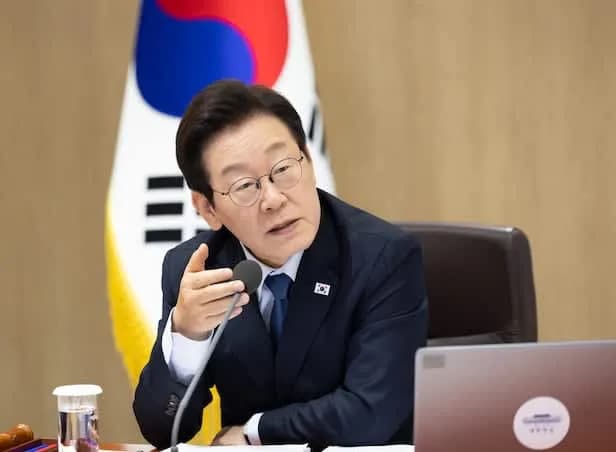
Lee Jae-myung Administration Excludes Multi-Home Officials from Real Estate Policymaking
President Lee Jae-myung has ordered the exclusion of multi-home owning public officials from all real estate policy processes.
Volkswagen CEO Says Germany Should Learn from China's Industrial Strategy
Volkswagen CEO stated that Germany should learn from China's systematic industrial planning approach.

Reddit Considers Face ID to Block Bots While Maintaining Anonymity
Reddit is considering implementing biometric authentication systems such as Face ID and Touch ID to block AI bots while maintaining anonymity.
BTS Tops March Artist Brand Reputation Rankings with First Full Group Comeback in 4 Years
BTS ranked first in the Korean Corporate Reputation Research Institute's March Artist Brand Reputation Rankings based on 99 million data points.

Santo Domingo's Malecón Sports Park Construction Progressing Smoothly
Construction of a soccer field and skate park is progressing smoothly in the Malecón area of Santo Domingo, Dominican Republic.
Pogačar Overcomes Crash to Win Milano-Sanremo, Achieves Four Monument Victories
Tadej Pogačar defeated Tom Pidcock to win Milano-Sanremo, achieving his fourth Monument victory.
BTS's New Album 'ARIRANG' Sweeps Spotify Global Chart Positions 1-14
BTS's new album 'ARIRANG' monopolized Spotify Global Chart positions 1-14 on its first day, establishing the largest album debut record in K-POP history.