‘Crush’, ‘Tero’, ‘Jidae’… The languages of North and South Korea are becoming increasingly distant.
The linguistic differences between North and South Korea revealed in Kim Jong-un's speech, and the distance between words widens amidst the hostile tone.

- •In Kim Jong-un's speech, many North Korean words that are different from South Korean words, such as 'jitbusheo' and 'tero', appeared
- •The language heterogeneity rate between North and South Korea, including the non-use of saishiot and differences in notation of foreign words, reaches approximately 30%
- •If the hostile atmosphere continues, efforts to integrate languages between North and South Korea are expected to become more difficult.
‘Unfamiliar Korean words’ contained in Kim Jong-un’s speech
On March 23, Chairman Kim Jong-un of the State Affairs Commission gave a speech at the first meeting of the 15th Supreme People's Assembly of North Korea. In this speech, he defined Korea as 'the most hostile country' and declared that he would completely reject it. However, if you look at this speech, there is something that stands out as much as the political message. The North Korean language is quite different from the Korean we use.
Same meaning, different expression
In the speech, the expression "to 'crush' all kinds of anti-DPRK provocations" appears. In Korea, 'smashing' or 'smashing' is used with the same meaning. The word 'dazzle' used in North Korea is a word used in a completely different context, like 'dazzle' or 'dazzle (wash dishes cleanly)' in Korean. It is not semantically suitable to be combined with the prefix 'jit-', which means 'harshly', 'abusively', or 'carelessly'.
The same goes for the expression, “We will continue the struggle offensively.” In Korea, it would be correct to say, ‘We will move forward.’ ‘Spread’ is used to widen body parts such as arms or legs, and ‘beolda’ is used to start or proceed with a task or action. This is a similar phenomenon to the use of ‘increase’ and ‘increase’ interchangeably between North and South Korea.
Gap between foreign language notation and saishiot
Differences are also noticeable in the transcription of foreign words. According to Korea's foreign language spelling system, the word 'state terrorism' that appeared in the speech should be written as 'state terrorism.' In North Korea, it is written as 'terrorist network' and 'terrorist,' but in South Korea, it is written as 'terrorist network' and 'terrorist.'
Even in the Saishiot regulations, the languages of the North and South are divided. Saishiot, which is notorious for its complicated application rules in the Korean Grammar Code, is not used at all in North Korea. So the word used as ‘standard’ in South Korea becomes ‘self-esteem’ in North Korea. The expression “diplomatic practices tailored to the old standards and old self-concepts of the past” was also used in the speech.
80 years of division, language is also divided
Since division in 1945, North and South Korea have pursued different language policies. Through the 'Cultural Language Movement' in 1966, North Korea promoted a policy of setting the Pyongyang language as the standard and replacing Chinese characters and foreign words with pure Korean. On the other hand, Korea has actively accepted foreign languages while maintaining a standard language based on Seoul dialect.
According to the Ministry of Unification's North Korea Information Portal, the current heterogeneity rate between North and South Korean languages is approximately 30%. There is a greater difference in technical terms and new words than in everyday terms. Computers are called 'electronic calculators' in North Korea, and ice cream is called 'ice cream.'
Language wall created by hostile tone [AI analysis]
Chairman Kim Jong-un's speech, in which he defined South Korea as 'the most hostile country', also casts a dark shadow on the future of linguistic integration between North and South Korea. At the time of the 2018 inter-Korean summit, language integration efforts continued, including the resumption of the joint compilation project for the 'Korean Language Dictionary', but if the current hostile atmosphere continues, such cooperation is highly unlikely to be expected.
Linguists warn that if the heterogeneity of the languages of North and South Korea deepens, communication barriers between generations and regions may emerge as a serious social problem even after unification. The phenomenon of political division becoming entrenched into linguistic division has the potential to eventually widen the psychological distance between people of the same ethnic group. The unfamiliar Korean language in North Korea's speech may be a mirror that shows the depth of division beyond simple language differences.
댓글 (3)
기사 잘 봤습니다. 다른 시각의 분석도 읽어보고 싶네요.
‘Tero’ 관련 기사 잘 읽었습니다. 유익한 정보네요.
그 부분은 저도 궁금했습니다.
More in Culture & Art
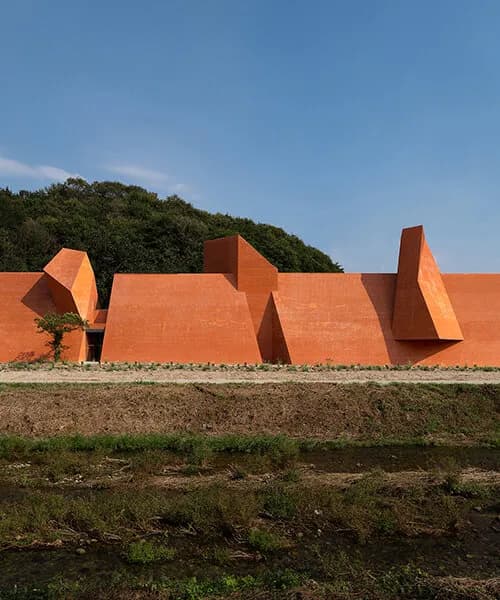
‘Fortress Café’ stands tall in the forests of Gangwon-do, reinterpreting ancient fortress walls through modern architecture.
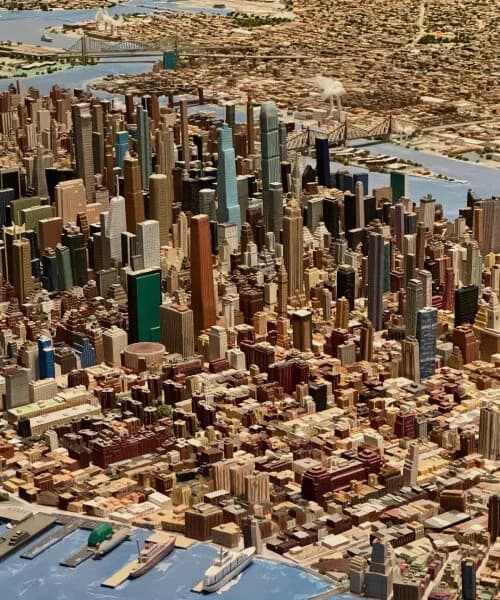
New York, hand-carved for 21 years, unveiled for the first time at an art museum
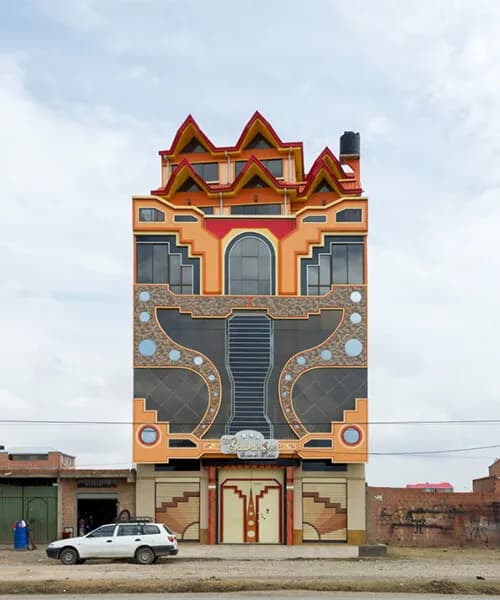
Freddie Mamani colors the city with Andean culture
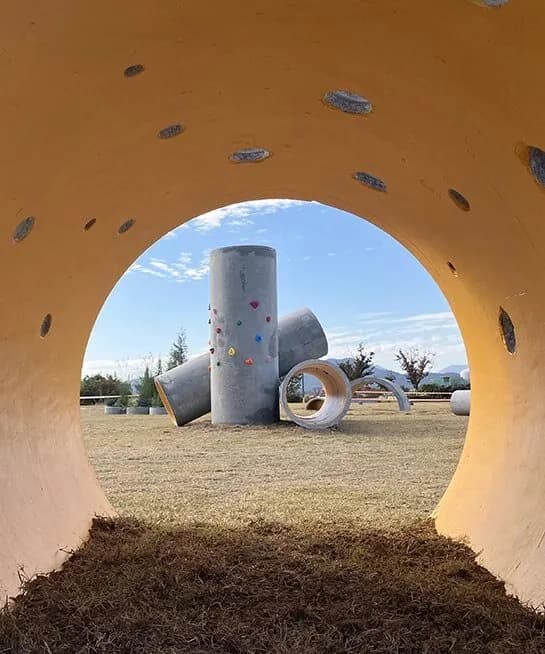
An abandoned concrete pipe is reborn as a playground... Busan Museum of Art ‘Concrete Utopia’

A Swedish artist's house, the essence of architecture that becomes one with nature
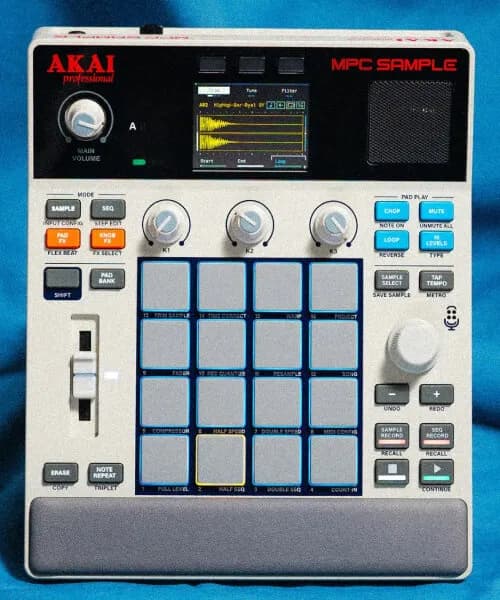
Akai Pro unveils 'MPC Sample', a portable sampler inherited from the 1988 classic
Latest News

6년 전 세 살 딸 살해한 30대 친모 구속송치
경찰, 6년 전 세 살 딸 살해 혐의 30대 친모를 구속송치

中企 수입 나프타의 80% 이상이 중동산…공급망 위기 심화
중소기업 수입 나프타의 80% 이상이 중동산으로 공급 의존도 높음

미·이란 긴장 한 달, 금융시장 요동…장기화 우려
미·이란 갈등으로 증시 변동성 확대, 코스피 6천 고지 후 등락

미·이란 전쟁 한 달, 미국 전문가 "종전·확전 기로"
미·이란 전쟁 1개월 도래, 종전·확전 기로 평가

미·이란 전쟁 1개월, 한국 안보·공급망 취약점 노출
미·이란 전쟁 장기화로 한국 안보·경제 취약점 노출

미·이란 군사작전 개시 1개월, 긴장 고조
미국·이스라엘 대이란 군사작전 개시 1개월 경과

루카셴코 벨라루스 대통령 첫 방북…김정은, 김일성광장서 성대한 환영식
루카셴코 벨라루스 대통령이 김정은의 초청으로 첫 방북

뉴욕증시 3대 지수 동반 상승…이란 휴전 기대감
뉴욕증시 3대 지수 전일 대비 강세로 마감