Apple Reroutes India-Made iPhones Away from Dubai Amid Middle East Conflict
U.S.-Israel-Iran tensions disrupt Gulf air cargo routes, forcing emergency shift to Singapore, Hong Kong, and Netherlands
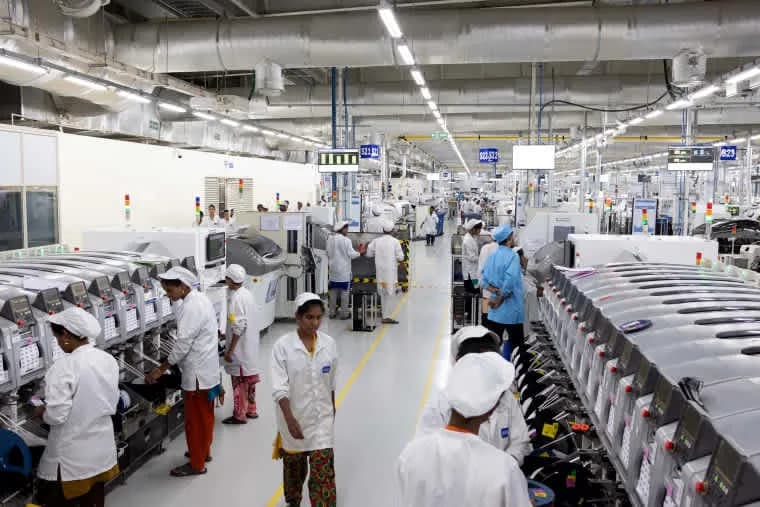
- •Apple halts Dubai routing for $3.6 billion worth of India-made iPhones due to U.S.-Israel-Iran conflict, urgently rerouting through Singapore, Hong Kong, and Netherlands
- •Shipping distances increase up to 63%, freight rates surge 30-50%, intensifying margin pressures on major suppliers including Foxconn and Tata
- •Projection that 1 in 4 iPhones will be India-made by 2026 remains intact, but prolonged logistics disruptions raise concerns about production plan delays
$3.6 Billion Logistics Overhaul Triggered by Gulf Conflict and Global Supply Chain Realignment
Apple is urgently redirecting its primary export routes for India-manufactured iPhones from Dubai to Singapore, Hong Kong, and the Netherlands. Dubai had processed approximately $3.6 billion worth of iPhone exports from India in 2025 as a critical transshipment hub, but weeks of airspace closures and military attacks across the Gulf region due to the U.S.-Israel-Iran conflict have paralyzed air cargo routes, making alternative paths necessary, according to a MoneyControl report on the 17th (local time).
This move is immediately impacting major Apple suppliers in India, including Foxconn (Bharat FIH, Rising Stars, Yuzhan Technology), Tata Electronics, and Dixon Technologies. Rising logistics costs and route instability are creating cascading cost pressures on manufacturers, rippling across India's entire electronics manufacturing ecosystem.
Why This Matters: First Test of India's Manufacturing Hub Strategy
This situation represents the first case demonstrating how vulnerable Apple's "China Plus One" strategy is to geopolitical risks. Apple has been expanding production in India since 2017 to reduce dependency on China, manufacturing approximately 14% of global iPhone production in India in 2025. Industry analysts project that by 2026, one in four iPhones will be made in India.
However, India-manufactured iPhones are primarily exported to European and Middle Eastern markets, with Dubai serving as the geographically central shortest-route transshipment hub. With Gulf conflicts blocking this route, Apple must use alternative routes involving detours of 1,000-3,000km or more, leading to shipping delays and surging logistics costs.
According to the Economic Times (ET), this conflict extends beyond Apple alone. The Indian government is prioritizing domestic fuel needs in response to liquefied petroleum gas (LPG) supply disruptions caused by West Asian tensions, and rising energy costs and freight rates are intensifying inflationary pressures across manufacturing. Small and medium enterprises (MSMEs) are particularly vulnerable to these cost pressures.
Logistics Route Comparison: Dubai vs. Alternative Hubs
| Item | Dubai Route (Previous) | Singapore/Hong Kong Route (Current) | Change |
|---|---|---|---|
| India-Europe Distance | ~5,500km | ~8,000-9,000km | +45-63% |
| Average Transit Time | 2-3 days | 4-6 days | +100% |
| Air Cargo Rates | Baseline | +30-50% vs. baseline | Surge |
| Airspace Stability | Unstable (military attacks) | Relatively stable | Improved |
| 2025 Volume Handled | $3.6 billion | Distributed processing | Restructuring |
Dubai was positioned on the shortest route from southern Indian cities like Chennai and Bengaluru to Europe, but logistics are now being distributed to Singapore (via Southeast Asia), Hong Kong (via Northeast Asia), and Amsterdam, Netherlands (direct flight followed by European distribution). This has increased shipping distances by up to 63% and raised freight rates by 30-50%.
Supplier Impact: Chain Reaction from Foxconn to Tata
Foxconn's Indian subsidiary Bharat FIH mass-produces iPhones in Sriperumbudur, Tamil Nadu, while Tata Electronics is expanding iPhone assembly in Karnataka. Dixon Technologies, India's largest electronics manufacturer, produces not only for Apple but also for other global brands like Samsung.
These companies had built supply chains optimized for Dubai-routed logistics, but the sudden route change has created difficulties in inventory management, delivery compliance, and cost control. Particularly with surging air cargo rates intensifying margin pressures, this is likely to ultimately lead to increased production costs for Apple's India operations.
An industry source expressed concern: "While Apple's India production demand itself remains unchanged, if logistics cost increases persist longer than expected, profitability will inevitably suffer. Plans to increase iPhone production share to 25% by 2026 could also face disruptions."
Broader Challenge for Indian Manufacturing: Rising Energy and Raw Material Costs
Apple's logistics restructuring is not an isolated incident but part of the broader impact of Middle Eastern conflicts on India's overall manufacturing sector. The Indian government is prioritizing domestic demand as LPG supply faces disruptions due to West Asian tensions, and is demanding expedited permits and fee waivers from state governments to accelerate natural gas pipeline infrastructure development.
Rising energy costs are pushing up manufacturers' production costs, while surging freight rates are weakening export competitiveness for finished goods. The Economic Times reported that "inflationary pressures are growing as raw material price increases and supply chain disruptions occur simultaneously, with small and medium enterprises taking the biggest hit."
The Intersection of Geopolitics and Technology Supply Chains [AI Analysis]
This situation starkly reveals how vulnerable global technology supply chains are to geopolitical risks. While Apple has expanded India production to reduce China dependency, it now faces new logistics risks from the unexpected variable of Middle Eastern conflict. This is not simply a matter to be resolved through route changes alone, but a structural challenge requiring long-term redesign of supply chain diversification strategies.
First, Apple is likely to shift toward reducing Dubai dependency and operating multiple transshipment hubs in parallel. Singapore is stable as Southeast Asia's logistics center, Hong Kong has strong connectivity with mainland China, and the Netherlands enables direct European market entry. Strategic utilization of these three locations can distribute single-route dependency risks.
Second, the Indian government is expected to further accelerate domestic logistics infrastructure improvements following this incident. Particularly, expansion of cargo handling capacity at western ports (Mumbai, Gujarat) and southern airports (Chennai, Bengaluru), customs procedure simplification, and air cargo subsidies may be considered. This could become a factor strengthening India's manufacturing hub competitiveness long-term.
Third, Apple's competitors—Samsung, Xiaomi, Vivo, Oppo, and others—are likely experiencing similar logistics disruptions, which could affect the supply balance in the global smartphone market. The Middle Eastern market is particularly important for Asian manufacturers, and if freight increases weaken product price competitiveness, demand could decline.
Finally, this situation suggests that technology companies must more sophisticatedly incorporate geopolitical scenarios into supply chain design. Rather than considering only production costs and labor, they must comprehensively evaluate logistics route diversification, energy supply stability, and regional conflict risks. Apple's ability to quickly secure alternative routes resulted from maintaining multiple logistics partnerships—an important lesson for other companies.
The likelihood of short-term Middle East conflict resolution is low, and air cargo route instability could persist for months. Therefore, Apple and Indian manufacturers are expected to accept this route change not as a temporary measure but as a "new normal," and pursue long-term supply chain resilience strengthening.
댓글 (3)
기사 잘 봤습니다. 다른 시각의 분석도 읽어보고 싶네요.
그 부분은 저도 궁금했습니다.
간결하면서도 핵심을 잘 정리한 기사네요.
More in this series
More in AI & Tech

영국 정치지도자들, 아동 성착취 혐의에 대한 긴급 조사 촉구

A humanoid robot performing in China has a child's face on it.

U.S. jury finds Meta and Google responsible for ‘social media addiction’… 3.7 billion won compensation ruling

Japanese X-ray Observatory makes first direct measurement of ultrafast 'cosmic wind' in galaxy M82

NASA selects 24 people for 2026 Astrophysics Postdoctoral Fellowships

Ethereum is at a crossroads to ‘redefine its identity’ ahead of the quantum computing and AI era
Latest News
"간부 잘 아는데 교통비 좀" 휴가 군인들 돈 뜯은 50대 구속
50대 A씨가 휴가 중인 군인들에게 부대 간부를 아는 척 접근해 돈을 사취

英 옥토퍼스, 이란 전쟁 이후 태양광 판매 50% 증가
이란 전쟁 이후 영국 옥토퍼스의 태양광 판매량 50% 증가
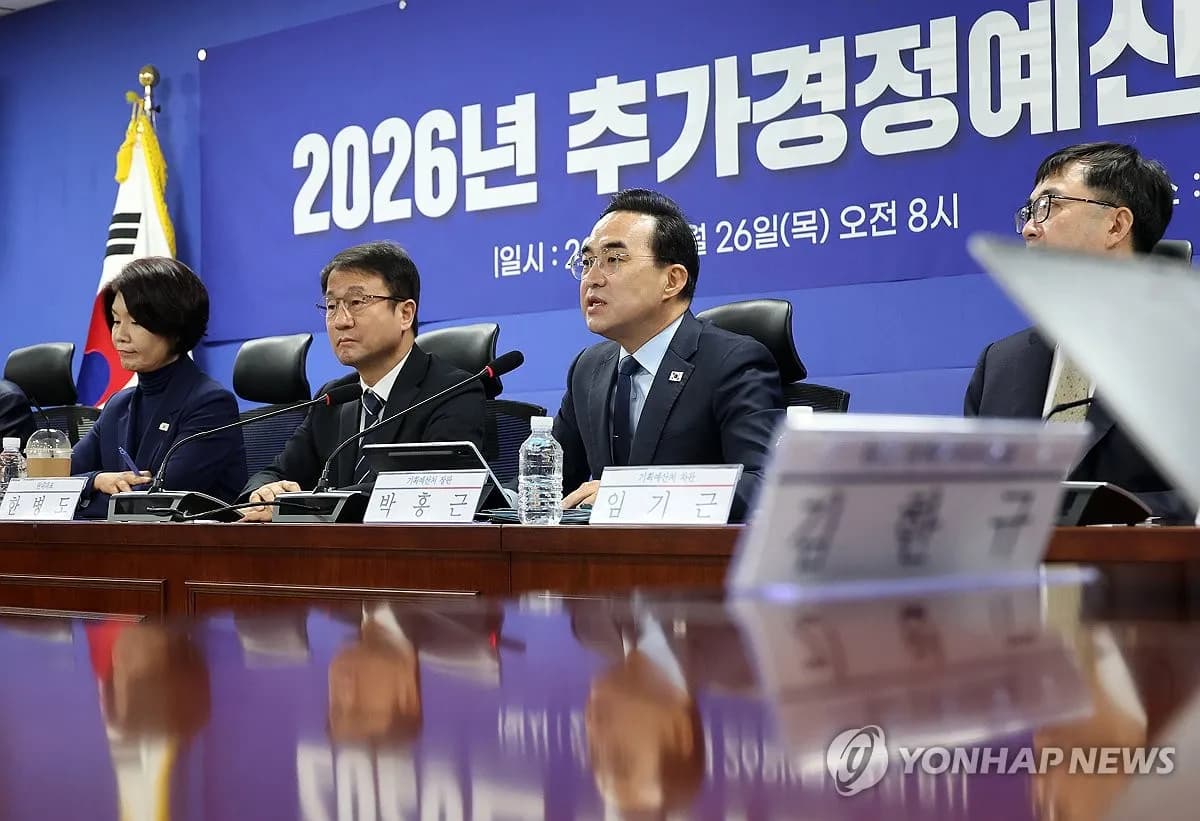
당정 "추경, 지방·취약계층에 더 지원되는 방식으로"
당정이 지방자치단체와 취약계층 중심의 추경 편성 방침 재확인

당정, 석유 최고가격제 손실 보전을 추경에 반영키로
당정이 석유 최고가격제 손실을 추경에 반영하기로 결정
어머니 폭행하고 금팔찌 빼앗은 30대 아들 경찰에 붙잡혀
어머니 폭행 후 금팔찌 빼앗은 30대 남성 체포
아이티 갱단 폭력사태로 10개월간 5천명 이상 사망
아이티에서 지난 10개월간 갱단 폭력으로 5천명 이상 사망
서방 정보당국 "러시아, 우크라이나 전쟁 후 이란에 드론·식량 공급"
서방 정보당국, 러시아의 이란 드론·식량 공급 작업 거의 완료 파악

6년 전 세 살 딸 살해한 30대 친모 구속송치
경찰, 6년 전 세 살 딸 살해 혐의 30대 친모를 구속송치