Apple's 50th Anniversary Event Overshadowed by China's Pressure to Open App Store
During Tim Cook's Chengdu Visit, People's Daily Calls 25% Commission Cut 'Insufficient,' Urges Third-Party Payments and Sideloading
- •Apple CEO Tim Cook's visit to Chengdu for the 50th anniversary was met with People's Daily criticism calling the 25% App Store commission cut insufficient
- •Chinese authorities are demanding expanded App Store openness including European-style third-party payment permission and sideloading
- •Despite iPhone achieving record quarterly revenue of $85.2 billion, regulatory pressure from China threatens Apple's Services revenue model
A Celebration Turned Regulatory Battleground
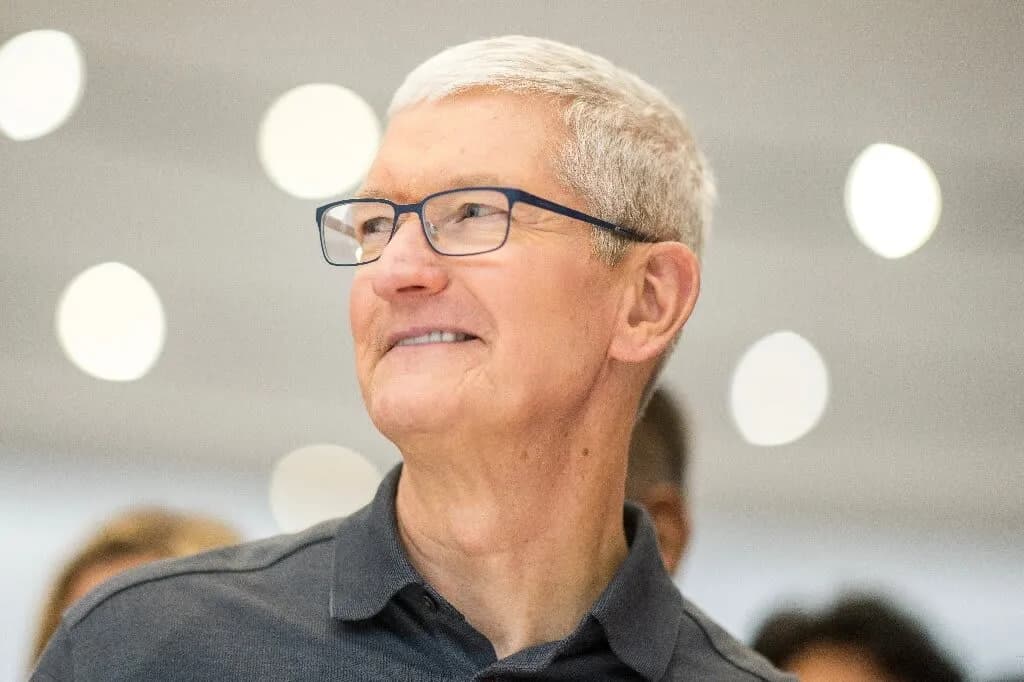
Apple CEO Tim Cook's visit to the Taikoo Li store in Chengdu, China, as part of the company's 50th anniversary tour, quickly lost its celebratory mood. China's state-run media outlet People's Daily criticized Apple's recent App Store commission reduction as "insufficient" and called for greater platform openness. Last week, Apple announced it would lower its standard App Store commission in mainland China from 30% to 25%, a decision made after "discussions" with Chinese regulatory authorities.
However, according to Bloomberg, People's Daily published an editorial immediately after the commission cut announcement, arguing that Apple must further ease App Store restrictions and address its "monopolistic" practices. This signals continued pressure from Beijing authorities, as Apple has been in conflict with Chinese tech giants like Tencent and ByteDance over iOS App Store policies.
China's Version of European Regulation
The demands from Chinese authorities mirror the structure of the European Union's Digital Markets Act (DMA). EU antitrust regulators forced Apple to allow third-party app stores and open iPhone NFC chips, leading Apple to partially permit alternative payment systems and sideloading in the European market starting in 2024.
Bloomberg reports that China's antitrust watchdog is investigating Apple's policies, with particular focus on:
- Allowing Third-Party Payment Systems: Currently, in-app purchases of digital goods must go through Apple's In-App Purchase (IAP) system, where Apple collects a commission. Chinese authorities are demanding the option for external payment links and payment method choices.
- Supporting Sideloading: Opening pathways to install apps outside the App Store. This is an area Apple has consistently refused, citing "security and privacy" concerns.
Timing Coincides with Manufacturing Shift
This pressure comes at a significant moment as Apple diversifies its manufacturing base from China to India, Vietnam, and other locations. Since 2023, Apple has moved a substantial portion of iPhone production to India, with the country's production share estimated at 15-20% as of 2025. The Chinese government views Apple's moves unfavorably and appears to be using regulatory pressure to secure negotiating leverage.
Multiple foreign media outlets interpret the People's Daily editorial as reflecting the official position of the Chinese Communist Party, as the newspaper serves as the party's official organ and represents government policy.
The Dilemma of iPhone Dependence and Negotiating Power
China is one of Apple's largest markets. In the Q4 2024 earnings announcement, Tim Cook stated that "iPhone achieved its best quarter ever, with all-time record revenue in every geographic segment." iPhone revenue reached $85.2 billion (approximately 120 trillion won), showing "simply staggering" demand.
However, high dependence on the Chinese market is a double-edged sword. Apple cannot maintain market access without regulatory compliance in China, but opening the App Store would directly hit Apple's core revenue model in its Services segment. Apple's Services revenue (App Store, Apple Music, iCloud, etc.) exceeded $90 billion annually as of 2024, with App Store commissions accounting for a significant portion.
| Item | Previous Policy (~Mar 2025) | After Change (Mar 2025~) | Chinese Government Demand |
|---|---|---|---|
| App Store Commission | 30% | 25% | Further reduction or elimination |
| Third-Party Payments | Not allowed | Not allowed | Full permission |
| Sideloading | Not allowed | Not allowed | Allow |
| External Links | Limited permission | Limited permission | Complete openness |
[AI Analysis] Power Shift in Platform Economy
This situation represents a new phase in the power struggle between Big Tech platforms and state authority. While the EU pressured Apple through a legal framework (DMA), China is demanding the same results using market access as leverage. Apple's precedent of allowing sideloading in the EU provides Chinese authorities with evidence that it is "technically feasible."
Future prospects compress into three scenarios. First, Apple is likely to gradually accept European-style opening policies in China as well. However, a compromise of first allowing limited sideloading (e.g., enterprise apps only) under the pretext of security concerns is most likely. Second, if negotiations fail, App Store operations in China could be restricted, or in the worst case, non-tariff barriers to iPhone sales could emerge. Third, this conflict could evolve into another front in the U.S.-China technology hegemony competition.
As Apple marks its 50th anniversary, asserting that "iPhone will remain at the center of people's digital lives for a long time to come," who controls that center is no longer just a corporate matter. This can be read as a signal that the rule-makers of the platform economy are shifting from Silicon Valley to Beijing and Brussels.
댓글 (3)
간결하면서도 핵심을 잘 정리한 기사네요.
50th 관련 기사 잘 읽었습니다. 유익한 정보네요.
공감합니다. 참고하겠습니다.
More in this series
More in AI & Tech

영국 정치지도자들, 아동 성착취 혐의에 대한 긴급 조사 촉구

A humanoid robot performing in China has a child's face on it.

U.S. jury finds Meta and Google responsible for ‘social media addiction’… 3.7 billion won compensation ruling

Japanese X-ray Observatory makes first direct measurement of ultrafast 'cosmic wind' in galaxy M82

NASA selects 24 people for 2026 Astrophysics Postdoctoral Fellowships

Ethereum is at a crossroads to ‘redefine its identity’ ahead of the quantum computing and AI era
Latest News

"간부 잘 아는데 교통비 좀" 휴가 군인들 돈 뜯은 50대 구속
50대 A씨가 휴가 중인 군인들에게 부대 간부를 아는 척 접근해 돈을 사취

英 옥토퍼스, 이란 전쟁 이후 태양광 판매 50% 증가
이란 전쟁 이후 영국 옥토퍼스의 태양광 판매량 50% 증가

당정 "추경, 지방·취약계층에 더 지원되는 방식으로"
당정이 지방자치단체와 취약계층 중심의 추경 편성 방침 재확인

당정, 석유 최고가격제 손실 보전을 추경에 반영키로
당정이 석유 최고가격제 손실을 추경에 반영하기로 결정

어머니 폭행하고 금팔찌 빼앗은 30대 아들 경찰에 붙잡혀
어머니 폭행 후 금팔찌 빼앗은 30대 남성 체포

아이티 갱단 폭력사태로 10개월간 5천명 이상 사망
아이티에서 지난 10개월간 갱단 폭력으로 5천명 이상 사망

서방 정보당국 "러시아, 우크라이나 전쟁 후 이란에 드론·식량 공급"
서방 정보당국, 러시아의 이란 드론·식량 공급 작업 거의 완료 파악

6년 전 세 살 딸 살해한 30대 친모 구속송치
경찰, 6년 전 세 살 딸 살해 혐의 30대 친모를 구속송치