Canada cancels registration of 35 cryptocurrency companies... Strengthening money laundering crackdown
After international investigative reporting, large-scale measures were taken and circumstances related to transactions related to Iran-linked terrorist organizations were also revealed.

- •Canada's FINTRAC deregisters 35 cryptocurrency companies following ICIJ investigative reporting
- •Some companies detect financial flows linked to Iranian terrorist organizations, $120 million transaction confirmed
- •Experts emphasize the need for international cooperation and continuous monitoring system for fundamental solutions
Canadian financial authorities cancel registration of a large number of cryptocurrency companies
Canadian financial authorities began cracking down on money laundering in earnest by canceling the registration of 35 cryptocurrency-related companies. This began with joint investigative reporting between the International Consortium of Investigative Journalists (ICIJ) and the Toronto Star.
The Financial Transactions Reporting and Analysis Center of Canada (FINTRAC) canceled the registration of 23 cryptocurrency companies last week and took the same action against 12 companies earlier this month. As a result, a total of 35 cryptocurrency companies lost their qualifications to provide fund transfer services in Canada.
“These measures demonstrate a significantly increased pace of enforcement,” Canadian Finance Minister François-Philippe Champagne said in a statement. “The government will maintain this momentum.” He predicted additional measures, saying, “Virtual currency businesses can be used to promote money laundering and fraud.”
The reality of illegal cryptocurrency operations revealed by investigative reporting
The background to this large-scale crackdown is investigative reporting released in November of last year. As part of ICIJ's 'Coin Laundry' project, the Toronto Star confirmed that dozens of cryptocurrency companies in the Toronto area are operating without registration with FINTRAC.
In particular, there were 50 businesses advertising cryptocurrency services on one road near Toronto alone, and most of them were presumed to be operating illegally. Many of these companies specialize in services that exchange cryptocurrency for cash.
A more serious problem is that two of these companies were found to be using cryptocurrency wallets suspected of being linked to terrorist organizations affiliated with the Iranian Revolutionary Guards Corps (IRGC). The IRGC is a terrorist organization designated by Canada.
According to reports, transactions worth at least $120 million (approximately KRW 160 billion) were made over the course of a year through a single virtual wallet used at a cryptocurrency business in the Toronto area. This wallet was confirmed to have received $430,000 worth of cryptocurrency from an IRGC-linked account on two occasions.
Cryptocurrency and money laundering: regulatory blind spot
It is not recent that cryptocurrencies have emerged as a new channel for money laundering. Since the cryptocurrency boom in 2017, financial authorities in each country have paid attention to illegal fund movements through virtual assets. However, the anonymity and decentralized nature of cryptocurrency have posed a great challenge to the traditional financial supervision system.
Canada was one of the first countries in the world to introduce cryptocurrency regulation laws in 2014. However, criticism of actual enforcement power has continued. Dennis Munier, former deputy director of FINTRAC, said, "It seems like FINTRAC is trying to send a message that 'we are watching,'" but questioned the speed of response, saying, "Some of the companies canceled this time have already had their registrations expire in 2024."
“I think they need to move faster,” Mounier noted.
Joseph Iwuso, secretary-general of the Canadian Money Transfer Business Association (CMSBA), said, "FINTRAC seems to be canceling registrations more frequently and publicly announcing this. Since they have been criticized for allowing registrations without verification, they are trying to show that 'we are also checking and can take action.'"
Loopholes in cash exchange services
Investigative reporting also clearly revealed loopholes in the ‘Courier Service’, which exchanges cryptocurrency for cash. Through undercover reporting, a Toronto Star reporter contacted a cryptocurrency platform called '001k' via Telegram and received $2,000 worth of cryptocurrency in exchange for cash.
Surprisingly, this company did not ask for the customer's name or ID. Instead, they were simply instructed to take a photo of the serial number of a $5 bill and send it to them. This shows that even the most basic Know Your Customer (KYC) requirements to prevent money laundering are not being observed.
Future outlook [AI analysis]
A FINTRAC spokesperson said, “We will take further action against the cryptocurrency industry in the coming days and weeks,” but did not provide specific details.
This large-scale crackdown in Canada is likely to signal a trend of strengthening global cryptocurrency regulations. The European Union (EU) has established a regulatory framework through the Crypto Asset Markets Act (MiCA), which went into effect in 2024, and the United States is also strengthening crackdowns centered on the Securities and Exchange Commission (SEC).
However, experts are skeptical about solving the fundamental problem. This is because it is difficult to completely block illegal fund movements as long as the essential characteristics of cryptocurrency, such as decentralization and anonymity, are maintained. In particular, due to the cross-border nature of cryptocurrency, there are bound to be limitations to individual country regulations.
The issue of terrorist financing raises even more serious concerns. The flow of funds with Iran-linked terrorist organizations revealed in this report shows that cryptocurrency can pose a direct threat to national security. In the future, strengthening information sharing and cooperation between governments and advancing blockchain analysis technology are expected to emerge as key tasks.
In order for the Canadian government's action to lead to real change, it must go beyond one-time crackdowns and go hand in hand with establishing a continuous monitoring system and strengthening punishment. Whether the stigma of ‘toothless regulation’ can be removed depends on future follow-up measures.
댓글 (2)
Canada 소식 정말 안타깝습니다. 유가족분들께 깊은 위로를 전합니다.
이런 일이 다시는 반복되지 않았으면 합니다. cancels 관련 대책이 시급합니다.
More in Special

U.S. political funding tracking debate: To what extent does TrackAIPAC view ‘pro-Israel funding’?

U.S. Department of Defense seeks to criminalize reporter's 'unauthorized questioning' itself

How to avoid ICE agents checking your phone at the airport

Intruder at Chinese Embassy in Japan Identified as Active JSDF Officer

New York City public hospital breaks up with Palantir... Ending controversy over commercialization of citizen health data

U.S. expands military operations in Latin America... ‘Operation total annihilation’ formalized
Latest News

Middle East War Reaches One-Month Mark, Weekend Critical for Talks or Ground War
Middle East war from US-Israel-Iran strikes enters 27th day

ASEAN Summit to Proceed in Philippines in May Despite Middle East Conflict, Scale Reduced
ASEAN summit confirmed for May in Philippines despite prolonged Middle East conflict

Court Suspends Detention of Unification Church Leader Han Hak-ja, Temporary Release Until Next Month 30th
Court decides to suspend detention of Unification Church leader Han Hak-ja

People Power Party Strongly Criticizes President Lee's Cheonan Ship Remarks
People Power Party strongly criticizes President Lee Jae-myung's Cheonan-related remarks

Malaysia-Indonesia Leaders Hold Emergency Talks on Middle East War Response
Malaysian PM Anwar and Indonesian President Prabowo held emergency talks in Jakarta

Tiger Woods Arrested for DUI Just 3 Days After Comeback—Fourth Vehicle-Related Incident
Tiger Woods arrested for DUI just 3 days after comeback

UK University Meningitis Outbreak: Worst Over but Concerns Remain About Recurrence
UK university meningococcal outbreak worst appears over, but cause remains unclear
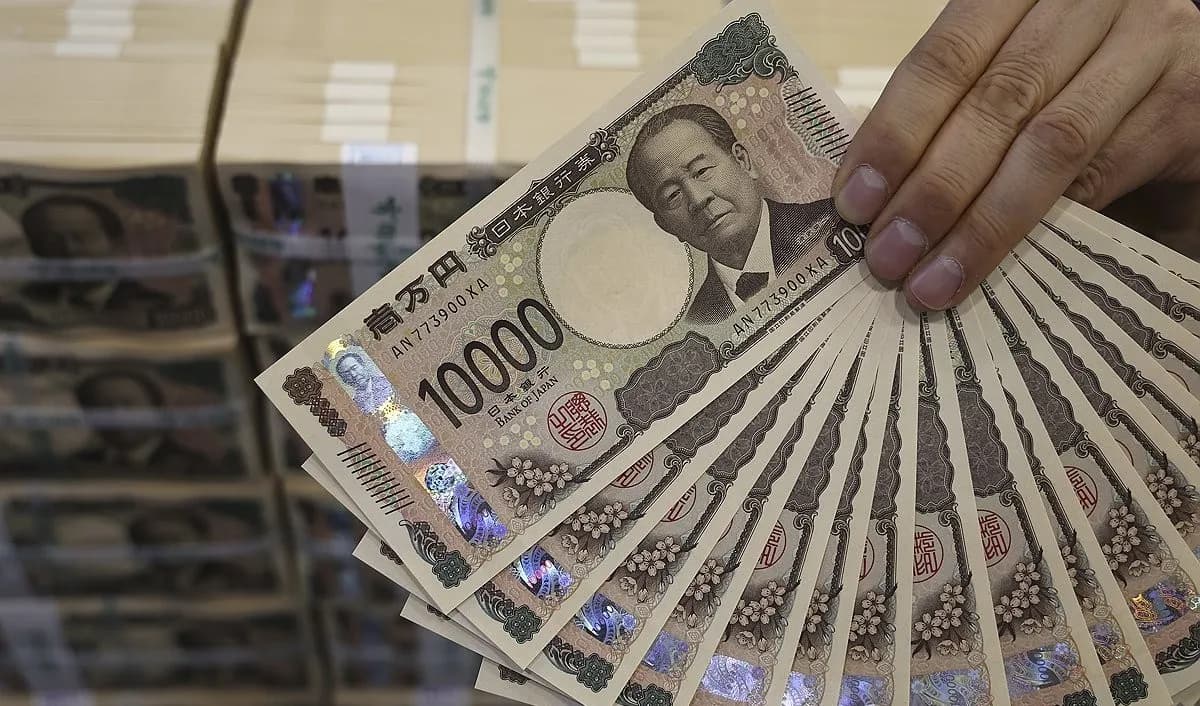
Yen/Dollar Rate Breaks Through 160 Yen for First Time in 1 Year 8 Months Amid US-Iran War
Yen/dollar rate breaks through 160 yen for first time in 1 year 8 months amid US-Iran war