NASA awards $180 million contract to Intuitive Machines to explore lunar south pole
2030 lunar South Pole landing goal, establishing a foundation for sustainable manned exploration of the Artemis program
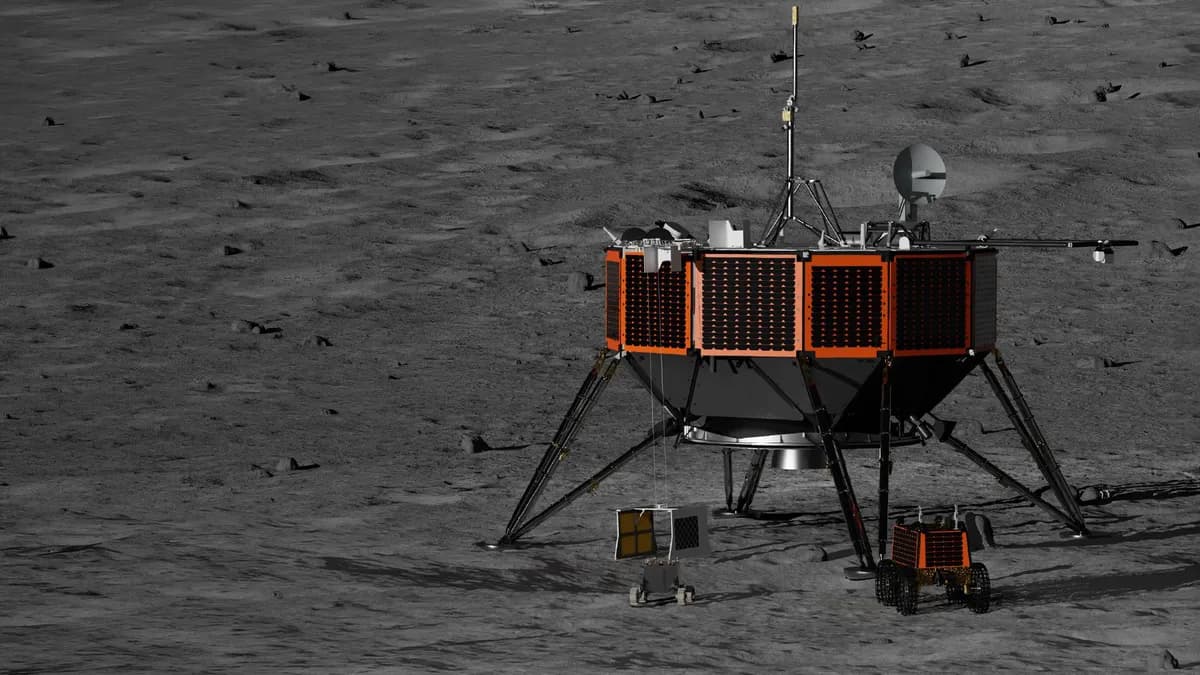
- •NASA signed a $180 million contract to explore the lunar south pole with Intuitive Machines.
- •With the goal of landing in 2030, seven payloads will be delivered to the lunar surface to study regolith and the radiation environment.
- •This mission is expected to contribute to establishing a foundation for sustainable lunar manned exploration of the Artemis program.
Key content
NASA has signed a $180.4 million lunar exploration contract with Houston, Texas-based Intuitive Machines. This contract is part of NASA's Commercial Lunar Payload Services (CLPS) initiative and the Artemis program, which aims to land at the lunar south pole in 2030.
In this mission, a total of seven payloads are scheduled to be delivered to the lunar surface, five of which are NASA equipment. The total weight of the payloads is approximately 75 kilograms.
Why is this contract important?
This contract is Intuitive Machines' fifth CLPS contract, and the company has already successfully delivered payloads to the Moon through the IM-1 and IM-2 missions. This is an example showing that NASA is accelerating lunar exploration through cooperation with private companies.
“This science and technology investigation will support long-term sustainability and contribute to a deeper understanding of the lunar surface,” said Joel Kearns, associate director for exploration for the Science Mission Directorate at NASA Headquarters.
“Regular CLPS deliveries will enhance our understanding of the exploration environment, accelerate the establishment of long-term human habitation on the Moon, and ultimately lay the foundation for manned exploration of Mars,” explained Adam Schlesinger, CLPS Initiative Manager at Johnson Space Center.
Main payload configuration
The main equipment included in this mission is as follows.
Stereo Camera System (SCALPSS): Photographs the effect of engine exhaust plumes on lunar soil (regolith) as the lander lands on the lunar surface. This equipment has already captured the first relevant images from IM-1 and Firefly Aerospace's Blue Ghost Mission 1. Hosted by NASA Langley Research Center.
Near-Infrared Volatile Spectrometer (NIRVSS): Observes light emitted or reflected from lunar soil to detect minerals and various types of ice. It was successfully operated on Astrobotic's Peregrine Mission One in 2024. Hosted by NASA Ames Research Center.
Mass Spectrometer for Lunar Operational Observation (MSolo): Analyzes the composition of volatile substances in the environment around the lander after landing. The IM-2 mission in 2025 demonstrated gas analysis capabilities under lunar conditions. Hosted by NASA Kennedy Space Center.
Lunar Vehicle Radiation Dosimetry System (LVRaD): Consists of four radiation detectors to quantify the radiation environment on the lunar surface and evaluate the effects on living organisms and the human body.
Connection with Artemis program
The scientific investigations of this mission are expected to contribute to improved understanding of the chemical composition and structure of regolith and the radiation environment in the lunar south pole. These data will become a key foundation for building a sustainable human lunar habitat through the future Artemis mission.
In particular, the lunar South Pole region is attracting attention as a key base for future manned exploration as there is a high possibility that water ice exists in the permanently shaded area. It is expected that the equipment delivered this time will be able to determine the presence and distribution of ice and the possibility of utilizing local resources.
댓글 (3)
NASA 문제는 양쪽 입장을 모두 들어봐야 할 것 같습니다.
차분한 논의가 필요하다는 말에 공감합니다.
이 사안은 신중하게 접근해야 한다고 봅니다.
More in AI & Tech

NASA-ISRO joint satellite NISAR captures first radar image of Mount Rainier

NASA-ISRO joint satellite NISAR captures St. Helens volcano through clouds

NASA plans to launch low-orbit experimental mission equipped with 7 small satellites

NASA Selects 10 Scientists to Support Artemis Lunar South Pole Exploration
NASA pursues private procurement of 'Nexus' Ka band relay service to replace aging satellites

84-year-old Chinese grandmother writes love letter to AI character and even dreams of marriage
Latest News

Man in His 30s Arrested After Crashing into Streetlight While Driving Under Propofol
Man in his 30s crashes into streetlight while driving after illegally taking propofol

Goyang Sono's 10-Game Winning Streak Ends as DB's Ellenson Explodes for 38 Points
Wonju DB ends Goyang Sono's 10-game winning streak with Henry Ellenson's 38-point explosion

Yemen's Houthis Launch Missiles at Israel, Enter War as Red Sea Security Crisis Deepens
Yemen's Houthi rebels launched missiles at Israel on the 28th, directly entering the US-Iran war

Nepal's Ex-PM Oli Arrested Over Deadly Protest Crackdown
Nepal's former PM KP Sharma Oli arrested over deadly protest crackdown

Iranian Missiles Breach Israeli Air Defense, Strike Southern Cities Dimona and Arad
Iranian ballistic missiles penetrated Israeli multi-layered air defense, striking southern cities Dimona and Arad

Mastermind of 'Revenge-for-Hire' Ring Faces Arrest Warrant Over Feces Terror Attacks
Mastermind of revenge-for-hire ring faces arrest hearing over orchestrating excrement attacks and graffiti

BBC Investigation Uncovers Error in Dopamine Agonist Drug Warnings... UK Authorities Launch Review
BBC investigation discovers critical error in patient leaflets for dopamine agonist drugs

Israel Activates Air Defense as Houthi Rebels Launch Missile from Yemen
Israeli military detects Houthi rebel missile launch from Yemen on the 28th and activates air defense