Samsung to Begin Tesla AI Chip Mass Production in Late 2027 Using 2nm Process
$16.5 billion foundry contract kicks off at Texas Taylor facility, marking drive to narrow gap with TSMC
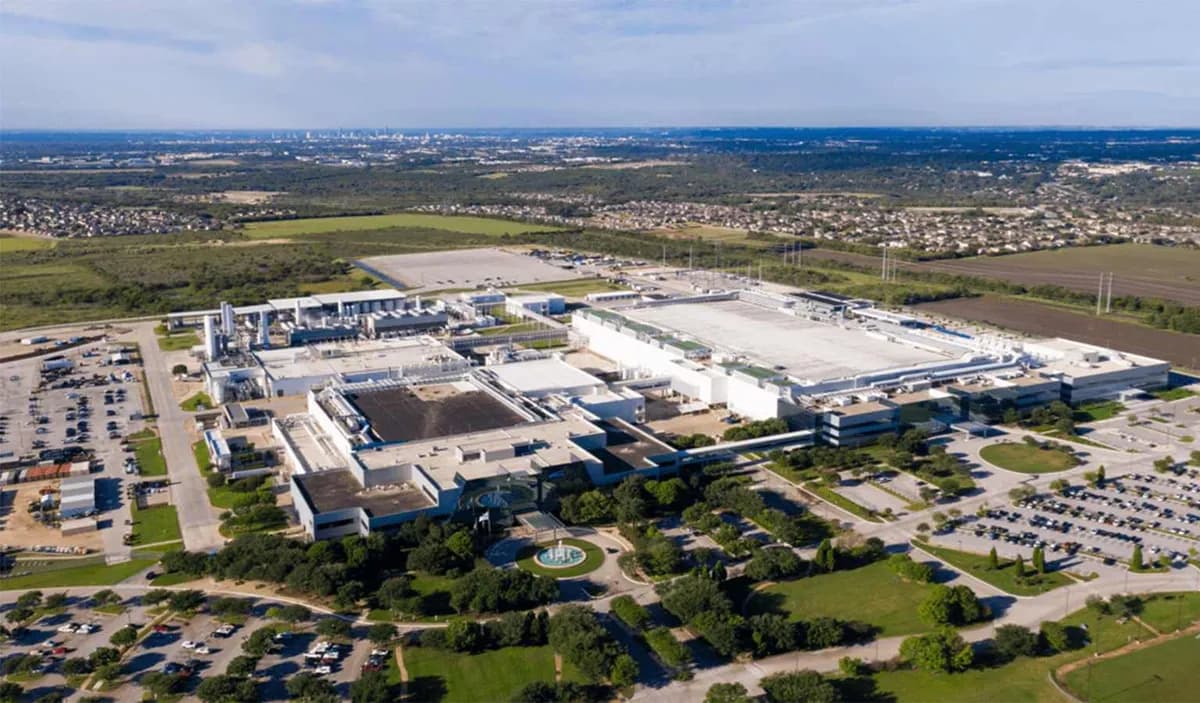
- •Samsung Electronics announced at its shareholders' meeting that mass production of Tesla's AI6 chip will begin in late 2027 at its Taylor, Texas facility using 2nm process technology
- •Part of a $16.5 billion foundry contract to produce brain chips for Tesla's autonomous vehicles, Optimus robots, and AI data centers
- •Despite 2nm mass production starting about 6 months later than TSMC, Samsung aims for 20% market share by differentiating with memory-logic integrated solutions
Samsung Confirms Foundry Partnership Timeline with Tesla
Samsung Electronics officially announced at its 57th annual shareholders' meeting on the 18th that mass production of Tesla's next-generation AI chip 'AI6' will begin in late 2027. The chip will be manufactured using advanced 2-nanometer (nm) process technology at Samsung's semiconductor production facility in Taylor, Texas. This timeline reflects a delay of approximately six months from the original plan, resulting from technical adjustments during the 2nm process preparation.
The AI6 chip is a key deliverable of a $16.5 billion (approximately 23 trillion won) foundry contract extending through 2033. It will serve as the brain powering Tesla's autonomous vehicles, humanoid robot 'Optimus,' and AI data centers. Han Jin-man, President of Samsung's Foundry Business, evaluated it as "a great opportunity for Samsung Foundry to leap forward in the era of physical AI."
Why This Partnership Matters
Samsung Electronics has elevated this Tesla collaboration beyond a simple customer relationship to a 'strategic alliance.' Currently, TSMC (Taiwan Semiconductor Manufacturing Company) dominates the foundry market as the overwhelming leader, while Samsung, as the second-place player, is focused on narrowing the technology gap. Tesla is a prime example of a company seeking supply chain diversification amid a structure where major AI chip designers like NVIDIA and AMD depend heavily on TSMC.
Through this collaboration, Samsung aims to demonstrate its advanced process technology capabilities, secure large-scale customers, and simultaneously maximize 'synergy among its three semiconductor divisions'—memory (DRAM/NAND), foundry, and System LSI. Jun Young-hyun, Vice Chairman and Head of the DS Division, stated at the shareholders' meeting, "We are the world's only semiconductor company capable of providing one-stop solutions from logic to memory, foundry, and advanced packaging," adding, "We will lead the market as an AI solution company."
What Has Changed
Samsung's foundry business has faced difficulties with yield rate issues and customer acquisition challenges. Particularly during the early mass production of the 3nm process, lower yields compared to competitors were noted, and market share stagnated as major customers flocked to TSMC. However, Vice Chairman Jun reported that with the recent start of HBM4 (High Bandwidth Memory) mass production shipments, the company is receiving positive feedback that "Samsung is back."
Tesla's AI6 chip marks Samsung's first case of securing a major customer with its 2nm process, and is expected to serve as a positive signal for attracting key foundry market customers such as NVIDIA, AMD, and Apple in the future. Kim Yong-gwan, President of DS Division Management Strategy Office, announced, "We will execute large-scale capital expenditures (CAPEX) for preemptive securing of core equipment and expansion of new facilities."
Samsung Foundry vs TSMC Comparison
| Category | Samsung Foundry | TSMC |
|---|---|---|
| 2nm Mass Production | H2 2025 (planned) | H1 2025 |
| Market Share (2025) | ~13% | ~62% |
| Major Customers | Tesla, Qualcomm, Google | Apple, NVIDIA, AMD |
| Strengths | Memory-logic integrated solutions | High yields, large-scale production capacity |
| North American Production Base | Taylor, Texas (2nm) | Arizona (5nm/3nm) |
Samsung's Strategy for the Physical AI Era
Samsung views autonomous driving and robotics as core application areas for the 'Physical AI' era. President Han Jin-man emphasized, "The Tesla collaboration is an opportunity for Samsung Foundry to leap forward in the era of autonomous driving and robotics." Indeed, Samsung's DX (Device eXperience) Division has announced plans to introduce manufacturing humanoid robots to production lines, making visible its hardware-software-semiconductor integration strategy.
Tesla plans to utilize the AI6 chip for the next-generation version of its Full Self-Driving (FSD) autonomous driving system and onboard computation for the Optimus robot. This goes beyond a simple inference chip, requiring a design philosophy different from data center training chips, as it performs real-time sensor data processing and complex decision-making as an edge AI chip.
What Lies Ahead [AI Analysis]
Samsung's Tesla partnership is likely to become a proving ground for the foundry business's resurgence. The late 2027 mass production start timing coincides with the commercialization of Level 4 autonomous driving in the global automotive industry, presenting Samsung with an opportunity to solidify its position in the automotive semiconductor market.
However, the technology gap with TSMC still exists. TSMC is set to begin 2nm mass production in the first half of 2025 and has already secured large-volume orders such as Apple's A19 chip. For Samsung to secure additional major customers like NVIDIA and AMD beyond the Tesla collaboration, yield stabilization and cost competitiveness are essential.
Meanwhile, Samsung's emphasized 'memory-logic-packaging integrated solution' is a differentiation point that TSMC cannot provide. The technology to integrate ultra-high-speed memory like HBM4 with 2nm logic chips through integrated packaging can demonstrate competitiveness in AI data center chips. If the $16.5 billion Tesla contract is successfully executed, Samsung Foundry is expected to move one step closer to its goal of breaking through 20% market share by 2030.
댓글 (3)
기사 잘 봤습니다. 다른 시각의 분석도 읽어보고 싶네요.
to 관련 기사 잘 읽었습니다. 유익한 정보네요.
공감합니다. 참고하겠습니다.
More in this series
More in AI & Tech
영국 정치지도자들, 아동 성착취 혐의에 대한 긴급 조사 촉구

A humanoid robot performing in China has a child's face on it.

U.S. jury finds Meta and Google responsible for ‘social media addiction’… 3.7 billion won compensation ruling

Japanese X-ray Observatory makes first direct measurement of ultrafast 'cosmic wind' in galaxy M82

NASA selects 24 people for 2026 Astrophysics Postdoctoral Fellowships

Ethereum is at a crossroads to ‘redefine its identity’ ahead of the quantum computing and AI era
Latest News
"간부 잘 아는데 교통비 좀" 휴가 군인들 돈 뜯은 50대 구속
50대 A씨가 휴가 중인 군인들에게 부대 간부를 아는 척 접근해 돈을 사취
英 옥토퍼스, 이란 전쟁 이후 태양광 판매 50% 증가
이란 전쟁 이후 영국 옥토퍼스의 태양광 판매량 50% 증가
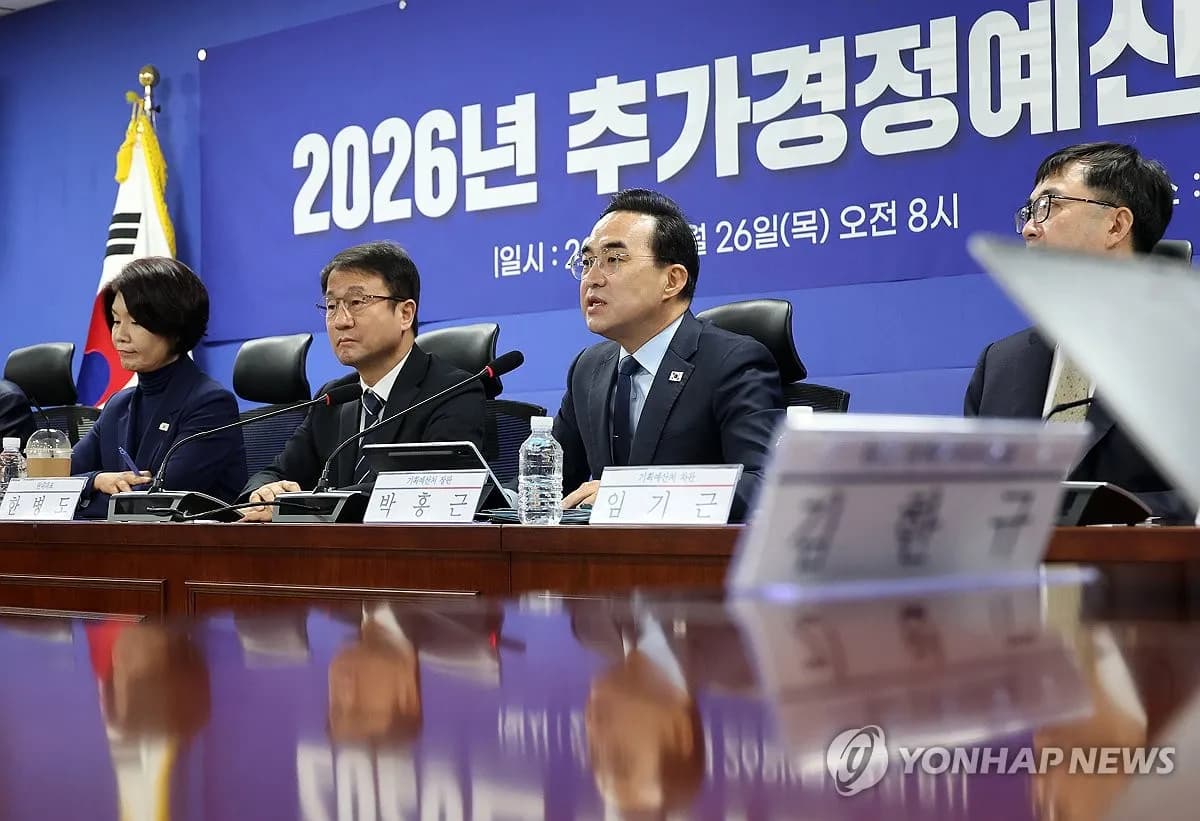
당정 "추경, 지방·취약계층에 더 지원되는 방식으로"
당정이 지방자치단체와 취약계층 중심의 추경 편성 방침 재확인
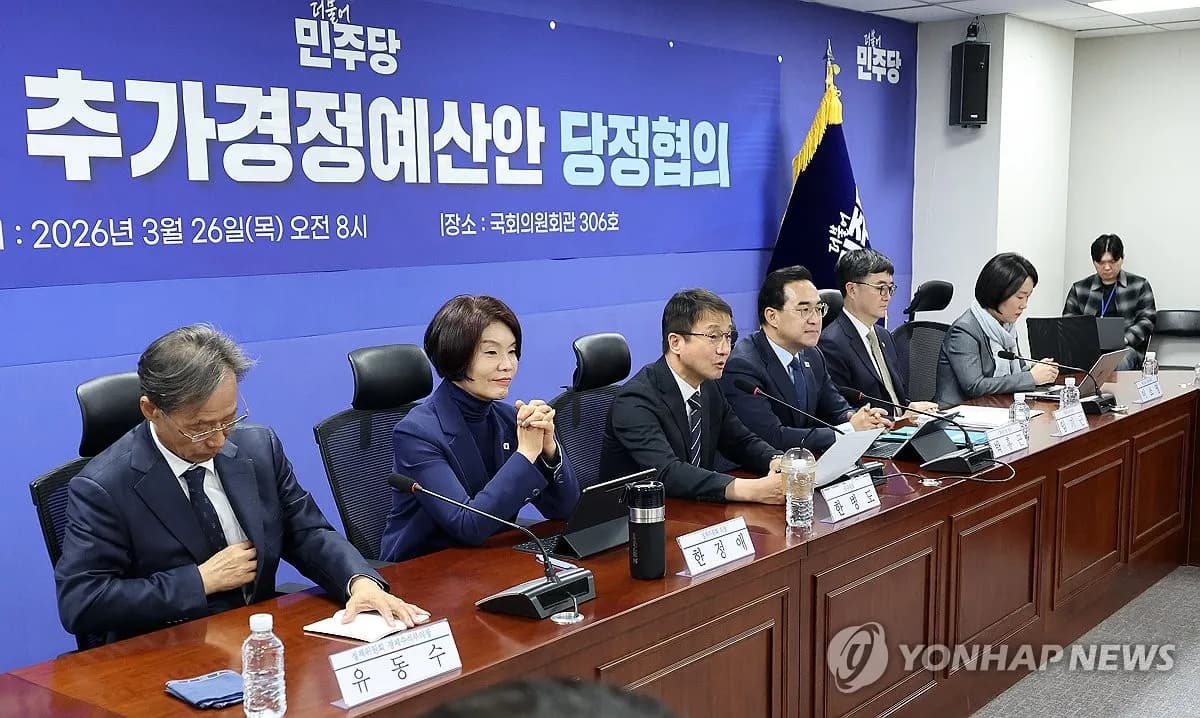
당정, 석유 최고가격제 손실 보전을 추경에 반영키로
당정이 석유 최고가격제 손실을 추경에 반영하기로 결정
어머니 폭행하고 금팔찌 빼앗은 30대 아들 경찰에 붙잡혀
어머니 폭행 후 금팔찌 빼앗은 30대 남성 체포
아이티 갱단 폭력사태로 10개월간 5천명 이상 사망
아이티에서 지난 10개월간 갱단 폭력으로 5천명 이상 사망
서방 정보당국 "러시아, 우크라이나 전쟁 후 이란에 드론·식량 공급"
서방 정보당국, 러시아의 이란 드론·식량 공급 작업 거의 완료 파악

6년 전 세 살 딸 살해한 30대 친모 구속송치
경찰, 6년 전 세 살 딸 살해 혐의 30대 친모를 구속송치